
Mango Lassi
Thick yogurt blended with sweet Alphonso mangoes — cool, creamy and the perfect Indian...
Pearl millet porridge thinned with buttermilk — the Tamil Nadu farm worker's summer coolant.

About Kambu Mor Koozh: Kambu Mor Koozh is the most hydrating drink of Tamil Nadu farms. Pearl millet plus sour buttermilk is a natural electrolyte drink. Across rural Tamil Nadu, particularly during the brutal summer months when temperatures regularly exceed 40°C, kambu mor koozh is the lifeline of agricultural workers, farm labourers, and outdoor workers. The dish predates modern sports drinks by thousands of years — Tamil farming communities discovered the perfect electrolyte combination through centuries of trial and observation. Genuinely heat-stroke preventative, not just folkloric.
Understand the dish: Two distinct stages — first cook the pearl millet into a thick porridge; then thin with buttermilk into a drinkable consistency. Each stage requires different attention. Kambu (Tamil for pearl millet, also called bajra in Hindi, sajje in Kannada) is one of the great traditional grains of South India. It thrives in dry hot conditions where wheat and rice fail.
Gather ingredients: 1 cup kambu flour (pearl millet flour — available at every Indian grocery; flour should look greyish-white with slightly gritty texture; substitute with finger millet flour/ragi for similar nutritional profile but slightly different flavour; freshly grinding from whole grains in a small grinder produces dramatically better porridge), 4 cups cold water for porridge, 1 cup thick buttermilk (Indian-style "mor" curd-based buttermilk; not American thin liquid buttermilk; substitute by whisking 1 cup plain yogurt with 1/2 cup cold water until smooth; slightly sour buttermilk works best for authentic flavour and better hydration), 1 fresh green chilli slit, small piece of fresh ginger (about 1cm) peeled and grated, salt to taste — about 1/2 tsp.
Mix flour with cold water: This is the critical first step. In a wide bowl combine the 1 cup kambu flour with 4 cups cold water. Whisk vigorously until completely smooth — no lumps visible. Adding dry flour to hot water produces inevitable lumps. Mixing in cold water first eliminates lumping problems.
Cook the porridge: Use a heavy-bottomed pot (3-litre size). Pour the cold water-flour mixture into the pot. Place over medium-high heat. While whisking constantly with a whisk or wooden spoon, bring the mixture to a boil. Do not stop whisking — millet starches thicken rapidly as the temperature rises. Whisk in figure-8 motions, scraping the bottom and sides constantly. Even a 30-second pause produces scorching at the bottom.
The critical 15-minute cook: Once the mixture comes to a boil and visibly thickens, reduce heat to the lowest setting your stove allows. Cook on lowest heat for 15 minutes, stirring every 2 minutes. Pearl millet starches need full time to gelatinise into smooth porridge. After 5 minutes, porridge is moderately thick. After 10 minutes, pulls away slightly from the sides. After 15 minutes, properly thick — pulling away cleanly from sides as you stir.
Doneness check: Porridge should be very thick — almost solid when scooped. Should hold its shape on a spoon for several seconds before slumping. If too thin, continue cooking 5-10 more minutes. If too thick, stir in 1/4 cup boiling water.
The critical cooling step: Switch off the heat. Transfer the cooked porridge to a wide bowl. Let cool to room temperature for 30-45 minutes. The cooling cardinal rule: porridge MUST be cool before adding buttermilk. Hot porridge curdles the buttermilk, producing an unpleasant texture and ruining the drink. Some Tamil farmers traditionally cool the porridge overnight, producing more deeply set texture.
Thin with buttermilk: To the cooled porridge, add 1 cup buttermilk. Whisk thoroughly to combine. Goal: drinkable but substantial — like thick milkshake or thin yogurt smoothie. Not soupy thin, not pudding thick. If too thick, add 1/2 cup more buttermilk or cold water. If too thin (rare), let stand 5 minutes — porridge absorbs more buttermilk and re-thickens. Stir in the slit green chilli, grated ginger, and 1/2 tsp salt.
The critical chilling: Transfer to fridge. Chill for at least 30 minutes — preferably 1 hour or more. Drink is meant to be served extremely cold — cold maximises cooling effect on the body. Room temperature koozh has reduced therapeutic benefit.
Serve in tall glasses: Pour the chilled koozh into tall glasses. Add 1-2 ice cubes if desired. Some Tamil farmers serve over ice for additional cooling — further dilutes the drink, which is fine; the dilution is part of the hydration purpose. Drink slowly. The substantial nature means you cannot gulp it down — sipping is part of the cooling experience.
The field tradition: Tamil farmers carry koozh in clay or metal pots to the fields. Around noon, when the sun is highest and most dangerous, they sit briefly under shade and drink koozh together. The break and the drink together prevent heatstroke. Tamil farming families traditionally entrust koozh-making to elder women. The drink is a daily summer ritual in farming households.
Serve at peak summer: For maximum traditional effect, serve in extreme summer heat — when temperatures are 35°C or higher. Genuinely cooling. The traditional working person's drink — providing electrolytes, complex carbs, and protein in one cool refreshing glass. Pre-workout or post-workout, kambu mor koozh provides genuine hydration and recovery support. Modern athletes are rediscovering its sports nutrition value.
For children, elderly, hypertension: The unique flavour can be challenging at first taste. Tamil families introduce children gradually — starting with smaller quantities and increasing as the palate adjusts. The drink is highly digestible, providing nutrition without taxing the digestive system. Many Tamil elderly drink it daily during summer months. The natural saltiness from buttermilk make this an excellent hot-weather drink for those with blood pressure concerns — adjust the added salt as needed.
Variations: Some Tamil families add 1 tsp finely chopped fresh curry leaves for additional aromatic depth. Others temper with 1/2 tsp mustard seeds in a hot pan and pour over — produces a more elaborate version.
A cultural and ecological note: Pearl millet is genuinely climate-appropriate for Tamil Nadu's drier regions. As climate change makes water increasingly scarce, traditional millets are being rediscovered as sustainable alternatives to water-hungry rice. Modern research validates many traditional beliefs about pearl millet — rich in iron (helps with heat-related fatigue), magnesium (supports sodium-potassium balance), and beta-glucans (supports gut health). Combined with buttermilk's probiotic content, the drink is genuinely health-supporting.
Leftover storage: Stored in fridge in an airtight container, the koozh keeps for 1-2 days. Texture thickens slightly as the millet absorbs more buttermilk; thin with 2-3 tbsp cold water before serving. Best consumed within 24 hours for peak fresh flavour.
Thick yogurt blended with sweet Alphonso mangoes — cool, creamy and the perfect Indian...
 ⭐ Featured
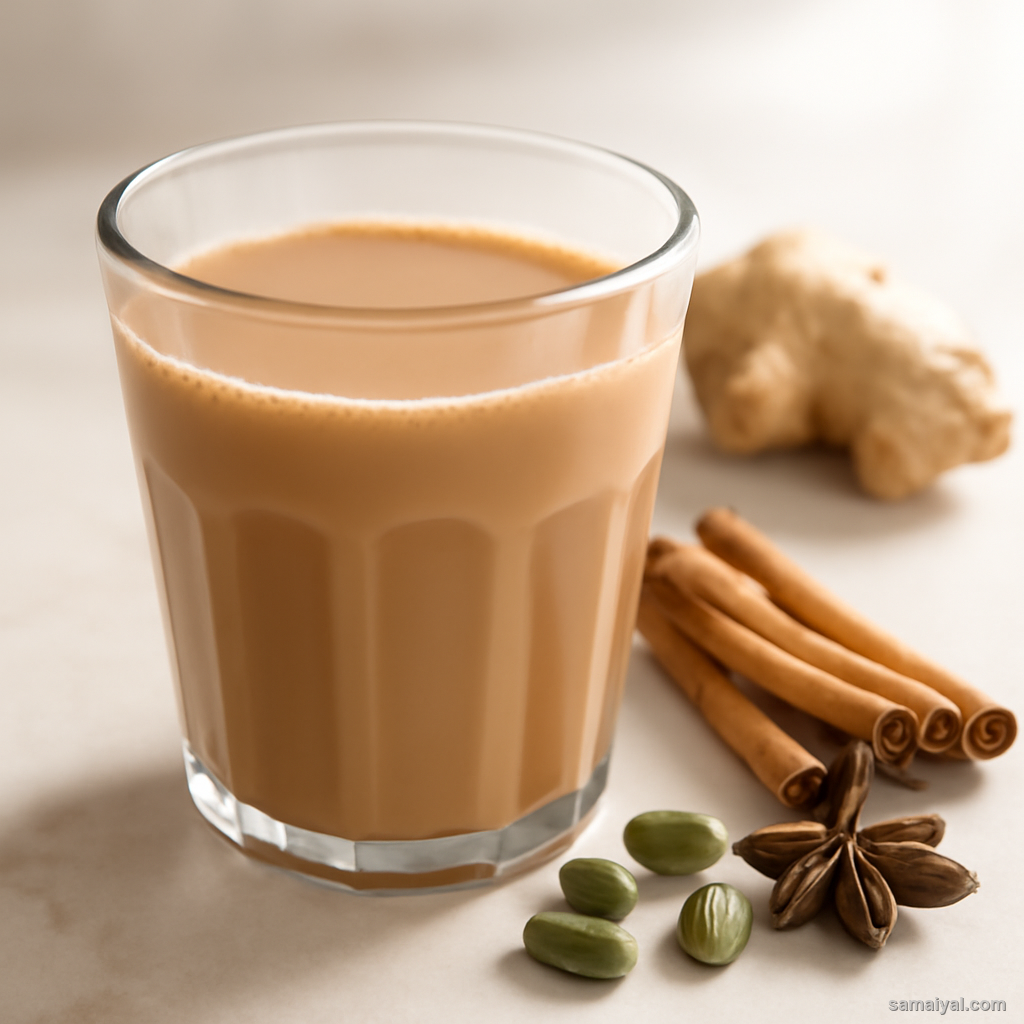
Spiced black tea with ginger, cardamom and cinnamon — India's universal warm embrace in a cup.

Chilled almond-spice-rose milk drink traditionally made for Holi — refreshing,...

Indian spiced lemonade with roasted cumin and black salt — light, tangy and the best...
Comments & Tips
Be the first to share your experience with this recipe!
Leave a Comment