 ⭐ Featured
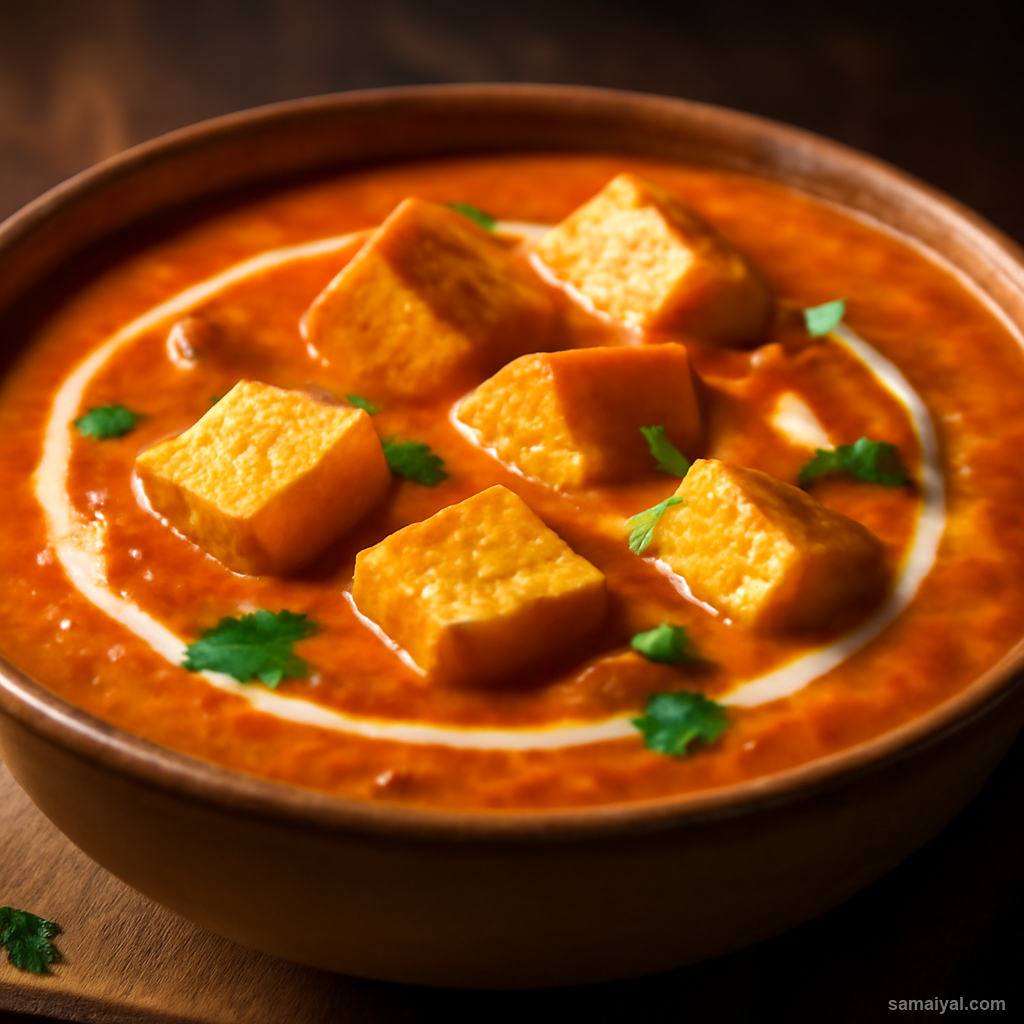
Butter Paneer Masala
Creamy tomato-based curry with soft paneer cubes — the all-time favourite of Indian...
Tangy lemon lentil soup with tomato — Assamese summer dal with tenga character

About Mah Tenga Sour Dal: Mah Tenga applies the tenga (sour) concept to lentils — Assamese cuisine's tradition of using sourness as a primary flavour. The result is a tangy, bright dal that works perfectly in Assam's hot and humid summers when heavy spiced food can feel oppressive. The lemon and tomato lift the dal into a refreshing, almost soup-like dish that pairs beautifully with plain rice.
Choose your lentils: Use 1 cup of either yellow moong dal or split red lentils (masoor dal). Both work well — moong gives a slightly more delicate flavour, masoor is heartier. The recipe technique is identical for both.
Wash thoroughly: Wash the lentils in 4-5 changes of cold water until the water runs clear. Removing the surface starch prevents foamy boiling.
No soaking needed: Both moong and masoor cook fast without soaking. Drain after washing.
Prepare the tomatoes: Take 2 medium ripe tomatoes. Chop into small 1cm dice. Slightly over-ripe tomatoes work even better — they break down faster and provide more natural acidity.
Prepare the green chillies: Take 2 fresh green chillies. Slit lengthwise. The chillies provide gentle heat that balances the sourness.
Cook the dal: Place the washed lentils in a heavy pot. Add 3 cups water and 1 tsp turmeric powder. Bring to a boil over medium-high heat.
Skim the foam: As the dal comes to a boil, white foam will rise. Skim and discard.
Reduce and simmer: Reduce heat to medium-low. Simmer uncovered for 18-20 minutes for moong, or 15-17 minutes for masoor, stirring every 5 minutes. The dal should be fully soft, with most lentils broken down into a creamy mass.
Mash gently: Use the back of a wooden spoon to lightly mash the dal — keep some texture. Do not pure smooth.
Adjust consistency: The dal should be slightly thinner than usual — like thick soup, more pourable than typical dals. Mah Tenga is a thinner-style dal. If too thick, add 1/2 cup water; if too thin, simmer 2-3 more minutes.
Keep the dal warm: Reduce heat to lowest while you prepare the tempering.
Heat the mustard oil: Pour 1 tbsp mustard oil into a small pan or kadhai over medium-high heat. Heat for 30-45 seconds until just smoking, to remove the raw bitter edge.
Add the chopped tomatoes: Reduce heat to medium. Add the chopped tomatoes to the smoking-hot oil. They will hiss dramatically. Stir well to coat.
Cook the tomatoes thoroughly: Cook the tomatoes on medium heat for 6-8 minutes, stirring every 90 seconds, until they have completely broken down into a thick pulpy mass and oil starts to separate at the edges. This deep cooking is essential — undercooked tomatoes produce a watery dal.
Combine with the dal: Pour the cooked tomato masala into the warm dal pot. Stir well to combine. The dal will turn from yellow to a beautiful warm orange-pink colour.
Add green chillies: Add the slit green chillies to the dal. Stir.
Add salt: Add salt to taste — about 3/4 tsp. Stir.
Simmer to marry: Bring back to a gentle simmer. Simmer uncovered for 8 minutes, stirring every 2 minutes. The flavours meld together and the colour deepens slightly.
The critical lemon timing: This is the most important step. Switch off the heat completely. Take the pot off the burner. Squeeze in the juice of 1 fresh lemon (about 2 tbsp). Adding lemon juice off-heat keeps the bright fresh aroma; boiling lemon juice turns it bitter.
Fold in the lemon: Stir gently to distribute the lemon throughout the dal. The dal will brighten in flavour immediately.
Final taste: Dip a clean spoon and taste. The dal should hit you with multiple flavours simultaneously — earthy lentils, deeply savoury cooked tomato, bright fresh lemon, gentle chilli warmth. The sourness should be present but not overwhelming. Adjust by adding more lemon (for brighter sour) or 1/4 tsp sugar (for balanced sourness).
Garnish and serve: Sprinkle 2 tbsp finely chopped fresh coriander over the top. Serve hot over plain steamed rice — the most traditional Assamese pairing.
The summer cooling effect: Mah Tenga is specifically a summer dal — the sourness from the lemon and tomato has cooling properties in Ayurvedic terms. Drinking the thinner version of this dal alone (like a soup) is even believed to help with heat exhaustion in Assamese folk medicine.
Serving suggestions: Pair with simple grains like plain rice or steamed millet. The bright dal also works alongside more substantial dishes like fish curry — the sourness cuts through the richness beautifully. Some Assamese homes also serve a small side of pickle and a piece of papad for crunch.
Variations: For a more substantial version, add 1/2 cup chopped greens (spinach, methi) along with the tomatoes — produces a vegetable-rich version. For a richer flavour, add 1/4 cup tamarind water instead of lemon juice — produces a deeper, more umami-tangy version.
Leftover storage: Stored in the fridge in an airtight container, this dal keeps for 2-3 days. The lemon flavour fades overnight; refresh by adding a small squeeze of fresh lemon when reheating. Reheat gently with a splash of water on the stovetop.
⭐ Featured
Creamy tomato-based curry with soft paneer cubes — the all-time favourite of Indian...
 ⭐ Featured
Velvety spinach curry with golden-fried paneer — nutritious, vibrant and absolutely delicious.

Bold, tangy chickpea curry packed with spices — a street food staple that works as a main dish.

Dry-spiced potatoes and cauliflower — simple, aromatic, and endlessly satisfying.
Comments & Tips
Be the first to share your experience with this recipe!
Leave a Comment