 ⭐ Featured
Pav Bhaji
Mumbai's beloved mashed vegetable curry served on butter-toasted soft buns — street food gold.
Fine rice vermicelli cooked in sweetened milk — a delicate Assamese sweet snack
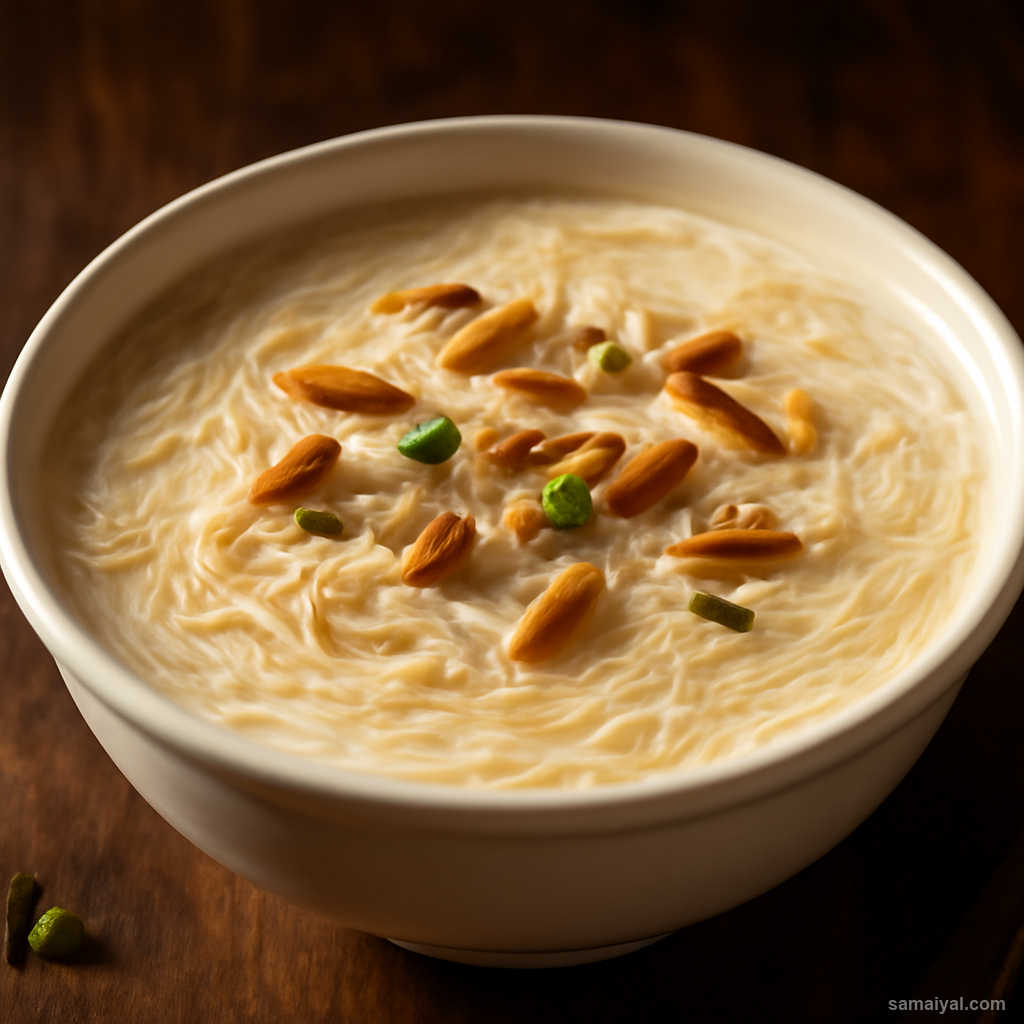
About Xoru Xori Vermicelli: Xoru Xori is the quick sweet of Assamese festivals — thin rice noodles in fragrant sweetened milk. Despite its quick preparation (under 15 minutes), the dish carries festival significance: it appears at minor celebrations when families want a sweet without committing to the long preparation of payox or laru. The dish bridges Assamese and pan-Indian cuisine — vermicelli kheer exists across India, but the Assamese version is distinctively delicate.
Understand rice vermicelli: Use 100g of thin rice vermicelli (also called rice sevai). The noodles should be very thin — like angel hair pasta. Available at every Indian grocer; you may find them as "vermicelli" or "sevai" or "idi appam noodles".
If rice vermicelli unavailable: Wheat vermicelli (regular sevai) works as substitute — common across India. The flavour profile differs slightly but the technique is identical.
Understand the milk: Use 2 cups of full-fat milk. Skimmed or low-fat milk produces a thin, watery kheer without the body this dessert needs. Whole milk is non-negotiable.
Prepare the saffron: Use a small pinch of saffron threads (about 4-6 strands). Place in 1 tbsp warm milk. Soak for 10 minutes. The strands will release their colour and aroma.
Measure the cardamom: Use 1/4 tsp cardamom powder. Freshly ground from whole pods is dramatically more aromatic than pre-ground.
Prepare the cashews and raisins: Use 1 tbsp cashews and 1 tbsp raisins. Roughly chop the cashews.
Use a heavy-bottomed pan: Use a heavy-bottomed pan or non-stick saucepan. Thin pans will scorch the milk on the bottom.
Melt the ghee: Place the pan over medium heat. Add 2 tbsp ghee. Heat for 30 seconds until fully melted and shimmering.
Fry the cashews and raisins: Add the chopped cashews to the warm ghee. Stir for 30 seconds until lightly golden. Add the raisins. They will plump within 15 seconds. Lift everything out with a slotted spoon and set aside for garnishing.
The critical vermicelli toasting: Add the rice vermicelli to the warm ghee. Stir gently for 2 minutes, breaking the noodles slightly with the spoon. The vermicelli will turn from white to very lightly golden.
Why toasting matters: The toasting deepens the vermicelli flavour and prevents it from going completely mushy in the milk. Skipping this step produces bland, soggy kheer.
Do not over-toast: The vermicelli should turn very light golden — pale, not deep brown. Over-toasted vermicelli tastes bitter.
Add the milk: Pour the milk into the pan with the toasted vermicelli. Bring to a gentle boil over medium heat. Watch carefully — milk loves to overflow.
Add sugar: As the milk approaches a boil, add 3 tbsp sugar. Stir to dissolve — about 30 seconds.
Add saffron and cardamom: Pour in the saffron-infused milk along with the threads. Sprinkle in the 1/4 tsp cardamom powder. Stir gently. The milk will turn a beautiful pale golden orange.
The slow simmer: Reduce heat to low. Simmer uncovered for 8 minutes, stirring every 2 minutes. The vermicelli will gradually cook through and absorb the flavoured milk.
Watch the texture: After 5 minutes, the noodles will be tender. After 8 minutes, the milk will have thickened slightly and the noodles will be fully cooked through but still hold their shape.
The consistency: Xoru xori is meant to be moderately liquid — flowing, not stiff. The vermicelli should be tender, the milk should be slightly thickened but still pourable.
If too thick: Stir in 2-3 tbsp warm milk to loosen.
If too thin: Simmer 2-3 more minutes uncovered.
Final taste check: The dish should taste richly creamy, sweet but not cloying, with clear saffron and cardamom notes coming through the warm vermicelli base.
Garnish: Switch off the heat. Sprinkle the fried cashews and raisins generously over the top.
Serve warm: Xoru xori is at its peak warm, when the texture is silky and the aromas are most pronounced. Spoon into deep bowls.
Serve with traditional Assamese accompaniments: At Assamese minor festivals, xoru xori is often part of a small sweet array — alongside narikol laru (recipe id 1238) or pithas. Each guest gets a small portion of multiple sweets.
For everyday eating: Xoru xori makes an excellent quick weekday dessert. The under-15-minute preparation suits busy schedules.
For children: This dish is particularly popular with children — sweet, soft, and visually appealing. Many Assamese mothers introduce children to traditional sweets through xoru xori.
Serving variations: Some Assamese homes add 1/4 cup grated coconut along with the saffron — produces a coconut-vermicelli version popular in lower Assam. Others add 1 ripe mashed banana for natural sweetness — produces a richer, fruity version.
A cultural note: Vermicelli kheer exists across many Indian regions — Hyderabadi seviyan, Punjabi sewai, Bengali shemai. The Assamese version is distinguished by its lighter character — less sweet, less rich, more emphasis on saffron-cardamom aromas. It reflects the Assamese preference for refined, gentle desserts over the heavier Punjabi or Mughal sweets.
Leftover storage: Stored in the fridge in an airtight container, xoru xori keeps for 2-3 days. The vermicelli absorbs more milk overnight and the texture firms up significantly. Refresh by stirring in 2-3 tbsp warm milk before reheating gently on the stovetop. Cold xoru xori is also delicious — many Assamese families enjoy refrigerated leftover sweets in summer.
⭐ Featured
Mumbai's beloved mashed vegetable curry served on butter-toasted soft buns — street food gold.

Fluffy steamed chickpea flour cake from Gujarat — light, spongy, tangy and totally addictive.

Mumbai's vegetarian burger — spiced potato dumpling in a fried batter, served in a...
 ⭐ Featured
Crispy golden pastry filled with spiced potatoes and peas — India's most loved snack,...
Comments & Tips
Be the first to share your experience with this recipe!
Leave a Comment