 ⭐ Featured
Gulab Jamun
Soft milk-solid dumplings soaked in fragrant rose sugar syrup — India's most beloved sweet.
Roasted gram flour rolled with jaggery and ghee into energy balls — the Bihar protein sweet
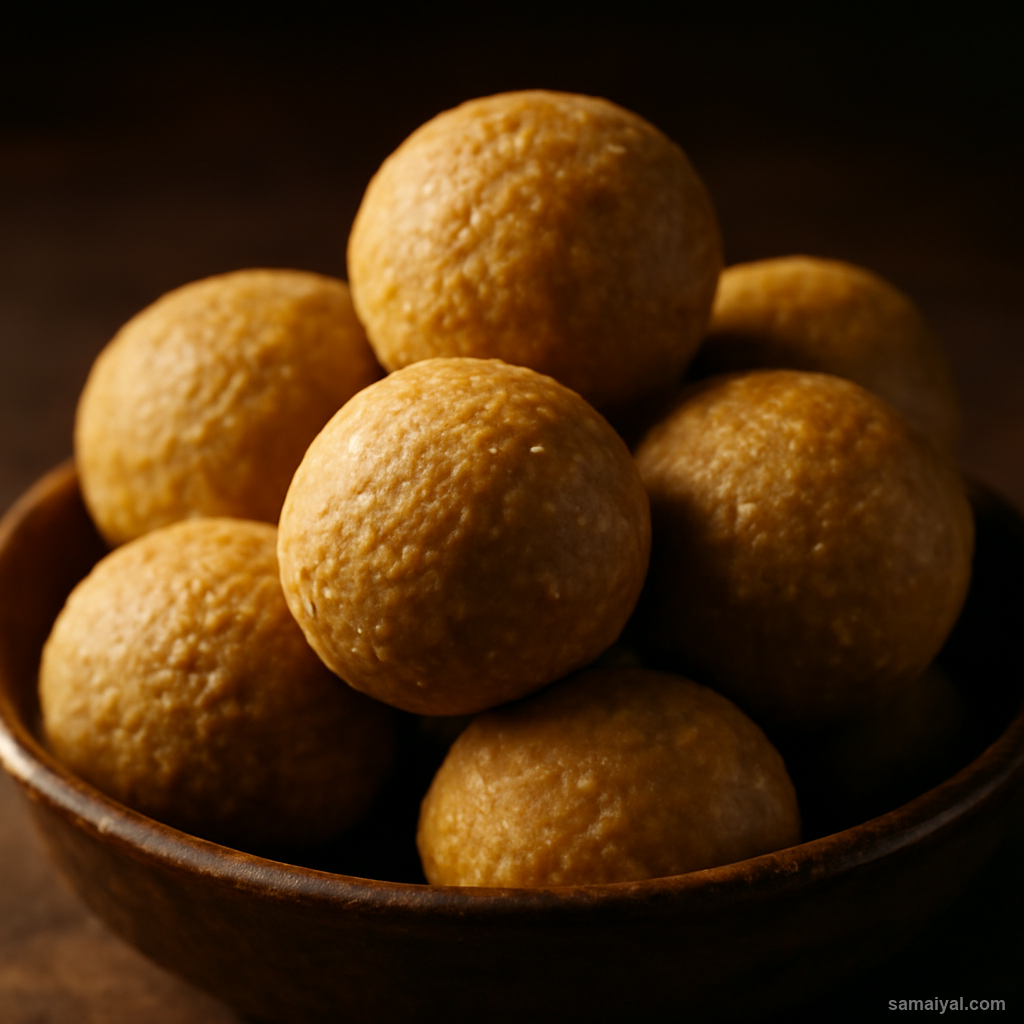
About Sattu Ladoo: Sattu Ladoo is the Bihar energy sweet — the same roasted gram flour that goes into drinks and parathas, transformed into a protein-rich sweet ball. They are popular as travel food (they keep for weeks), as a quick energy snack between meals, and as offerings during religious occasions. Each ladoo provides about 8-10g protein — making them more nutritionally dense than typical Indian sweets.
Understand sattu: Sattu is roasted Bengal gram (chana) flour, the most distinctive ingredient in Bihari cooking. Roasting gives it a nutty cooked flavour, and the protein content makes it exceptionally filling. Sold at Indian groceries, particularly those with Bihari or UP sections.
If sattu is unavailable: You can make at home — dry-roast 2 cups Bengal gram (chana dal) in a heavy pan for 8-10 minutes until deeply nutty and lightly browned, cool, then grind to a flour. The result is approximate but works.
Measure the sattu: Use 2 cups of sattu (about 250g). Pre-measured before any roasting.
The critical sattu re-toasting: Even if buying packaged sattu, the Bihari tradition is to re-toast briefly before making sweets. This deepens the flavour. Heat a heavy dry pan over low heat. Add the sattu. Toast for 3 minutes, stirring constantly, until you can smell deep nutty aroma. Do not let it brown — sattu is already roasted, so further browning means burning.
Let the sattu cool: Tip onto a wide plate. Let cool completely — about 15-20 minutes. Hot sattu mixed with melted jaggery produces lumpy ladoos.
Understand the jaggery: Use 3/4 cup grated jaggery. Use dark Bihari palm jaggery for the most authentic deep flavour. Grate fine on the small holes of a box grater.
Understand the ghee: Use 3 tbsp pure ghee. The ghee is the binding agent — without it, the ladoos crumble. The amount is precise; less ghee makes them too dry, more makes them too greasy.
Measure the cardamom: Use 1/4 tsp cardamom powder. Freshly ground from whole pods is dramatically more aromatic than pre-ground.
Prepare the sesame seeds: Use 2 tbsp white sesame seeds. If your sesame seeds are not already toasted, dry-toast in a small pan for 90 seconds until they pop softly and turn light golden. Cool completely.
Use a heavy-bottomed pan: Use a heavy-bottomed pan or non-stick frying pan. Thin pans will scorch the jaggery on the bottom.
Melt the jaggery: Place the grated jaggery and 3 tbsp ghee in the pan over low heat. Stir continuously with a wooden spoon for 2-3 minutes until the jaggery is fully dissolved into a smooth dark glossy syrup.
The critical jaggery test: When the jaggery is fully dissolved, drop a tiny drop of the syrup into a glass of cold water. It should form a soft thread that bends but does not break. This is the soft thread stage — perfect for ladoos.
If the syrup hardens immediately: It went too far. Add 1 tbsp warm water and reheat to soften slightly.
If the syrup is still grainy: Cook 1 more minute on low heat, stirring constantly.
Let the syrup cool slightly: Switch off heat. Let cool for 1-2 minutes — the syrup should be warm but not hot. Adding very hot syrup to sattu can scorch the flour.
The critical mixing: Tip the cooled toasted sattu into the warm jaggery syrup. Use a wooden spoon to mix vigorously for 2-3 minutes until everything combines into a stiff slightly crumbly mixture.
Add cardamom and sesame: Stir in the 1/4 tsp cardamom powder and toasted sesame seeds. Mix for 1 more minute to distribute evenly.
The binding test: Take a small portion in your palm and squeeze hard. It should hold together when squeezed — that means the binding is right.
If the mixture crumbles: Add 1 tbsp more melted ghee and mix again. The ghee should bind everything.
If the mixture is too sticky: Add 2 tbsp more sattu and mix. The mixture should be pliable but not gooey.
The milk option: If the mixture still seems too dry, add 1-2 tsp warm milk to bind. The milk is a Bihari grandmother's trick for getting the texture right.
Let cool to warm-touch: Let the mixture cool for 5-10 minutes — until warm to the touch but not hot. Cold mixture is too stiff to shape; hot mixture is too soft.
Grease your palms: Lightly grease your palms with 1/2 tsp ghee. The ghee prevents the mixture from clinging to your hands.
Shape the balls: Take small portions of the mixture (about 2 tbsp each) and roll firmly between your greased palms into smooth round balls about 3cm in diameter. Squeeze hard while rolling — loose balls fall apart later. You should get 14-16 balls from this quantity.
Let firm up: Place the shaped balls on a serving plate. Let cool completely at room temperature for 30 minutes. The balls firm up beautifully as they cool.
The firming process: As they cool, the ghee solidifies and binds everything together. Within 30 minutes, the ladoos go from sticky-soft to firm-but-pliable.
Serve at room temperature: Sattu Ladoo are best served at room temperature, when the texture is at its peak.
Serving as travel food: Pack 4-6 ladoos in a small container for travel — they keep for a week without refrigeration. The Bihari tradition of carrying sattu ladoos on long train journeys reflects their excellent keeping qualities.
Serving for energy: Eat 1-2 ladoos as a quick energy snack between meals. The combination of protein from sattu, sugar from jaggery, fat from ghee, and minerals provides sustained energy without the crash of refined sugars.
Serving for religious occasions: Sattu ladoo is offered at Chhath puja (the Bihari sun festival) as part of the prasad spread. The naturally sattvic ingredients (no onion, garlic, eggs) make it suitable for religious offerings.
Serving for new mothers: Sattu ladoo is traditionally given to new mothers in Bihar — the protein, calcium, and iron content support post-pregnancy recovery and breastfeeding.
A nutritional note: Each ladoo provides approximately 8-10g protein, plus iron, calcium, B vitamins, and complex carbohydrates. They are far more nutritionally dense than typical Indian mithai. Modern fitness enthusiasts in Bihar are rediscovering sattu ladoos as natural protein bars.
A cultural note: Sattu has been part of Bihari cooking for centuries — it appears in religious texts and folk medicine traditions. The transformation of this humble ingredient into festive sweets, drinks, and parathas reflects Bihari ingenuity. Eating sattu ladoos connects you to a culinary tradition stretching back generations.
Leftover storage: Store in an airtight container at room temperature for up to 1 week. In humid weather, store in the fridge for up to 2 weeks but bring to room temperature before serving for best texture.
⭐ Featured
Soft milk-solid dumplings soaked in fragrant rose sugar syrup — India's most beloved sweet.

Slow-cooked rice pudding with cardamom, saffron, nuts and rose water — pure comfort in a bowl.

Slow-cooked grated carrot pudding with ghee, milk and cardamom — a winter celebration classic.

Spongy soft chenna balls cooked in light sugar syrup — the iconic Bengali sweet.
Comments & Tips
Be the first to share your experience with this recipe!
Leave a Comment