 ⭐ Featured
Pav Bhaji
Mumbai's beloved mashed vegetable curry served on butter-toasted soft buns — street food gold.
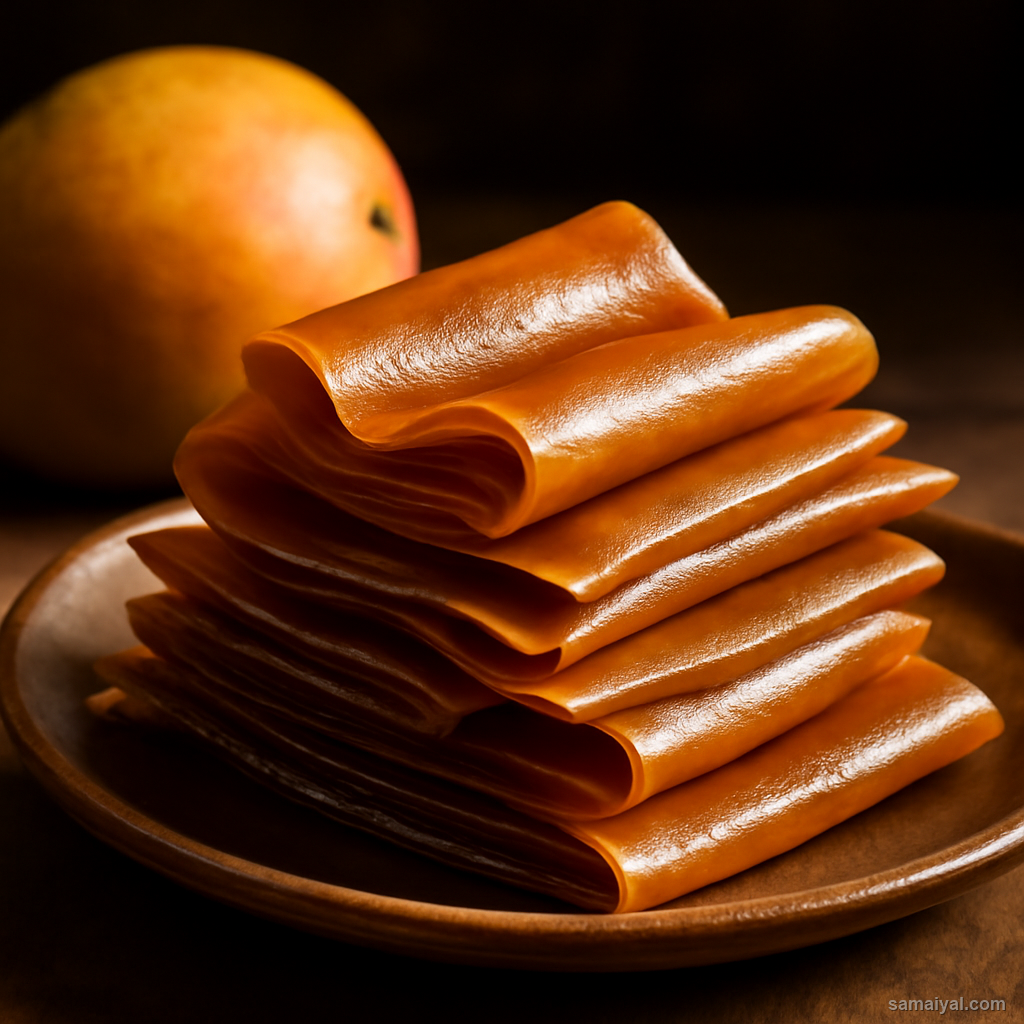
Ripe mango pulp mixed with sugar and dried in the sun into thin, flexible, intensely mango-flavoured sheets — the traditional preserved mango preparation of Rajasthan and UP made when Alphonso, Dashehari or Langra mangoes are at their peak.
Peel and cut the mangoes: Peel the ripe mangoes. Cut the flesh away from the seed. Put all the mango flesh into a blender.
Blend to a completely smooth purée: Blend for 2 to 3 minutes until a perfectly smooth, silky purée with no fibres or lumps.
Taste and add sugar: Taste the purée. Add sugar only if the mangoes are not perfectly sweet on their own. Add cardamom, black pepper and a pinch of salt. Blend again for 30 seconds to incorporate.
Choose a drying surface: Spread a sheet of plastic wrap or greased foil on a flat tray or baking sheet. The smooth surface is essential — the aam papad must peel off cleanly after drying.
Pour and spread thin: Pour the mango purée onto the prepared surface. Using the back of a spoon or spatula, spread into a very thin, even layer — about 3 to 4 mm thick. Thinner layers dry faster and are more flexible; thicker layers take longer.
Sun-dry: Place the tray in direct, strong sunlight. Cover with a thin muslin cloth to prevent insects. Leave for 2 to 3 days (in strong summer sun — more days in weaker sun).
Alternatively dry in an oven: At the lowest oven temperature (about 50 to 60°C) for 8 to 10 hours with the door slightly ajar.
Check doneness: The aam papad is ready when it peels off the surface cleanly without tearing and feels firm, dry and flexible — like thick leather. If it sticks or tears, dry for another day.
Peel off the surface: Gently peel the dried mango sheet from the plastic or foil. It should come off in one piece.
Cut into pieces: Cut with scissors into rectangles or strips. Roll into cylinders if desired (the traditional presentation). Dust with powdered sugar if storing.
Note: Aam Papad (aam = mango, papad = a thin dried preparation) is the traditional sun-dried mango preserve of Rajasthan, UP and Gujarat — made during the peak mango season (May to July) specifically to enjoy mango throughout the year. In the days before commercial preservation, sun-drying was the primary method of preserving the excess mango harvest. The Rajasthani and UP versions tend to be spiced with cardamom and black pepper which distinguishes them from the plainer Gujarat version.
⭐ Featured
Mumbai's beloved mashed vegetable curry served on butter-toasted soft buns — street food gold.

Fluffy steamed chickpea flour cake from Gujarat — light, spongy, tangy and totally addictive.

Mumbai's vegetarian burger — spiced potato dumpling in a fried batter, served in a...
 ⭐ Featured
Crispy golden pastry filled with spiced potatoes and peas — India's most loved snack,...
Comments & Tips
Be the first to share your experience with this recipe!
Leave a Comment