 ⭐ Featured
Pav Bhaji
Mumbai's beloved mashed vegetable curry served on butter-toasted soft buns — street food gold.
Tribal/village Tamil Nadu recipe — Sprouted moong sundal — raw, crunchy and iron-rich temple festival offering.
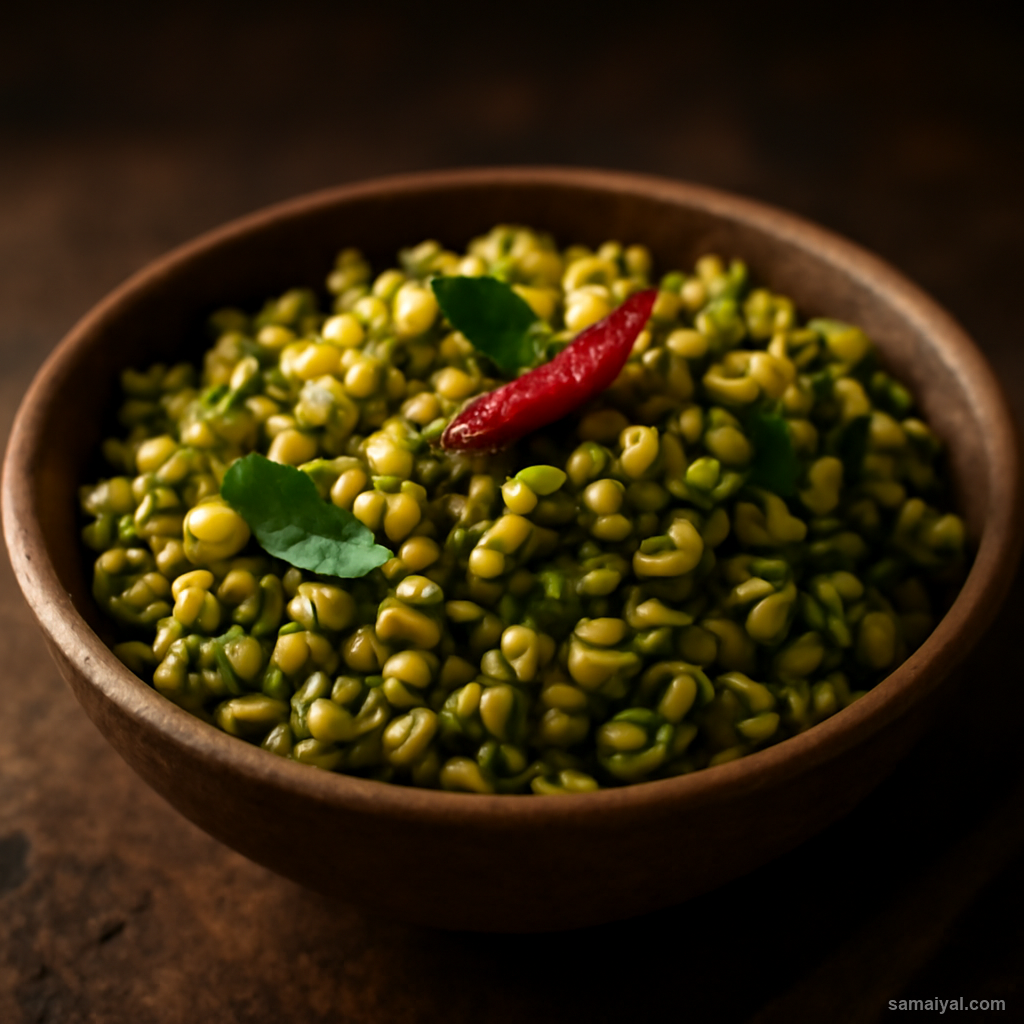
About Pasi Payaru Sundal: Pasi Payaru Sundal is the sprouted moong sundal — raw, crunchy and iron-rich temple festival offering. Combines "pasi payaru" (Tamil for green moong/whole mung bean) with "sundal" (steamed-and-tempered legume preparation). During Navaratri (9 nights of goddess worship), sundal is the iconic prasadam — different legumes prepared each day. Sprouted moong sundal is the most nutritious version — sprouting dramatically increases nutrient bioavailability.
Note on source: The original recipe instructions were template-generated boilerplate. This rewrite provides correct technique. Sundal is sprouted (or boiled) legumes tempered with mustard seeds, curry leaves, and finished with grated coconut.
Gather ingredients: 1.5 cups whole moong (whole green mung beans, "pasi payaru" — whole bean with green skin intact is essential for sprouting; split or skinned moong does NOT sprout), 1 tsp mustard seeds, 1 tsp urad dal, 2 dried red chillies, 1/4 tsp asafoetida, 1 sprig fresh curry leaves, 2 tsp coconut oil (most authentic; sesame oil works as substitute), 3 tbsp freshly grated coconut, 1 tsp fresh lemon juice, 3/4 tsp salt.
Sprout the moong (soak step): Wash whole moong in 2-3 changes of cold water. Cover with plenty of cold water (the beans triple in size). Soak 8 hours minimum, preferably overnight. Drain in a sieve — beans should look plump and slightly heavier.
Sprout the moong (sprouting step): Take a clean cotton or muslin cloth. Place drained moong in the centre. Tie loosely into a bundle (allowing room to expand). Place in a wide bowl and cover loosely with a plate (allowing air circulation). Keep at room temperature (20-25°C) for 12 hours. Untie briefly every 6 hours, sprinkle with a few drops of cold water to re-moisten, then re-tie. Properly sprouted moong has small tails (1-3mm long); beans look plump and green skins start splitting slightly. Good sprouts smell fresh and slightly nutty; bad sprouts smell sour or off — discard.
Choose your cook level: Eat raw (most nutritious; skip steaming). Briefly steam 5-7 minutes (slight softening, more digestible while preserving most living enzyme content). Or fully cook (boil in salted water for 10-15 minutes — destroys some sprouting nutrition but produces traditional sundal texture). All three are valid.
Do the tempering: Heat 2 tsp coconut oil in a wide pan over medium-high heat for 30 seconds until shimmering. Add 1 tsp mustard seeds — they pop within 5-10 seconds (keep splatter screen handy). Wait for popping to slow (about 20 seconds). Add 1 tsp urad dal and stir for 30 seconds — turns golden brown. Add the snapped dried red chillies, asafoetida, and curry leaves. Stir for 5 seconds.
Add the sprouts: Add the prepared sprouts (raw, briefly steamed, or fully cooked) to the pan. Stir to integrate with the tempering. Stir 2 minutes on medium heat — sprouts warm through and absorb tempering aromatics. For raw or briefly-steamed sprouts, longer cooking destroys living enzyme content. For fully cooked sundal, continue cooking 5 more minutes.
Finish with salt, coconut, and lemon: Sprinkle in salt to taste — about 3/4 tsp. Add 3 tbsp grated coconut and stir to combine. Switch off heat. Squeeze in 1 tsp fresh lemon juice. Adding off-heat preserves bright fresh aroma. Stir gently to distribute.
Final taste: Should taste fresh and complex — slightly sweet sprouts, sharp mustard pungency, asafoetida warmth, mild chilli heat, fragrant curry leaves, sweet grated coconut, bright lemon. The flavour is fresh and assertive.
Serve immediately: At peak within 15 minutes of cooking. For traditional Tamil presentation, fold a banana leaf into a small cone and fill with sundal. At Navaratri pujas, sundal is offered to the goddess and distributed as prasadam (each devotee receives about 1/4 cup). Excellent at Tamil meals, evening tea time, or as snack.
For pregnant women, athletes, gym-goers: Sprouted moong is exceptionally nutritious — high protein, iron, folate. Highly recommended during pregnancy. Modern athletes recognise sprouted moong as exceptional pre-workout or post-workout protein source — high biological availability of nutrients.
For diabetes management: Sprouted moong has lower glycemic index than cooked moong. Excellent for blood sugar management. Traditionally considered cooling for the body — appropriate for hot weather and inflammation.
Variations: Add 1 tsp grated ginger to the tempering for warming version. Or 1 tbsp finely chopped fresh coriander as additional garnish. For more substantial sundal, add 1/2 cup grated cucumber or 1/4 cup chopped tomato along with the coconut — produces a salad-style sundal.
A scientific note: Sprouting dramatically transforms legumes — increases vitamin C content (raw moong has almost none; sprouted has substantial amounts), increases B vitamins, increases protein bioavailability, and produces phytate reductions that improve mineral absorption. The Navaratri sundal tradition reflects deep Tamil understanding of legume nutrition — different legumes provide different amino acids; eating variety across the 9 days ensures balanced nutrition.
Leftover storage: Fridge for 1-2 days. Freshness fades after the first day; sundal is ideally same-day food. The lemon juice prevents the moong from going stale quickly.
⭐ Featured
Mumbai's beloved mashed vegetable curry served on butter-toasted soft buns — street food gold.

Fluffy steamed chickpea flour cake from Gujarat — light, spongy, tangy and totally addictive.

Mumbai's vegetarian burger — spiced potato dumpling in a fried batter, served in a...
 ⭐ Featured
Crispy golden pastry filled with spiced potatoes and peas — India's most loved snack,...
Comments & Tips
Be the first to share your experience with this recipe!
Leave a Comment