 ⭐ Featured
Gulab Jamun
Soft milk-solid dumplings soaked in fragrant rose sugar syrup — India's most beloved sweet.
Fox nuts slow-cooked in saffron-sweetened milk — Bihar's most celebrated and distinctive dessert
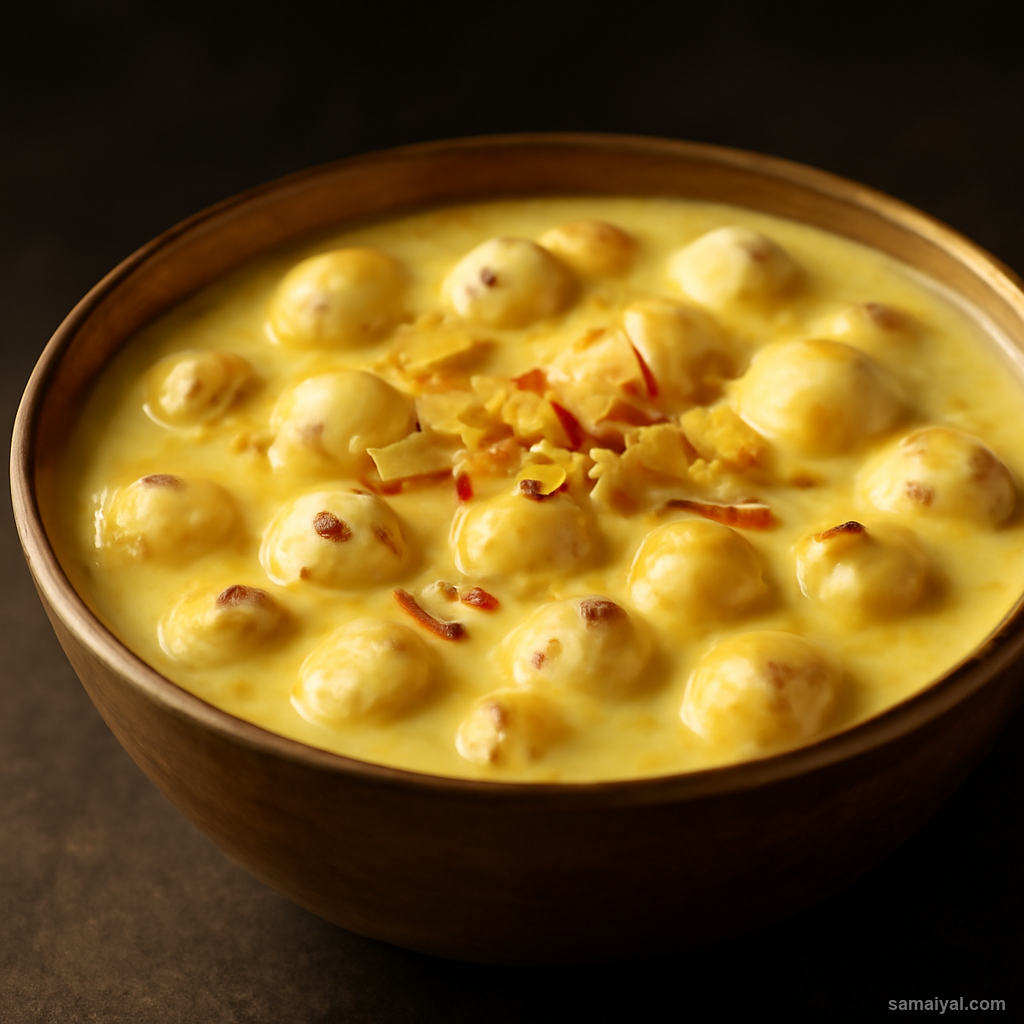
About Makhana Kheer: Makhana Kheer is Bihar's greatest gift to Indian desserts. Makhana (lotus seeds) are cultivated in the ponds and wetlands of the Mithila region, making them genuinely a regional speciality. The combination of crispy fried makhana and saffron-cardamom sweetened milk is unlike any other kheer — both familiar and uniquely Bihari. It is the showpiece dessert at Mithila weddings, religious festivals, and special meals.
Understand makhana: Makhana (also called fox nuts or lotus seeds) are the puffed seeds of the prickly water lily plant. They look like white-cream popcorn, are surprisingly light, and have a unique chewy-crispy texture. Bihar (specifically Mithila region) is the world capital of makhana production — accounting for about 90% of global supply.
Choose quality makhana: Use 1 cup of makhana. Look for uniform, large, white pieces with no broken bits. Premium-grade makhana is essential — small pieces or yellowed makhana indicates lower quality.
The makhana freshness check: Fresh makhana should be uniformly white-cream and feel light. Old makhana may have yellowed slightly and feel slightly soft — discard if so.
Prepare the saffron: Take a generous pinch of saffron threads (about 8-10 strands). Place in 2 tbsp warm milk taken from the 1 litre. Let soak for 15 minutes. The strands will release their colour and aroma.
Measure the cardamom: Use 1/4 tsp cardamom powder. Freshly ground from whole pods is dramatically more aromatic than pre-ground.
Prepare the cashews and raisins: Use 2 tbsp cashews and 2 tbsp raisins. Roughly chop the cashews into small pieces.
Use a heavy-bottomed pot: Use a heavy-bottomed pot or non-stick saucepan. Thin pots will scorch the milk on the bottom — once burned, the entire kheer is unsalvageable.
Use full-fat whole milk: Use 1 litre (about 4 cups) of full-fat whole milk. Skimmed or low-fat milk produces a thin watery kheer without the rounded richness this dessert needs.
Fry the cashews and raisins: Heat 1 tbsp ghee in a small pan over medium heat. Add the chopped cashews. Stir for 30 seconds until lightly golden. Add the raisins. They will plump within 15 seconds. Lift everything out with a slotted spoon. Set aside for garnishing.
The critical makhana frying: Add the remaining 1 tbsp ghee to the pan. Heat over medium heat. Add the makhana to the warm ghee. Stir continuously for 5 minutes — the makhana will gradually turn from soft-puffy to crispy-golden. Each piece should feel firm and crisp when you press one.
The doneness signs: Properly fried makhana is uniformly light golden, crispy when bitten, and has a deeper toasted aroma. The crispy texture is essential — without it, the makhana goes mushy in the kheer.
Why fry matters: Untoasted makhana absorbs milk and turns into mushy lumps. Pre-fried makhana retains some crispness even after cooking in milk — providing the textural contrast that defines this kheer.
Let cool slightly: Tip onto a plate and cool for 5 minutes.
Crush half: Take half of the fried makhana and crush coarsely between your fingers or with a rolling pin. The crushed pieces will integrate into the kheer and thicken it; the whole pieces will provide texture variety.
Keep both pieces ready: Keep the crushed makhana and whole makhana separate for the moment.
Boil the milk: Pour the remaining milk (about 950ml after taking 2 tbsp for saffron) into the heavy pot. Place over medium heat. Watch carefully — milk loves to overflow. As soon as milk approaches a boil, reduce heat to low.
Add both crushed and whole makhana: Add both the crushed makhana and the whole makhana to the simmering milk. Stir gently.
The critical slow simmer: Cook on very low heat for 25 minutes, stirring every 5 minutes with a wooden spoon. This slow cooking is what produces the thick creamy texture.
Watch the texture: After 15 minutes, the milk will have thickened slightly and the crushed makhana will have integrated into a creamy base. After 25 minutes, the consistency should be moderately thick — pourable but with body.
Add sugar: Add 1/4 cup sugar. Stir until fully dissolved — about 1 minute. The kheer will thin slightly as sugar dissolves; continue cooking 2-3 more minutes to thicken back up.
Add saffron and cardamom: Pour in the saffron-infused milk along with the threads. Sprinkle in the 1/4 tsp cardamom powder. Stir gently. The kheer will turn a beautiful pale golden orange.
Final cook: Simmer for 5 more minutes on low heat, stirring once or twice. The flavours will meld and the colour will deepen.
Final taste check: The kheer should taste richly creamy, sweet but not cloying, with clear saffron and cardamom notes. The makhana should provide chewy textural contrast — some pieces still firm, others integrated into the creamy base.
Garnish: Sprinkle the fried cashews and raisins generously over the top. For an extra-festive presentation, scatter a few extra saffron threads.
Serve warm or chilled: Both are excellent. The Bihari tradition is to serve warm at religious offerings (puja prasad style); for festive home meals or summer days, chill in the fridge for 2 hours and serve cold.
Cold version: Cold makhana kheer thickens further into a creamy custard-like texture. Some Bihari homes prefer it cold for the texture and the way the flavours integrate.
The Mithila tradition: Makhana kheer is the prestige dessert of the Mithila region — served at all major celebrations, weddings, and religious gatherings. It is also offered as prasad at Mithila temples.
For festive occasions: Serve as the dessert at the end of a Bihari festive meal. The kheer pairs particularly well after rich meat dishes — the cooling sweet milk balances the rich gravy.
For everyday eating: Even on regular days, makhana kheer makes an excellent sweet treat. The makhana provides protein (about 9g per cup), making this dessert more nutritious than most.
A cultural and economic note: Mithila region of Bihar produces about 90% of the world's makhana. The cultivation is labour-intensive — farmers wade waist-deep in pond water to harvest the lotus seeds, which are then sun-dried, roasted, and pressure-popped (a centuries-old technique). Eating makhana kheer supports this traditional industry and connects you to Mithila agricultural heritage. Modern Mithila farmers are increasingly recognised for this regional specialty, and makhana has become a celebrated Indian export.
Leftover storage: Stored in the fridge in an airtight container, makhana kheer keeps for 3-4 days. The texture firms up considerably overnight as the makhana continues absorbing milk. Refresh by stirring in 2-3 tbsp warm milk before reheating gently on the stovetop.
⭐ Featured
Soft milk-solid dumplings soaked in fragrant rose sugar syrup — India's most beloved sweet.

Slow-cooked rice pudding with cardamom, saffron, nuts and rose water — pure comfort in a bowl.

Slow-cooked grated carrot pudding with ghee, milk and cardamom — a winter celebration classic.

Spongy soft chenna balls cooked in light sugar syrup — the iconic Bengali sweet.
Comments & Tips
Be the first to share your experience with this recipe!
Leave a Comment