 ⭐ Featured
Gulab Jamun
Soft milk-solid dumplings soaked in fragrant rose sugar syrup — India's most beloved sweet.
A lighter, white version of the Mathura peda made with fresh khoya cooked very briefly so it stays pale — the temple prasad version offered at Bankey Bihari temple where the white peda is preferred over the golden saffron version.
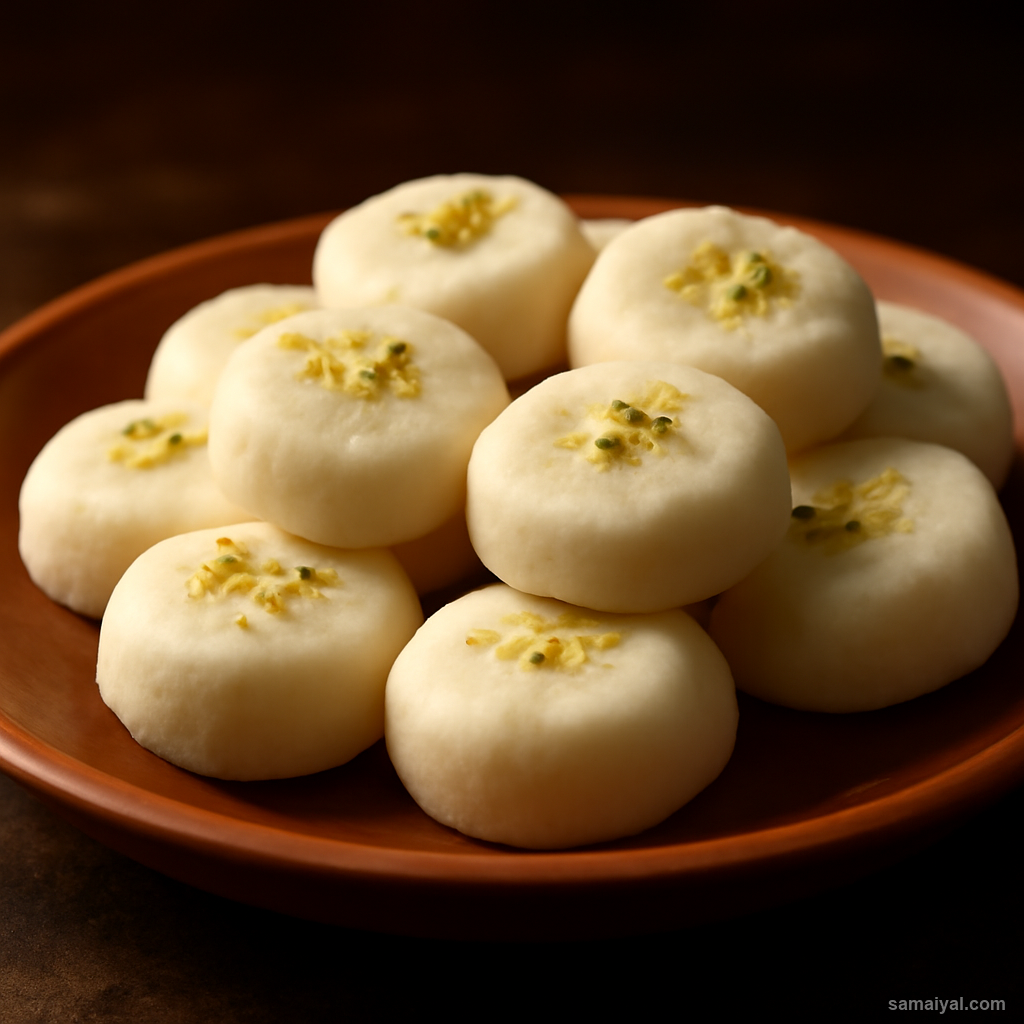
Understand the difference: The Brij/Bankey Bihari white peda is kept deliberately pale — unlike the saffron-tinted version. This requires minimal cooking of the khoya — just enough to firm it without allowing it to brown.
Gently warm the khoya: Place khoya in a wide, heavy non-stick pan. Heat on the very lowest setting possible — barely warm. Stir gently for 5 to 6 minutes. The khoya should become smooth and very slightly looser but must not change colour at all.
Remove from heat: Take off the heat. The khoya should still look white.
Add powdered sugar: Add powdered sugar to the warm khoya. Mix vigorously for 2 minutes until fully incorporated and smooth.
Add cardamom and white pepper: Add cardamom powder and a tiny pinch of white pepper. The white pepper is a subtle spice — barely detectable but adds depth. Mix.
Test the consistency: Press a small amount between fingers — it should hold its shape firmly without sticking. If too soft, return to the very lowest heat for 2 more minutes. If too firm, add 1 tsp warm milk.
Shape the pedas: Grease palms lightly with ghee. Take a tablespoon of mixture. Roll between palms into a smooth ball then flatten into a disc about 4 cm wide and 1 cm thick. The surface must be completely smooth.
Decorate: Press a thin pistachio sliver onto the centre of each peda. If using silver leaf, press it gently over the surface.
Cool and firm: Place on a plate. Cool at room temperature 20 to 30 minutes until fully firm.
Serve or offer as prasad: White peda is offered at temples and distributed to devotees as prasad.
Note: The Brij region (Mathura-Vrindavan-Agra belt) is the heart of Krishna devotion and the food culture of this region is deeply connected to temple offerings. The white peda — without saffron or strong flavouring — is preferred at certain temples as it represents purity. Vrindavan has hundreds of small peda makers operating near the temples, and the freshness of the peda (made the same morning) is considered essential for prasad quality.
⭐ Featured
Soft milk-solid dumplings soaked in fragrant rose sugar syrup — India's most beloved sweet.

Slow-cooked rice pudding with cardamom, saffron, nuts and rose water — pure comfort in a bowl.

Slow-cooked grated carrot pudding with ghee, milk and cardamom — a winter celebration classic.

Spongy soft chenna balls cooked in light sugar syrup — the iconic Bengali sweet.
Comments & Tips
Be the first to share your experience with this recipe!
Leave a Comment