 ⭐ Featured
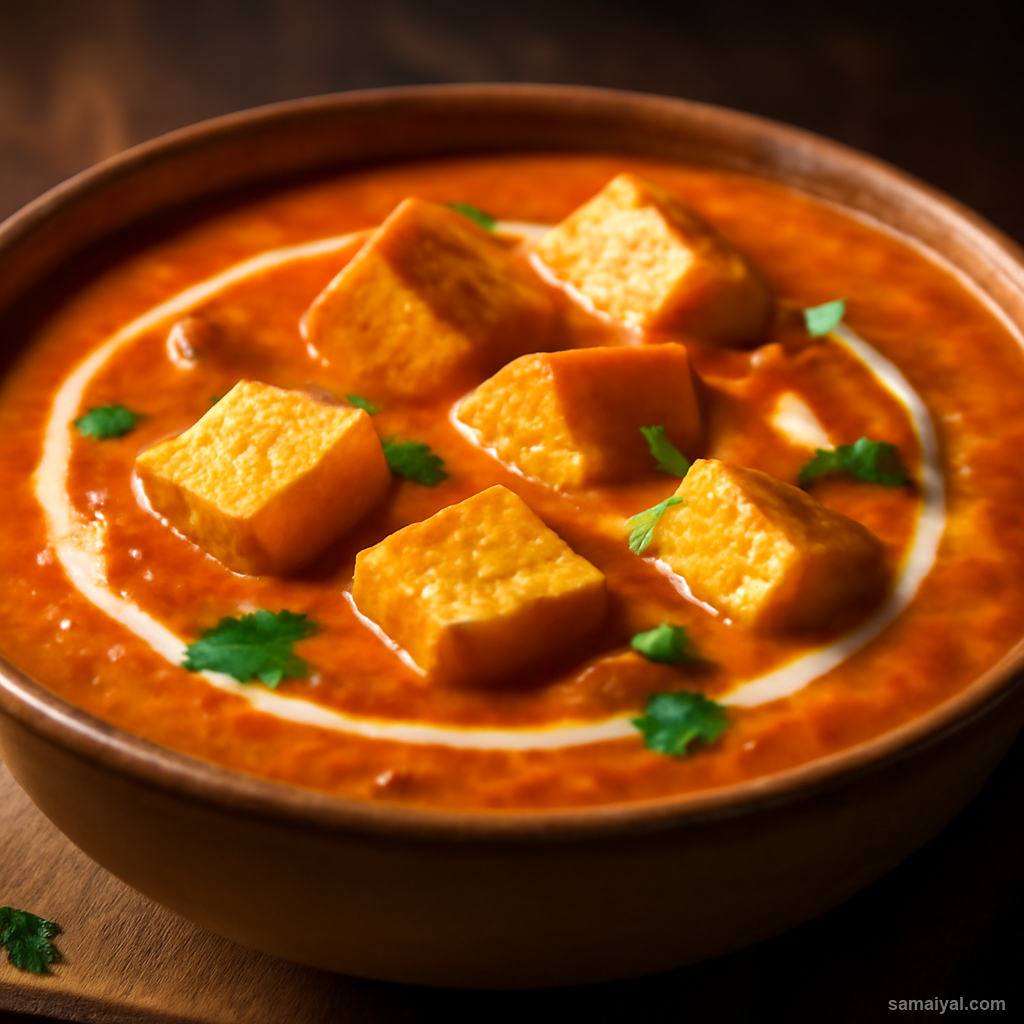
Butter Paneer Masala
Creamy tomato-based curry with soft paneer cubes — the all-time favourite of Indian...
Tangy yogurt and gram flour curry with fried pakodis — the everyday Bihari comfort curry

About Bihari Kadhi: Bihari kadhi is thinner and slightly more sour than Punjabi kadhi. Served with plain rice it is the definitive weekday lunch — the kind of meal Bihari families eat regularly throughout the year. The dish balances tangy yogurt, savoury besan, sweet onion fritters (pakodis), and a fragrant tempering — combining many flavours and textures into a single comforting bowl.
Understand the components: Three preparations are needed — the yogurt-besan kadhi (the gravy), the pakodis (besan fritters), and the tempering (tadka). Each is straightforward, but timing matters: the pakodis need to soak in the kadhi to soften, and the tempering goes on at the very end.
START WITH THE PAKODIS:
Mix the pakodi batter: In a wide bowl combine 1/2 cup besan (gram flour), 1 finely chopped small onion (about 1/4 cup), 1 finely chopped green chilli, salt to taste (about 1/4 tsp), and 1/4 tsp baking soda (optional, for fluffier pakodis).
Whisk the batter: Add 4-5 tbsp cold water gradually, whisking with a fork. The batter should be thick — like thick pancake batter, holding its shape on a spoon but pourable.
Let the batter rest: Cover and rest for 5 minutes.
Heat the oil: Pour neutral cooking oil into a deep heavy pan to a depth of at least 4cm. Place over medium heat.
Test the oil temperature: Drop a tiny droplet of batter into the oil. It should sink briefly, rise to surface within 5 seconds, and start sizzling.
Fry the pakodis: Drop spoonfuls (about 2 tsp each) of batter into the hot oil. Fry 4-5 at a time. Cook for 3-4 minutes, turning once, until uniformly golden brown.
Drain on paper: Lift out with a slotted spoon and drain on kitchen paper. Set aside.
NOW MAKE THE KADHI:
Prepare the yogurt-besan mixture: In a large bowl combine 1 cup whisked yogurt, 3 tbsp besan, and 4 cups water. Whisk thoroughly with a fork or whisk for 2 minutes — the mixture must be completely smooth, no besan lumps. Lumps will not dissolve later and produce ugly white specks in the kadhi.
The critical smoothness: Use a fine-mesh sieve to strain the mixture if you spot any lumps. Smooth kadhi is the foundation of good kadhi.
Add dry spices: Add 1 tsp turmeric powder, 1 tsp red chilli powder, and salt to taste — about 3/4 tsp. Whisk to combine.
Use a heavy pot: Use a heavy-bottomed pot or kadhai. The kadhi simmers for a while; thin pots scorch the bottom.
The critical low-heat cooking: Pour the yogurt-besan mixture into the pot. Place over medium heat. Stir constantly with a wooden spoon as it heats. Bring slowly to a boil — about 5-7 minutes of constant stirring.
Why constant stirring: Yogurt curdles when heated rapidly. Stirring prevents the yogurt from sitting in one spot too long, which is what causes curdling. Once the kadhi reaches a boil, it stops curdling.
The boiling point: Once the kadhi is bubbling, stop stirring constantly. Reduce heat to low.
The long simmer: Simmer on low heat for 20 minutes, stirring every 2-3 minutes. The kadhi will gradually thicken slightly and the besan will fully cook through (raw besan is unpleasant).
Watch the consistency: After 20 minutes, the kadhi should be slightly thicker than at the start — like thin soup, definitely not a thick gravy. Bihari kadhi is thinner than Punjabi kadhi.
Add the pakodis: Add the fried pakodis to the simmering kadhi. They will sink initially, then float as they absorb liquid.
The critical pakodi soak: Cook for 5 more minutes after adding pakodis. The pakodis will absorb the kadhi and become soft and saturated with flavour.
Adjust the consistency: After the pakodis go in, the kadhi may thicken (the pakodis absorb water). Add 1/2 cup hot water if too thick.
NOW MAKE THE TEMPERING:
The critical tempering: Make the tempering just before serving. Heat 1 tbsp ghee in a small pan over medium-high heat. Heat for 30 seconds until very hot.
Add cumin and mustard seeds: Add 1 tsp whole cumin seeds and 1 tsp mustard seeds. Within 5-10 seconds the mustard will start popping vigorously and the cumin will turn golden.
Add dried chillies and hing: Add 2 dried red chillies (broken in half) and a pinch of asafoetida (hing). Fry for 30 seconds.
The critical pour-over: Pour the sizzling tempering over the kadhi. The kadhi will hiss dramatically and the kitchen will fill with the aroma.
Do not stir vigorously: Stir gently to distribute the tempering through the kadhi.
Let rest briefly: Switch off the heat. Let rest for 5 minutes — this lets the tempering flavours fully infuse.
Final taste check: The kadhi should hit you with multiple flavours — tangy creamy yogurt, savoury besan, sweet pakodis, warming cumin, sharp mustard, gentle chilli, savoury hing. Adjust salt to your liking.
Garnish: Sprinkle 2 tbsp finely chopped fresh coriander over the top.
Serve with plain rice: The traditional Bihari pairing is plain steamed rice. The thin kadhi is meant to be poured generously over rice — the rice absorbs the kadhi and the pakodis become the protein-rich bites.
Serve with rotis: For a different feel, kadhi also pairs with rotis. The bread is dipped into the kadhi and used to scoop pakodis.
For a complete meal: Pair with a small portion of pickle and a vegetable side dish. The kadhi is filling enough to be the main dish in a vegetarian Bihari meal.
Serving as comfort food: Kadhi is the ultimate Bihari comfort food — eaten when feeling unwell, when wanting something light, or simply when wanting something familiar. Many Bihari families have kadhi at least once a week.
For invalids: The probiotic yogurt, easily digestible besan, and gentle spicing make kadhi suitable for those recovering from illness.
A cultural note: Kadhi exists across many regional Indian cuisines — Punjabi, Gujarati, Sindhi, Maharashtrian — each with its own personality. The Bihari version is distinguished by its thinner consistency, slightly more pronounced sour character, and the cumin-mustard tempering. Tasting the regional variations is one of the great pleasures of exploring Indian regional cooking.
Leftover storage: Stored in the fridge in an airtight container, kadhi keeps for 3-4 days and tastes even better the next day after the flavours have deepened. The pakodis absorb more kadhi overnight, becoming richer. Reheat gently on the stovetop with 1/4 cup warm water if too thick — never microwave at high power, which can curdle the yogurt.
⭐ Featured
Creamy tomato-based curry with soft paneer cubes — the all-time favourite of Indian...
 ⭐ Featured
Velvety spinach curry with golden-fried paneer — nutritious, vibrant and absolutely delicious.

Bold, tangy chickpea curry packed with spices — a street food staple that works as a main dish.

Dry-spiced potatoes and cauliflower — simple, aromatic, and endlessly satisfying.
Comments & Tips
Be the first to share your experience with this recipe!
Leave a Comment