 ⭐ Featured
Gulab Jamun
Soft milk-solid dumplings soaked in fragrant rose sugar syrup — India's most beloved sweet.
Roasted gram flour halwa with ghee and sugar — the Bihari wedding dessert
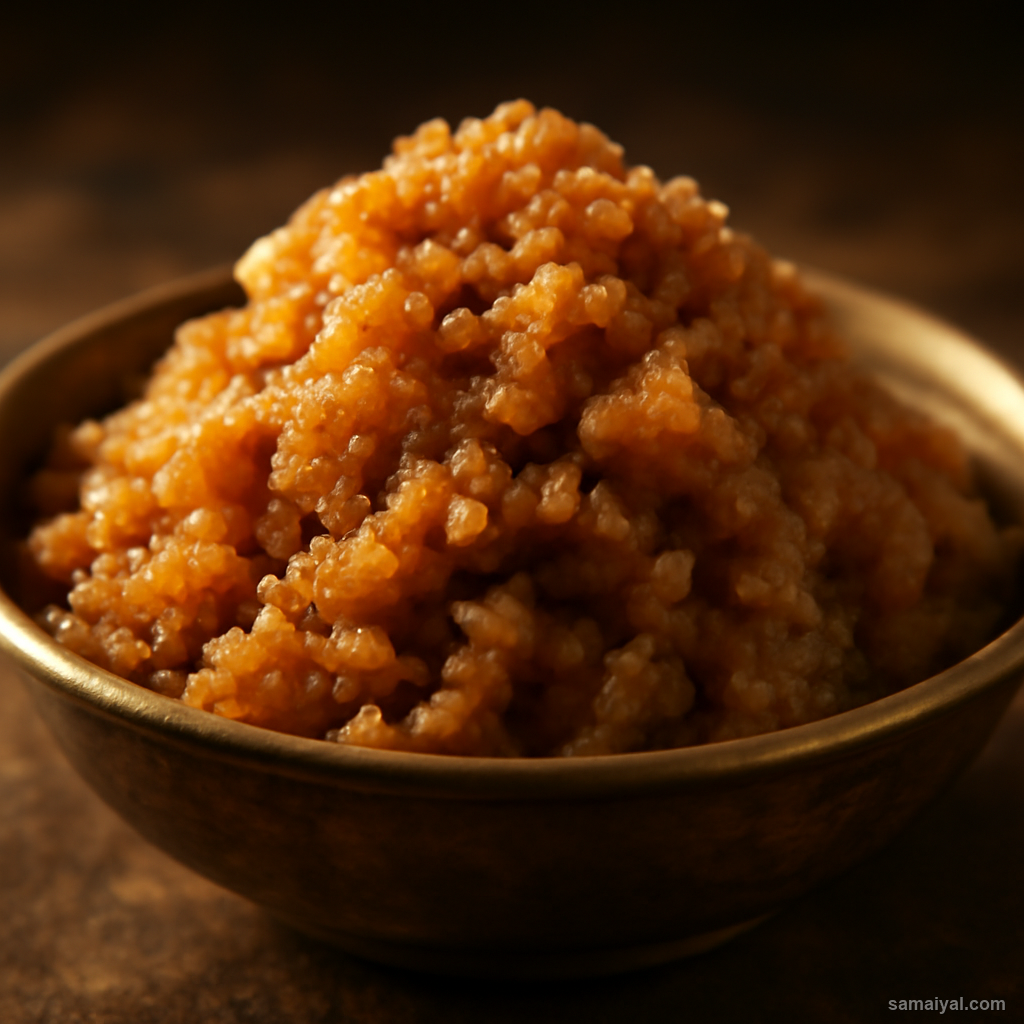
About Bihari Chana Dal Halwa: Despite the name, this halwa is made from besan (chickpea flour, also called gram flour) rather than whole chana dal. It is the showstopper Bihari wedding dessert — dense, rich and deeply nutty, with a meltingly soft texture distinct from the more granular suji halwa. Made with generous ghee, it is reserved for weddings, big festivals and special celebrations.
Use coarse besan if available: Two grades of besan exist — fine and coarse (sometimes labelled ladoo besan). Coarse besan gives a more granular, melt-in-mouth texture. Fine besan also works but produces a denser halwa. Use 1 cup of either.
Sift the besan: Sift the besan into a wide bowl through a sieve to remove any lumps and aerate it. Sifted besan roasts more evenly.
Prepare the cashews and raisins: Take 2 tbsp cashews. Chop roughly into small pieces. Take 2 tbsp raisins (kishmish). Set aside in separate bowls.
Warm the water: Heat 2 cups of water in a separate small saucepan and keep it on the lowest possible heat — you want it warm but not boiling when added later. Adding cold water to hot besan creates lumps and the halwa never recovers.
Warm the ghee: Place a heavy-bottomed kadhai or non-stick pan over medium-low heat. Add 4 tbsp ghee. Heat for 30 seconds until fully melted and shimmering. Do not let it brown.
Fry the cashews and raisins first: Add the chopped cashews. Stir for 30 seconds until they turn golden. Add the raisins — they will plump up within 15 seconds and start to look glossy. Lift them all out with a slotted spoon and set aside.
Add the besan: Tip the sifted besan into the same ghee. Stir vigorously with a wooden spoon to combine. The mixture will look like wet sand at first.
The critical roasting: Reduce heat to low — low heat is essential. Stir continuously with the wooden spoon. The mixture goes through several stages over 12-15 minutes. Be patient — high heat ruins the besan and produces a raw aftertaste.
Watch the colour change: At 5 minutes the mixture will look pale and slightly wet. At 8 minutes the besan will start feeling looser and lighter, the colour will deepen subtly, and the aroma will turn nutty. At 12 minutes it should be a rich golden tan colour and smell like toasted nuts.
Do the smell and texture test: When the besan is properly roasted, the kitchen will smell deeply nutty and the mixture will turn looser, almost flowing — the besan grains release their fat. This is the signal it is done.
Add the warm water carefully: Take the pan off the heat for safety — water added to hot besan in a hot pan splatters dangerously. Pour the warm water in slowly, stirring vigorously the whole time. The mixture will hiss, steam and threaten to clump. Keep stirring fast — your wooden spoon is your best friend here.
Return to heat and stir out lumps: Return the pan to medium heat. Stir continuously for 2-3 minutes until any small lumps have dissolved completely. The mixture should now look like a thick, smooth porridge.
Add the sugar: Add 3/4 cup sugar. Stir well to combine. The halwa will thin slightly as the sugar melts — that is normal. Continue cooking on medium heat for 5-7 minutes, stirring constantly.
Watch for the pull-away test: As the halwa cooks, you will notice it gradually pulling away from the sides of the pan as you stir. The ghee will start re-emerging at the edges, glossy and golden. This is the signal that the halwa is ready — it should leave a clean trail when a spoon is dragged through, with ghee visibly separating.
Add cardamom: Sprinkle 1/4 tsp cardamom powder over the halwa. Stir to distribute. Cardamom goes in at the end so the aroma is preserved — adding it earlier dulls the fragrance.
Add the fried garnishes: Add the reserved cashews and raisins back to the halwa. Reserve a few for the final garnish. Stir gently to combine.
Final taste check: Dip a clean spoon and taste. The halwa should taste deeply nutty, sweet but not cloying, with a clear cardamom note. Adjust by stirring in 1 tbsp more sugar if you prefer sweeter, or simmering 1 minute more if too soft.
Serve with elegance: Spoon onto a serving plate or into individual bowls. Garnish with the reserved cashews and raisins on top. Bihari Chana Dal Halwa is best eaten warm — the texture is at its finest 5-10 minutes after cooking. Pair with a cup of hot tea or serve as a wedding dessert. Stored in the fridge in an airtight container, it keeps for 5-6 days; reheat with a small splash of milk in the microwave to restore the soft texture.
⭐ Featured
Soft milk-solid dumplings soaked in fragrant rose sugar syrup — India's most beloved sweet.

Slow-cooked rice pudding with cardamom, saffron, nuts and rose water — pure comfort in a bowl.

Slow-cooked grated carrot pudding with ghee, milk and cardamom — a winter celebration classic.

Spongy soft chenna balls cooked in light sugar syrup — the iconic Bengali sweet.
Comments & Tips
Be the first to share your experience with this recipe!
Leave a Comment