 ⭐ Featured
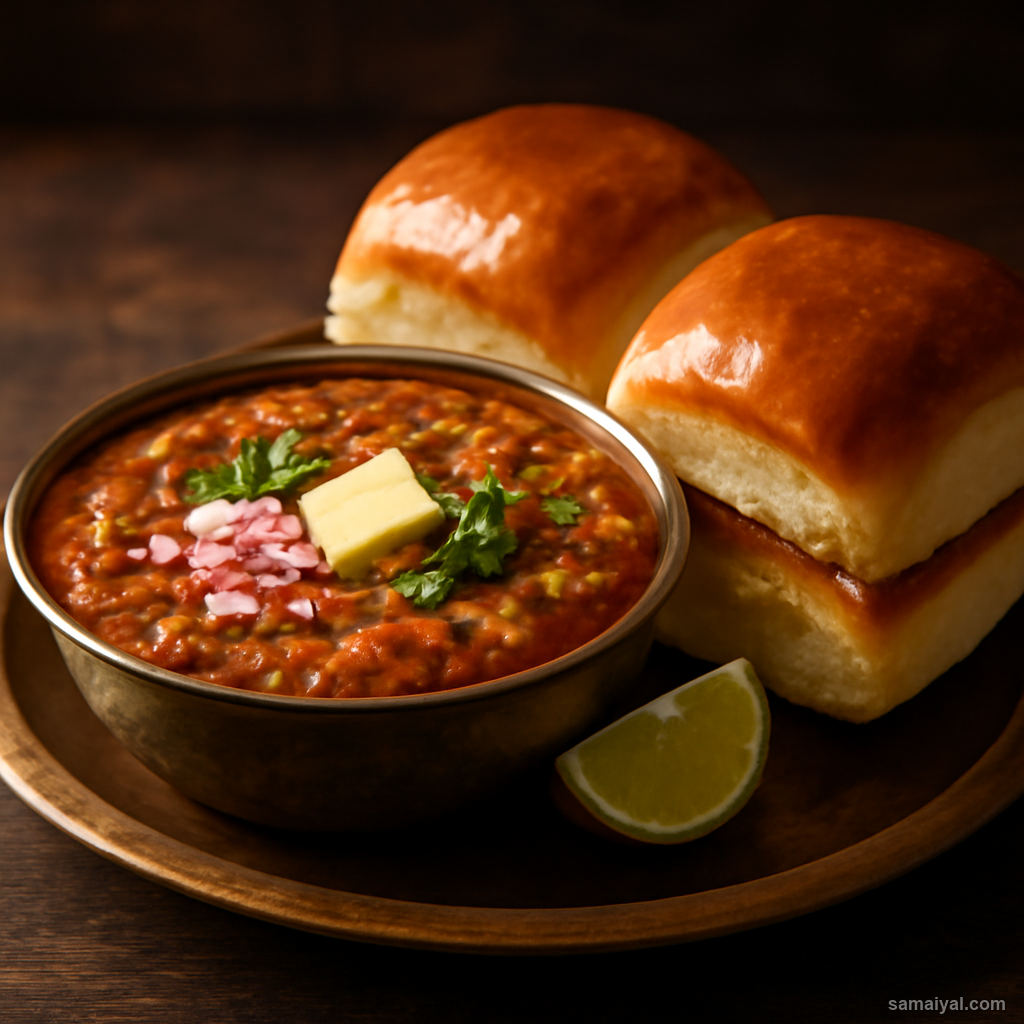
Pav Bhaji
Mumbai's beloved mashed vegetable curry served on butter-toasted soft buns — street food gold.
Sun-dried rice crackers — made in summer and fried all year round as a crispy side dish.

About Arisi Vadam: Arisi Vadam is a labour of love — made in peak Tamil Nadu summer (March-May) on a terrace, sun-dried for 2-3 days, then stored for the entire year. The dried discs are deep-fried throughout the year as crispy puffed crackers — providing instant crispy snacks alongside curd rice, sambar rice, and rasam during festive meals. Embodies traditional Tamil food preservation wisdom: turn surplus seasonal sun and rice into stable food for the year. Two-part recipe: first make and sun-dry the vadam discs in summer; second, throughout the year deep-fry the dried discs into crispy puffed snacks.
Gather ingredients: 2 cups raw rice (white parboiled rice, idli rice or any short-grain raw rice; avoid basmati — final texture is wrong), 1/4 cup whole skinless urad dal (white) — provides binding by gelling with rice during cooking, 1 tsp cumin seeds, 1/2 tsp asafoetida, 2 fresh green chillies chopped, salt to taste — about 1 tsp, neutral oil for deep frying, plus a clean white cotton or muslin cloth for sun-drying.
Soak the rice and dal: Wash rice and urad dal together in 3-4 changes of cold water. Cover with plenty of cold water and soak 4 hours. Drain in a sieve and let drip dry 5 minutes.
Grind the batter: Place soaked drained rice and urad dal in a small grinder. Add cumin seeds, asafoetida, chopped green chillies, and salt to taste. Grind 4-5 minutes until very smooth — adding 1/2 cup water gradually during grinding. The batter should be slightly thicker than dosa batter — pourable but with body. When you lift a spoon, batter should drip in a slow continuous ribbon. Batter should look completely smooth — no visible grains or lumps. Rub a tiny drop between your fingers — should feel smooth, not gritty. Cover with a cloth. Let rest 30 minutes at room temperature.
Prepare for sun-drying: Spread a clean white cotton or muslin cloth on a flat outdoor surface (the traditional choice is a freshly washed cotton sheet on a flat terrace surface). The cloth should be in direct sunlight on a flat surface (not uneven; wrinkles produce uneven drying). Start the drying process early in the morning (by 8-9 AM) to maximise sun exposure.
Drop the discs: Use a small spoon (about 1 tsp size). Drop small spoonfuls of batter onto the white cloth. Each disc should be about 4-5cm wide. Leave 2cm between each disc — they spread slightly during drying and may stick together if too close. The dropped batter naturally forms thin discs. Some traditional Tamil families use a small wooden press to make them more uniformly thin.
Drying day 1-3: Let the discs dry in direct sunlight for the first day — typically 6-8 hours of sun exposure. By evening, the discs should be partially dry — feel firm to the touch but still flexible. Bring the cloth inside if rain threatens. Wet vadams can develop mold. Let the discs continue drying in direct sunlight for the second day. By the end of day 2, the discs should be much firmer and slightly translucent. For maximum crispness, dry for one more day. By end of day 3, discs should be brittle and rock-hard.
Doneness signs: Properly dried vadam discs are uniformly thin, brittle, slightly translucent, and produce a clack when knocked together. The texture is like very thin crackers but more delicate. If still soft, continue drying — soft vadams develop mold during storage.
Alternative drying: If Tamil summer sun is not available, use a dehydrator at 60°C (140°F) for 8-10 hours, or a low oven at 60°C for 6-8 hours with the door slightly ajar. Result is similar but lacks the sun-character.
Long-term storage: Once fully dried, transfer vadams to airtight containers. They keep for 8-12 months in a cool dry place — genuinely a year-long supply from one summer's production.
Deep fry to use: Use a heavy-bottomed kadhai or deep frying pan with at least 4cm of oil depth. Heat neutral cooking oil to 180-185°C (350-365°F) — slightly hotter than typical deep frying. The high heat is essential for the puffing. Drop one or two dried vadams into the very hot oil. Within 1-2 seconds, vadam should puff dramatically — expanding to several times its original size — and turn from translucent to bright white-cream.
Flip and lift: Use a slotted spoon to turn the vadam in the oil. Cook 1-2 more seconds on the second side. Total cooking time is only 3-5 seconds. Lift out immediately. Drain on kitchen paper.
Serve immediately: Vadams are at peak crispness within 5 minutes of frying. As they cool, they soften slightly. Serve with curd rice (the classic Tamil pairing — crispy vadam provides excellent textural contrast to soft creamy curd rice). Equally classic with sambar rice or with light tangy rasam. At Tamil festive meals (Pongal, Diwali, weddings), vadams appear as the crispy element on the banana leaf.
For those without proper drying conditions: If you cannot dry properly (insufficient sun, too humid), buy commercial vadams. They are widely available at Indian groceries.
A cultural and historical note: The vadam tradition reflects centuries of Tamil food preservation wisdom. Before refrigeration, the only way to preserve seasonal abundance was through drying, fermentation, or pickling. Vadams represent the genius of the drying tradition — turning a few hours of summer sun into a year of crispy snacks. As modern lifestyles reduce summer terrace time, the tradition is at risk. The act of making vadams in summer is often a family activity — multiple women and children working together on the terrace.
Leftover storage: Properly dried vadams keep for 8-12 months in airtight containers in a cool dry place. Fried vadams are best within 30 minutes of frying. Stored fried vadams in airtight containers keep for 1 day; refresh by warming briefly in a hot oven.
⭐ Featured
Mumbai's beloved mashed vegetable curry served on butter-toasted soft buns — street food gold.

Fluffy steamed chickpea flour cake from Gujarat — light, spongy, tangy and totally addictive.

Mumbai's vegetarian burger — spiced potato dumpling in a fried batter, served in a...
 ⭐ Featured
Crispy golden pastry filled with spiced potatoes and peas — India's most loved snack,...
Comments & Tips
Be the first to share your experience with this recipe!
Leave a Comment