 ⭐ Featured
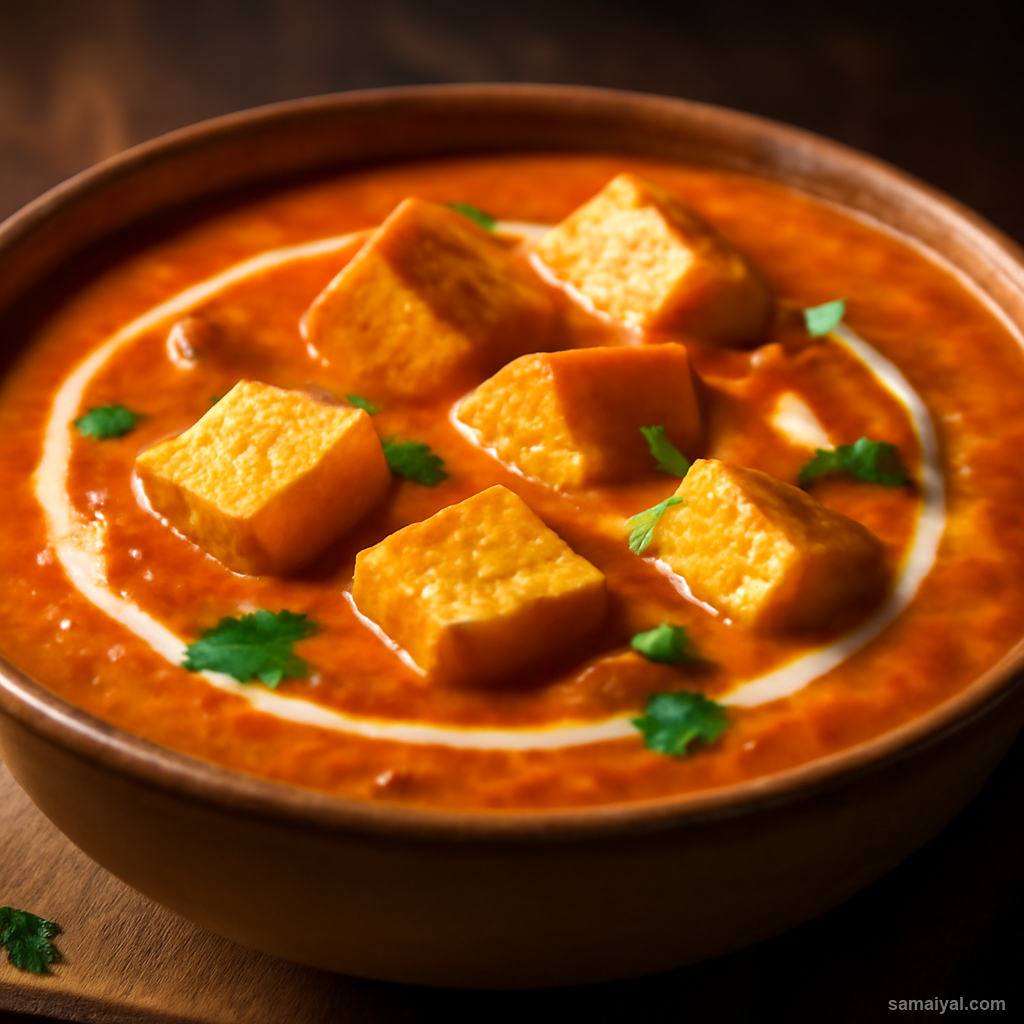
Butter Paneer Masala
Creamy tomato-based curry with soft paneer cubes — the all-time favourite of Indian...
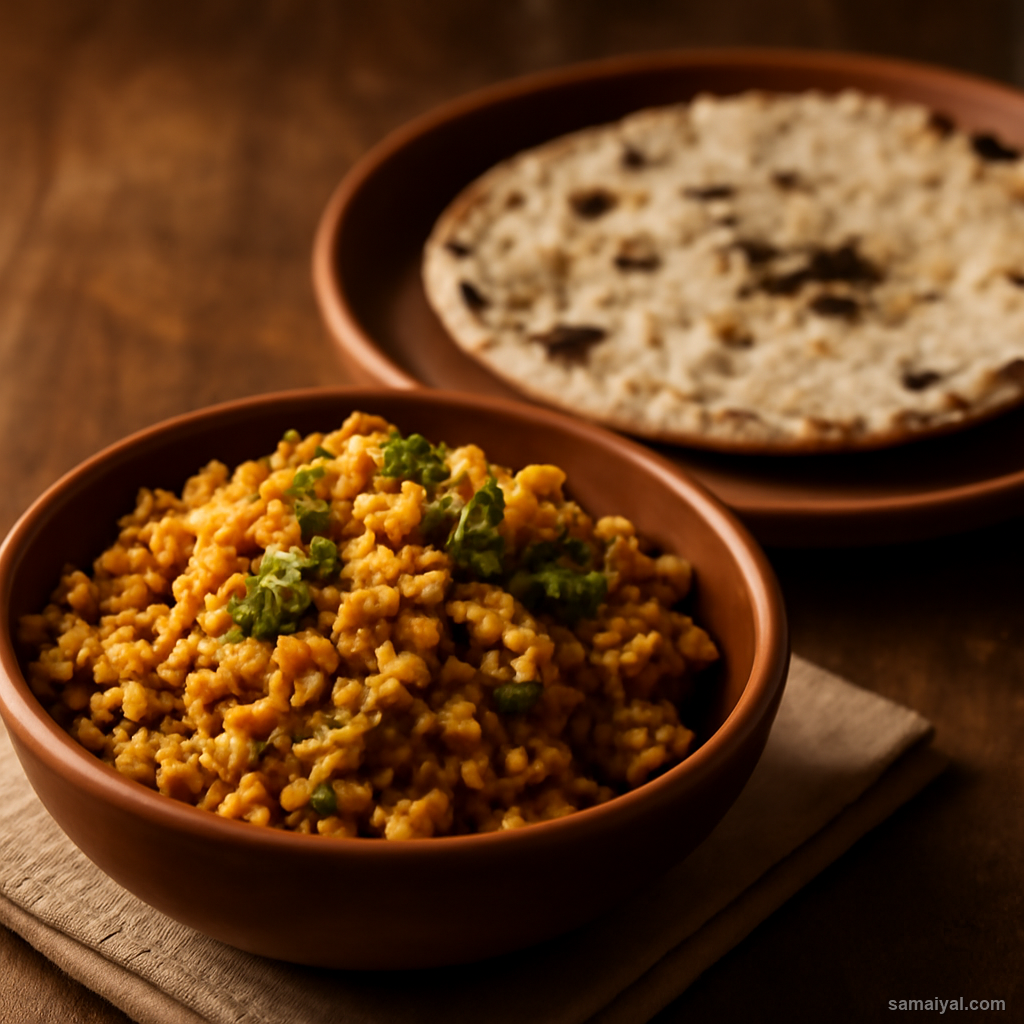
Dry, crumbly spiced gram flour dish cooked with onion and green chilli, served alongside a crispy jowar flatbread. The humble daily meal of farming communities across rural Maharashtra.
Make the bhakar dough: In a wide bowl combine 2 cups jowar flour and a pinch of salt. Add warm water one tablespoon at a time, mixing with your hands after each addition. Jowar has no gluten so the dough feels different from wheat dough — it may crumble at first but will come together with patient mixing. Add water until you get a firm but smooth dough that does not stick to your hands. Divide into 4 portions.
Shape the bhakar using the hand-pat method: Jowar dough is too fragile to roll with a pin. Place one dough portion between two pieces of plastic wrap. Using your palm, press outward from the centre in slow firm circular motions until you get a round about 15 cm in diameter and 3 to 4 mm thick. The edges will be slightly uneven — this is natural and traditional.
Cook the bhakar: Heat a flat iron griddle on high heat until very hot. Carefully peel off the plastic wrap and slide the jowar disc onto the griddle. Cook on high heat for 2 minutes until the top surface changes colour and the underside develops brown spots. Flip with a wide spatula. Cook 2 minutes more. Flip once again and press gently with a folded cloth to ensure even contact with the griddle. The bhakar is done when it has brown spots on both sides and sounds hollow when tapped. Keep warm under a cloth. Repeat for remaining portions.
Dry roast the gram flour: Place a wide dry pan on medium-low heat. Add 1 cup gram flour. Roast stirring constantly for 3 to 4 minutes until the flour turns slightly golden and smells nutty. Be very attentive — gram flour can go from golden to burnt in seconds. Remove immediately into a bowl.
Heat oil and temper: In the same pan heat 3 tbsp oil on medium heat. Add 1 tsp mustard seeds and wait for them to pop. Add cumin seeds, curry leaves and asafoetida. Stir 10 seconds.
Cook onion and chilli: Add the finely chopped onion and green chilli. Cook stirring on medium heat for 8 minutes until the onion is soft and golden. Add 1 tsp ginger paste and stir 1 minute.
Add spice powders: Turn heat to low. Add turmeric, red chilli powder and salt. Stir on low heat for 1 minute.
Add roasted gram flour: Add the dry roasted gram flour to the spiced onion. Stir quickly and thoroughly so the flour mixes with the onion and spices evenly.
Add water and cook: Pour 3/4 cup water slowly into the pan while stirring continuously. The flour will absorb the water rapidly and form a thick crumbly texture. Continue stirring on medium heat for 3 to 4 minutes until the zunka is cooked through and crumbly — it should not be wet or paste-like.
Serve: Place the zunka alongside the bhakar on a plate. Add a small piece of raw onion, a whole green chilli and optionally a small spoonful of oil or ghee on the bhakar. Eat by breaking off pieces of the bhakar and using them to scoop up the zunka.
Note: Zunka Bhakar is the meal of farmers in the Marathwada and Vidarbha regions of Maharashtra — areas that face drought and water scarcity. The Maharashtra government has set up dedicated Zunka Bhakar centres in Mumbai to make this food accessible and to honour farming communities. It requires minimal ingredients and no refrigeration.
⭐ Featured
Creamy tomato-based curry with soft paneer cubes — the all-time favourite of Indian...
 ⭐ Featured
Velvety spinach curry with golden-fried paneer — nutritious, vibrant and absolutely delicious.

Bold, tangy chickpea curry packed with spices — a street food staple that works as a main dish.

Dry-spiced potatoes and cauliflower — simple, aromatic, and endlessly satisfying.
Comments & Tips
Be the first to share your experience with this recipe!
Leave a Comment