 ⭐ Featured
Aloo Paratha
Stuffed whole-wheat flatbread with spiced potato filling — the quintessential Punjabi...
Stiff millet or maize porridge — the cornerstone carbohydrate of several Arunachali tribes
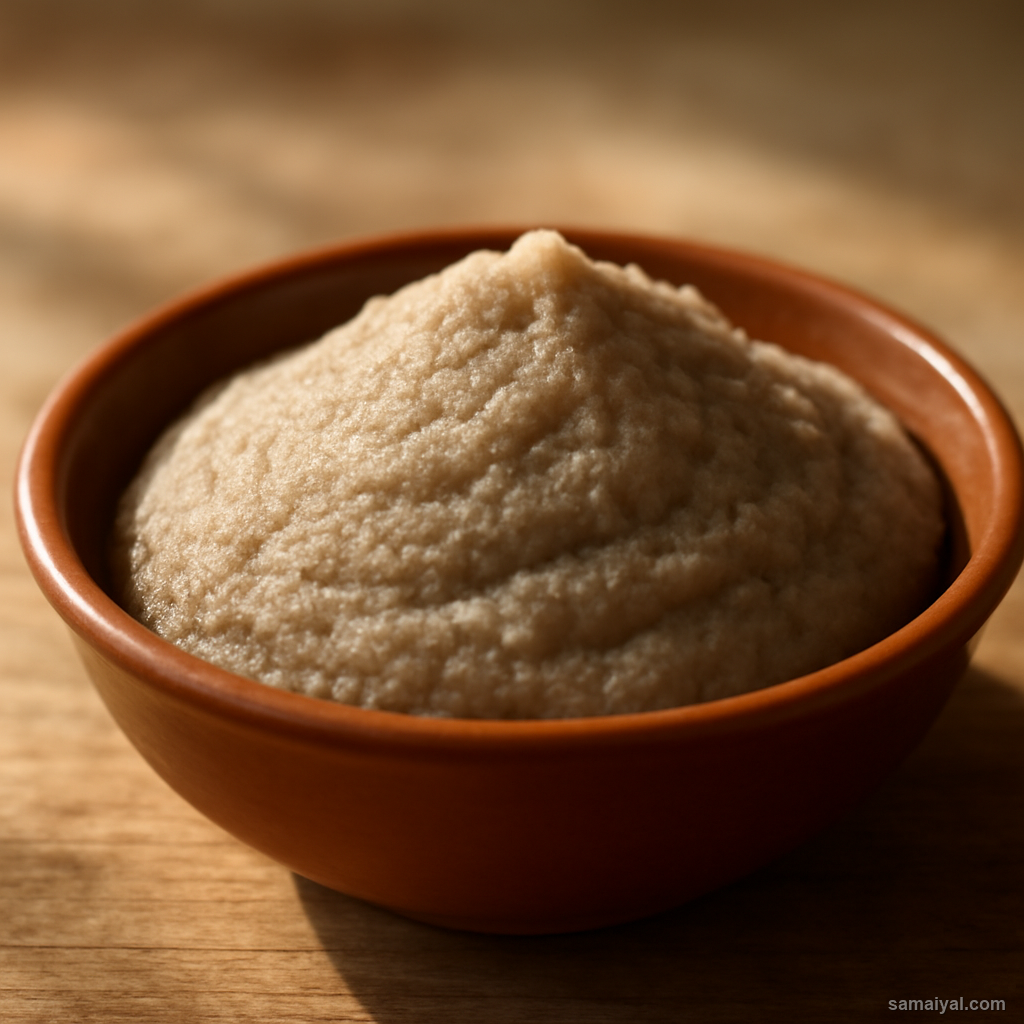
About Zan Millet Porridge: Zan is the thick stiff porridge of highland Arunachali tribes. Its texture is dense — closer to polenta or stiff oatmeal than to liquid porridge. Across Monpa, Sherdukpen, and Memba communities of the Tawang and West Kameng regions, zan is the foundational starch — eaten with vegetables, meat, or fermented soybean accompaniments. The thick stiff texture sustains highland eating: provides hours of energy for cold mountain mornings of farming or temple visits.
Understand zan: Zan is essentially a thick millet porridge — cooked to such firm consistency that it can be portioned and eaten with hands. Traditional Arunachali eating has the diner pull off small portions with fingers, dipping in vegetable, meat, or fermented soybean accompaniments. Eaten more like dense bread or polenta than like soup or porridge.
Understand the millets: Zan can be made from various millets — pearl millet (kambu/bajra), finger millet (marua/ragi), sorghum (cholam/jowar), or any combination. Each produces slightly different character. Highland Arunachali zan is typically made from pearl millet or finger millet flour, sometimes with barley flour mixed in.
Gather ingredients: 1.5 cups millet flour (pearl millet or finger millet, or a 50-50 blend), 4 cups water, 1/2 tsp salt, 1 tbsp butter or ghee for finishing (optional but traditional). For a richer version: 2 tbsp yak butter or yak cheese during cooking — produces more authentic Monpa character.
Mix flour with cold water: This is the critical first step. In a wide bowl combine the 1.5 cups millet flour with 1 cup cold water. Whisk vigorously until completely smooth — no lumps visible. Adding dry flour to hot water produces inevitable lumps. Mixing with cold water first eliminates lumping problems.
Heat the remaining water: In a heavy-bottomed pot, bring 3 cups water to a vigorous boil over high heat. Add 1/2 tsp salt to the boiling water.
The critical pour-and-whisk: While whisking the boiling water in a circular motion, slowly pour the cold water-flour slurry in a steady thin stream. Continue whisking for 30 seconds after all the slurry is added — this prevents lumps from forming and integrates the millet smoothly. Without proper whisking, zan becomes lumpy.
The critical stiff-cook: Once integrated, reduce heat to lowest setting. Cook on lowest heat for 15-20 minutes, stirring constantly with a sturdy wooden spoon or paddle. Zan thickens dramatically as it cooks. Use long sturdy strokes to prevent scorching at the bottom — pour porridge against the sides of the pot, scrape bottom thoroughly. After 5 minutes, porridge is moderately thick. After 10 minutes, very thick — pulling away from sides as you stir. After 15-20 minutes, properly stiff — the wooden spoon will stand upright in the porridge.
Doneness check: Properly cooked zan is so thick that a spoon stands upright in it. Should pull cleanly away from sides as stirred. Should hold its shape when scooped — like very stiff polenta or thick mashed potatoes. If too thin, continue cooking 5-10 more minutes. If too thick (rare), stir in 2-3 tbsp boiling water.
Add butter and finish: Switch off the heat. Add 1 tbsp butter or ghee. Stir until fully melted. Some Monpa traditions stir in 2 tbsp yak butter or grated yak cheese during the final cooking — produces a richer, more authentic character.
The traditional shaping: Zan is traditionally portioned into small balls or oval shapes for serving. Wet your hand with cold water, scoop a portion, shape into a ball or rough oval. Traditionally eaten with hands — you pull off small pieces and dip into accompaniments.
Serve immediately with accompaniments: Zan is at peak hot, when texture is firm and butter is fully integrated. Pair with traditional Arunachali accompaniments: bamboo shoot curry (recipe id 1104), pork dishes, vegetable stews, fermented soybean (pehak, recipe id 1111), or Tibetan-style butter tea. The most traditional Monpa pairing is zan with butter tea — diners alternate between bites of zan and sips of bitter-salty butter tea. The combination is iconic highland eating.
Serve across contexts: This is the traditional Monpa daily food — eaten before heading out to work or attending temple services. For lighter dinner, zan is hearty enough to satisfy without other dishes. Particularly satisfying on cold mountain days. Pair with substantial side dishes for a hearty meal — zan with smoked pork, fermented bamboo curry, and vegetables forms a complete highland meal.
For children, gluten-free, traditional eating: Children find zan unusual at first taste — the texture is different from typical Indian breads. Many highland Arunachali children grow up eating it daily. Naturally gluten-free, suitable for celiac or gluten-sensitive individuals. The traditional highland eating method (eating with hands) is part of the cultural experience. For visitors to Arunachal, eating zan with hands is part of the cultural immersion.
Variations: Add 1/4 cup grated cheese (yak cheese is most authentic; cheddar works as substitute) just before serving — produces a richer cheese-zan version. Some highland families add 1 tbsp dried apricots or raisins for sweetness — produces a sweet variation suitable for breakfast or snack. Pure pearl millet zan is more iron-rich; pure finger millet zan is more calcium-rich; mixed blends provide balanced nutrition.
A cultural, ecological, scientific note: Zan is genuinely one of the most ancient foods of highland India. References to similar millet porridges appear in pre-Buddhist Tibetan texts. Modern Monpa, Sherdukpen, and Memba communities continue to make zan exactly as their ancestors did. As Arunachali agriculture has shifted toward rice, traditional millet eating has declined. Cooks who maintain the zan tradition preserve genuinely ancient highland food culture. Pearl millet provides exceptional iron, magnesium, B vitamins. Finger millet provides exceptional calcium, iron, complete protein. The combination with butter (healthy fats) produces nutritionally complete eating that supports highland physical demands.
Leftover storage: Stored in fridge in an airtight container, zan keeps for 1-2 days. Texture firms up considerably overnight as the millet continues absorbing moisture. Refresh by stirring in 2-3 tbsp warm milk or water before reheating gently on the stovetop. Best made fresh — texture is at peak immediately after cooking.
⭐ Featured
Stuffed whole-wheat flatbread with spiced potato filling — the quintessential Punjabi...
 ⭐ Featured
Thin crispy rice-lentil crepe filled with spiced potato masala — the iconic South...
 ⭐ Featured
Steamed fermented rice cakes served with tangy lentil vegetable soup — South India's...

Crispy ring-shaped lentil fritters with fluffy interior — a South Indian must-have with sambar.
Comments & Tips
Be the first to share your experience with this recipe!
Leave a Comment