 ⭐ Featured
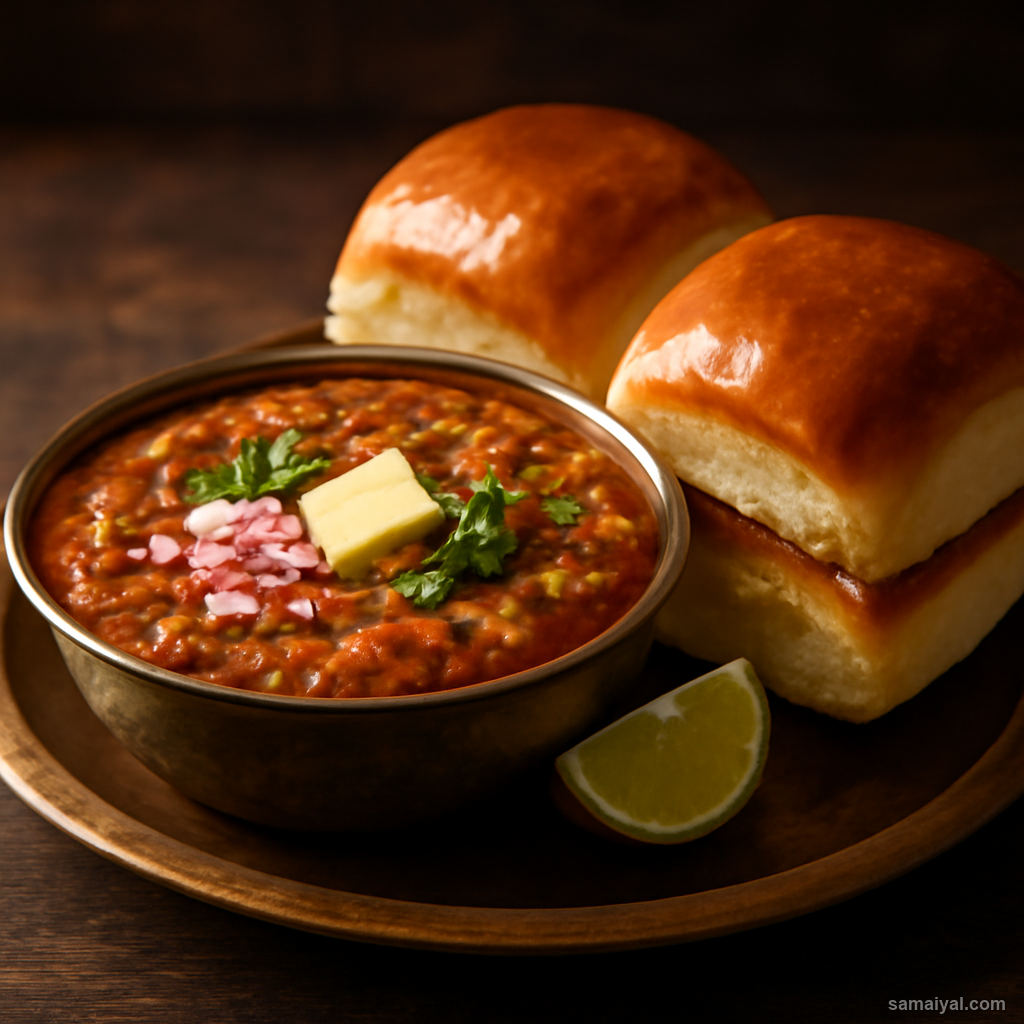
Pav Bhaji
Mumbai's beloved mashed vegetable curry served on butter-toasted soft buns — street food gold.
Flat disc-shaped murukku made by pressing dough with a thavuttu wooden press — thicker and crunchier.

About Thavuttu Murukku: Pressed flat with a wooden disc (thavuttu), thavuttu murukku is thicker and crunchier than extruded murukku — a Diwali, Karthigai, and Pongal essential in rural Tamil Nadu. The flat-disc method produces substantial crunch that stays crispy for 4-6 weeks.
Gather ingredients: 2 cups rice flour, 1/4 cup roasted chana dal flour (pottukadalai maavu — substitute home-roasted-and-ground chana dal), 2 tbsp white sesame seeds, 1 tsp cumin seeds, 1/4 tsp asafoetida, 2 tbsp room-temperature butter or ghee, 1 tsp salt, neutral oil for deep frying.
Mix dry ingredients: In a wide bowl combine rice flour, chana dal flour, sesame seeds, cumin seeds, asafoetida, butter, and salt. Use your fingers to rub the butter into the flour for 2-3 minutes until it looks like coarse breadcrumbs.
Form the dough: Add about 3/4 cup just-off-boiled water gradually, mixing first with a wooden spoon then with hands once cool enough. Hot water partially gelatinises the rice flour for proper texture.
Knead and rest: Knead 3-5 minutes until firm and smooth — like sturdy dumpling dough. Add more hot water 1 tbsp at a time if too crumbly. Cover with a damp cloth and rest 10 minutes.
Press the discs: Lightly grease the wooden thavuttu (or use two flat plates as substitute, or press between sheets of parchment paper using the bottom of a flat plate). Pinch off 25g portions of dough — about 18-20 portions total. Press each ball between the discs into a thin disc about 8cm wide and 5mm thick.
Keep dough covered: Keep all dough portions under a damp cloth — exposed dough dries quickly. Transfer pressed discs to an oiled plate in a single layer.
Heat the oil: Use a heavy kadhai with at least 6cm oil depth. Heat oil over medium heat to 170-175°C — test by dropping a tiny piece; should rise within 3-5 seconds, sizzling vigorously. Too hot burns; too cool produces greasy murukku.
Fry the murukku: Slide pressed discs into hot oil away from yourself (oil splatters at first contact). Add 3-4 discs per batch — do not crowd. Cook 5 minutes total per batch (longer than standard murukku because the discs are thicker), turning gently at 2 minutes for even browning.
Check colour and drain: Aim for deep golden-brown like polished bronze (pale means undercooked; black means over-fried). Lift out with slotted spoon, drain over the pan briefly, rest on kitchen paper. Wait 1 minute between batches for the oil to recover temperature.
The critical full cooling: Once all murukku are fried, cool completely at room temperature for 30 minutes. They crisp up dramatically as they cool — storing while warm produces softening through condensation.
Serve with hot tea: The traditional pairing is Tamil filter coffee or strong Indian tea. Excellent festival food (Diwali, Karthigai, Pongal). Pack in clean glass jars or boxes lined with parchment as homemade gifts. Children love the substantial crunch.
Regional variations: Different Tamil regions vary slightly — Nagercoil version uses more spice; Kanyakumari version uses more sesame; Thanjavur uses different chana dal flour proportions. The basic technique remains.
A cultural note: The thavuttu represents traditional Tamil kitchen craftsmanship. As metal extrusion presses have replaced specialised wooden cookware, the thavuttu tradition has declined. Cooking thavuttu murukku preserves a genuinely traditional Tamil snack-making craft.
Leftover storage: Stored in airtight containers at room temperature, keeps for 4-6 weeks. Becomes slightly less crispy over time but remains delicious. Refresh by warming briefly in a 150°C oven for 5 minutes.
⭐ Featured
Mumbai's beloved mashed vegetable curry served on butter-toasted soft buns — street food gold.

Fluffy steamed chickpea flour cake from Gujarat — light, spongy, tangy and totally addictive.

Mumbai's vegetarian burger — spiced potato dumpling in a fried batter, served in a...
 ⭐ Featured
Crispy golden pastry filled with spiced potatoes and peas — India's most loved snack,...
Comments & Tips
Be the first to share your experience with this recipe!
Leave a Comment