 ⭐ Featured
Aloo Paratha
Stuffed whole-wheat flatbread with spiced potato filling — the quintessential Punjabi...
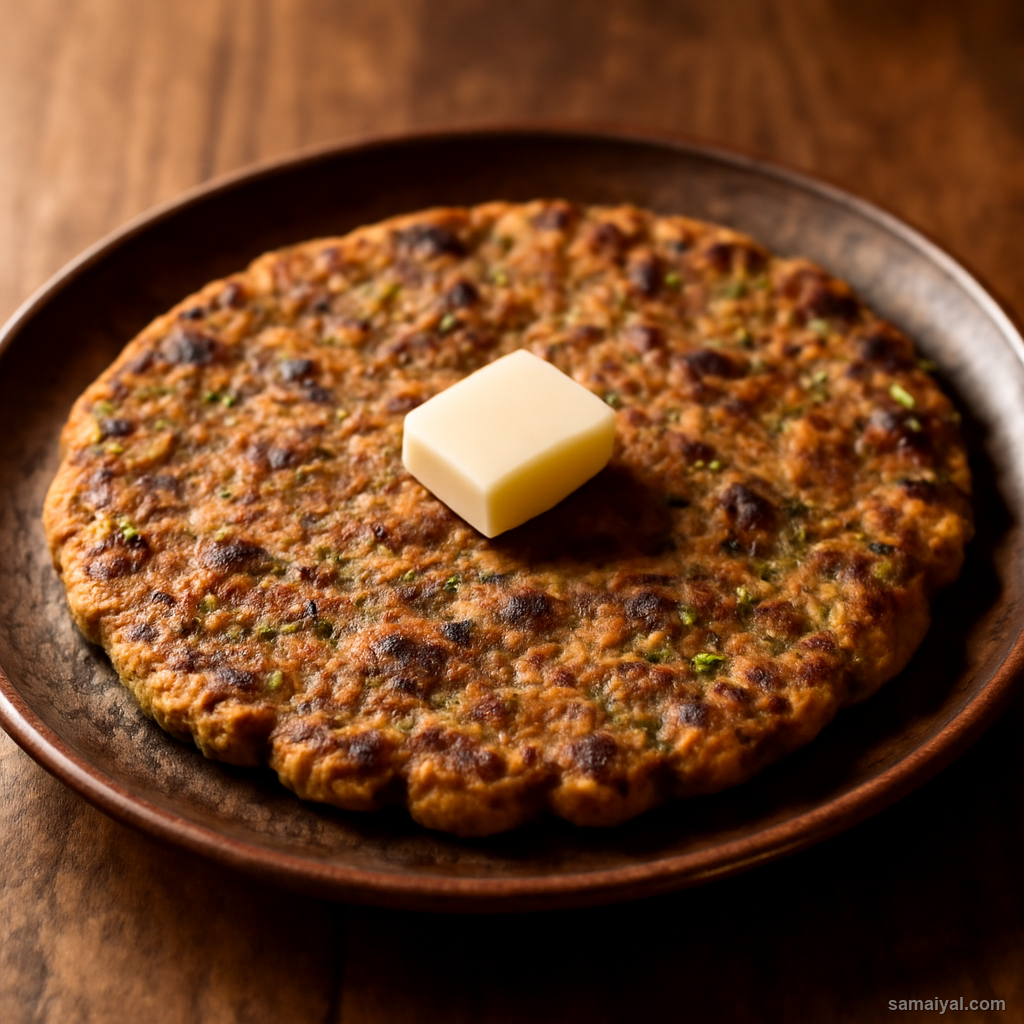
A thick, spiced flatbread made from a mix of jowar flour, wheat flour, rice flour and gram flour, patted onto a hot griddle with wet hands and cooked until crispy. The everyday breakfast of rural Maharashtra.
Understand the flour mix: Thalipeeth uses a blend of different flours — jowar (sorghum) for earthiness and fibre, wheat flour for softness, rice flour for crispiness, and gram flour for protein and flavour. Each flour contributes something. This mix is called bhajani in Marathi.
Mix the flours: In a large wide bowl combine jowar flour, wheat flour, rice flour and gram flour. Mix with a spoon until evenly combined with no pockets of one flour only.
Add the vegetables and spices: Add the grated or very finely chopped onion, chopped green chilli, ginger paste, chopped coriander leaves, chopped fenugreek leaves, cumin seeds, turmeric, red chilli powder and salt. Mix everything together with your hands.
Add water and form dough: Add water one tablespoon at a time — you will need about 3 to 4 tablespoons total. Mix as you add water. The mixture should come together into a soft dough — softer than chapati dough, almost like a thick paste. The moisture from the onion also helps bind the dough. Let it rest for 5 minutes.
Prepare a bowl of water: Fill a small bowl with clean water and place it next to the stove. You will wet your fingers in this while shaping the thalipeeth to prevent sticking.
Heat the griddle: Place a flat iron griddle (tawa) on medium heat. Let it heat for 2 minutes. Rub a few drops of oil on the surface with a paper towel.
Shape directly on the griddle: Take a golf ball-sized portion of dough. Dip your fingers and palm in the water bowl. Place the dough ball on the hot griddle. Using wet fingertips, pat and press the dough outward in slow circular motions, rotating the flatbread as you go, to form a round about 15 cm in diameter and 4 mm thick. Keep dipping fingers in water as needed. Make a small hole in the very centre with your fingertip — this helps steam escape and ensures even cooking.
Add oil and cover: Drizzle 1/2 tsp oil around the edges and a small drop through the centre hole. Cover with a lid. Cook on medium heat for 3 minutes.
Flip and finish: Remove the lid. The underside should have golden-brown spots. Use a flat spatula to carefully flip — it should release easily. Drizzle another 1/4 tsp oil. Cook uncovered for 2 to 3 minutes. Press the centre — it should feel firm and cooked through, not doughy.
Make remaining thalipeeth: Repeat with the remaining dough. Each one takes about 5 to 6 minutes total.
Serve: Serve hot directly from the griddle. The traditional accompaniment is a generous spoonful of cold fresh yogurt on the side. The contrast of hot crispy thalipeeth with cold yogurt is the classic way to eat it. A small piece of butter on top is also traditional.
Note: Thalipeeth is made for breakfast and dinner across Maharashtra, especially in Pune, Nasik and the Marathwada region. In rural Maharashtra it is made daily using stored bhajani flour — a pre-roasted multigrain flour blend that can be kept for months. Each household guards its own flour proportion as a family recipe.
⭐ Featured
Stuffed whole-wheat flatbread with spiced potato filling — the quintessential Punjabi...
 ⭐ Featured
Thin crispy rice-lentil crepe filled with spiced potato masala — the iconic South...
 ⭐ Featured
Steamed fermented rice cakes served with tangy lentil vegetable soup — South India's...

Crispy ring-shaped lentil fritters with fluffy interior — a South Indian must-have with sambar.
Comments & Tips
Be the first to share your experience with this recipe!
Leave a Comment