 ⭐ Featured
Pav Bhaji
Mumbai's beloved mashed vegetable curry served on butter-toasted soft buns — street food gold.
Corn paste wrapped in banana leaf and steamed — the harvest festival snack of Arunachali plains
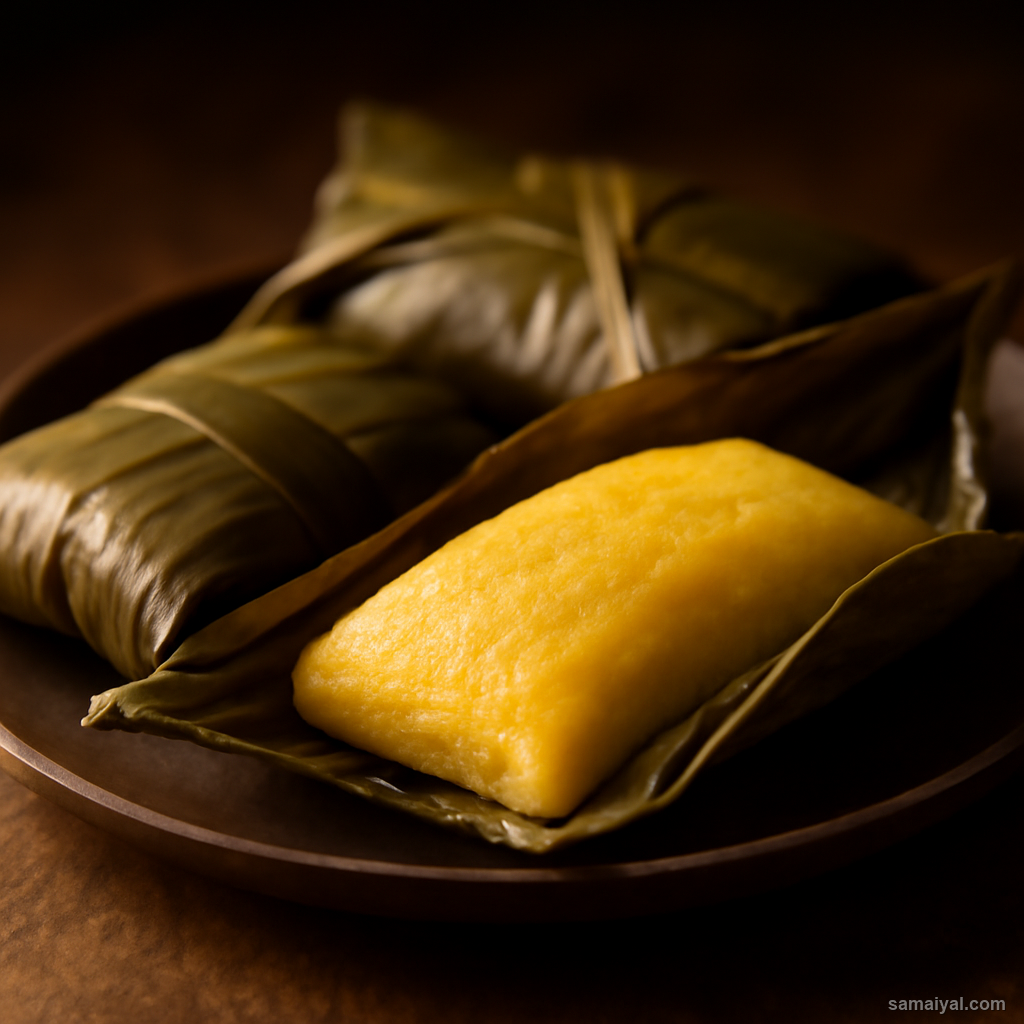
About Sweet Corn Pitha Arunachal: Sweet corn pitha is made during the post-harvest period when sweet corn is abundant. Banana leaf imparts a delicate green flavour that distinguishes this version from the mainland Indian corn preparations. The dish reflects the agricultural rhythm of Arunachali plains and lower hills — corn is harvested in late summer, banana leaves are abundant in tropical lowlands, and steaming preserves both the natural sweet corn flavour and the leaf aromatics. It is the kind of seasonal traditional sweet that connects modern Arunachali kitchens to ancestral foods.
Understand the seasonality: Fresh sweet corn peaks in India during late summer and autumn (August-October). Outside this season, frozen corn kernels work as substitute but produce less vibrant flavour. This recipe specifically benefits from fresh corn.
Understand the dish: Sweet corn pitha is a steamed sweet — corn ground into paste, sweetened with jaggery, spiced with cardamom, wrapped in banana leaf, and steamed. The result is a tender, fragrant cake-like sweet that captures the essence of fresh corn season.
Choose fresh sweet corn: Use 2 cups of fresh sweetcorn kernels (about 3 medium corn cobs). The kernels should be plump, juicy, and burst when bitten. Older corn (starchy and hard) produces inferior pitha.
If using frozen corn: Use 2 cups frozen sweet corn kernels, thawed completely and patted dry. Squeeze out excess moisture before grinding. The result is acceptable but less vibrant.
If using corn cobs from scratch: Stand each cob upright on a chopping board. Use a sharp knife to cut down the length, removing the kernels. Some cobs yield more than others; 3 medium cobs typically produce 2 cups of kernels.
The critical grinding: Place the corn kernels in a small grinder. Pulse 4-6 times to a coarse paste — texture should still show recognisable corn pieces, not a smooth puree.
Why coarse texture: The coarse paste preserves textural variety in the final pitha. Smooth puree produces a uniform texture more like cake than pitha.
Mix the batter: Transfer the coarse corn paste to a bowl. Add 1/4 cup rice flour, 2 tbsp grated jaggery, 1/4 tsp cardamom powder, and a pinch of salt. Mix thoroughly with a spoon.
The consistency goal: The batter should be thick but spoonable — like a thick cake batter or stiff porridge. Too thin produces leaky pitha; too thick produces dense pitha. If too thick, add 1 tbsp warm water; if too thin, add 1 tbsp more rice flour.
Let the batter rest: Cover and let rest for 10 minutes. The rice flour absorbs moisture during this rest, producing better texture.
Source fresh banana leaves: Use 6-8 fresh banana leaves, cut into pieces about 20x15cm. Available at Indian groceries (Bengali, South Indian, or Northeast Indian sections).
If banana leaves unavailable: Substitute with parchment paper for similar parcel cooking — the result is different (no leaf aroma) but still works. Aluminium foil works in a pinch but loses much of the dish's character.
The critical leaf preparation: Banana leaves are stiff straight from the package. Pass each leaf briefly over a low gas flame for 5-10 seconds — you will see the leaf turn slightly glossy and become noticeably more pliable.
Check leaf flexibility: Try folding a corner — the leaf should bend easily without cracking. If it still cracks, pass over the flame for 5 more seconds.
If no flame: Soak the leaves in hot water for 1 minute, then pat dry. Less aromatic but functional.
MAKE THE PARCELS:
The assembly: Place a flexible banana leaf flat on a work surface, shiny-side up (this side touches the batter). Place 2 tablespoons of the corn batter in the centre.
The folding: Fold the bottom edge of the leaf up over the batter. Then fold the top edge down. Then fold the left side toward the centre. Then fold the right side over. The batter should be fully enclosed in a small rectangular packet.
Secure with toothpick: Use a toothpick (or a strip of banana leaf) to secure the parcel. Push the toothpick through the folded edges to hold them in place.
Why secure: The parcels need to hold together during steaming. Toothpicks are reliable; banana leaf strips are traditional but can come undone.
Repeat for all batter: Continue assembling parcels until all batter is used — typically 8-10 parcels for 2 cups corn.
Prepare the steamer: Use a bamboo steamer or any standard steamer setup with a lid. Fill the bottom pan with water and bring to a rolling boil over high heat.
The critical steam temperature: The water must be at a vigorous rolling boil before the parcels go in — stable rapid steam is what cooks the pithas through.
Place parcels in steamer: Once the water is at full rolling boil, arrange the parcels in the steamer in a single layer (do not stack). Cover with the lid.
Steam for 20-25 minutes: The cooking time depends on parcel size. 20 minutes for smaller parcels, 25 for larger.
Do not lift the lid: Avoid the temptation to check during cooking. Lifting releases trapped steam and slows the cooking.
Check doneness: After 20-25 minutes, switch off the heat. Carefully lift one parcel out (use tongs — they are very hot). Open carefully — fragrant steam will rise dramatically. The pitha inside should be firm, not runny, with the leaf having darkened slightly and infused the pitha with its character.
If undercooked: If the pitha is still runny, return all parcels to the steamer for 3-5 more minutes.
Let rest briefly: Once cooked, switch off heat. Let parcels rest for 5 minutes — easier to handle.
Serve in their parcels: Place each unopened parcel on a serving plate. The traditional serving is to bring the parcels to the table closed — each diner opens their own.
The ceremony of opening: Each diner opens the parcel by removing the toothpick and unfolding the leaf. The aromatic steam rises — corn, jaggery, banana leaf, and cardamom combining into one of the great food aromas. This presentation is part of the dining experience.
Serve directly from the leaf: Eat the pitha straight from the open parcel — the leaf serves as a natural plate.
Serve warm: Sweet corn pithas are at their peak warm, when the texture is at its peak and the aromas are most pronounced.
The harvest festival tradition: Sweet corn pitha appears at Arunachali harvest festivals (Solung for the Adi tribe, Mopin for the Galo) where seasonal foods are celebrated. The dish marks the success of corn harvest and the abundance of monsoon-fed crops.
For everyday eating: Sweet corn pitha makes an excellent seasonal sweet treat with hot tea or coffee. The combination of sweet corn, jaggery, and cardamom is genuinely satisfying.
For children: The natural sweetness of corn and the relatively low sugar content make this a healthier sweet for children than commercial confections.
Variations: Some Arunachali families add 2 tbsp grated coconut to the batter for textural variety — produces a sweet corn-coconut version. Others add 2 tbsp chopped fresh ginger for warming character.
A cultural note: The banana leaf wrapping technique is one of the oldest food preservation and cooking methods in tropical Asia. Long before refrigeration, banana leaves served as natural packaging — biodegradable, aromatic, and effective. The Arunachali sweet corn pitha continues this ancient practice. Eating this dish is participating in a tradition that long predates modern packaging.
Leftover storage: Stored in the fridge in their parcels, sweet corn pithas keep for 1 day. The parcel structure helps preserve moisture. Reheat by re-steaming for 5 minutes — never microwave at high power, which destroys the delicate texture. The banana leaf flavour fades overnight; best eaten the day made.
⭐ Featured
Mumbai's beloved mashed vegetable curry served on butter-toasted soft buns — street food gold.

Fluffy steamed chickpea flour cake from Gujarat — light, spongy, tangy and totally addictive.

Mumbai's vegetarian burger — spiced potato dumpling in a fried batter, served in a...
 ⭐ Featured
Crispy golden pastry filled with spiced potatoes and peas — India's most loved snack,...
Comments & Tips
Be the first to share your experience with this recipe!
Leave a Comment