 ⭐ Featured
Gulab Jamun
Soft milk-solid dumplings soaked in fragrant rose sugar syrup — India's most beloved sweet.
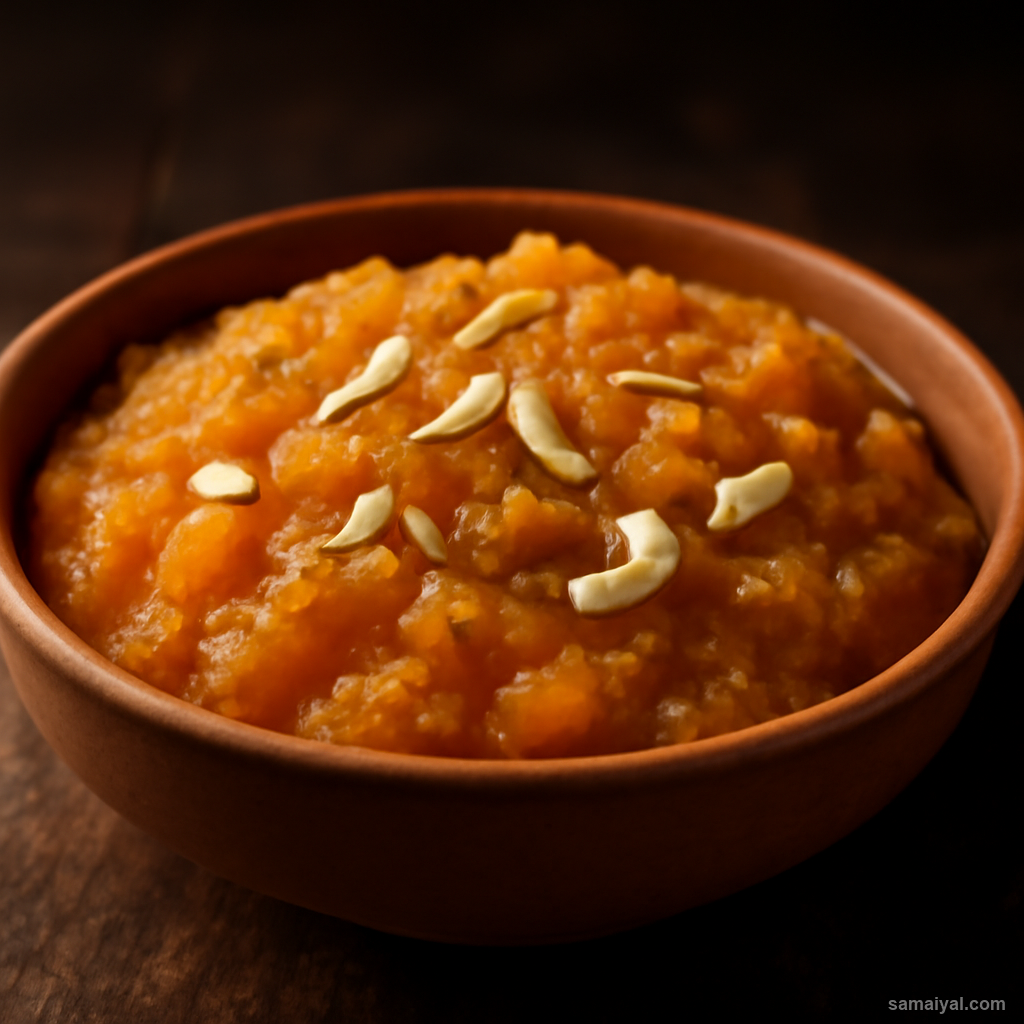
Semolina roasted in ghee until golden and fragrant, then cooked with sugar syrup into a soft, golden, fragrant pudding. The halwa offered as prasad at Gurudwaras and made at home for every religious occasion in Punjab.
Make the sugar syrup first: Combine 1 cup sugar and 2 cups water in a small pot. Heat stirring until sugar dissolves. Bring to a boil. Turn off heat and keep the syrup warm. Having the syrup ready before roasting the semolina is important — once the semolina is roasted you need to add the syrup immediately.
Add saffron to the syrup: Add the saffron strands with their soaking water to the warm syrup. Stir gently. The syrup will turn pale golden.
Heat ghee in a wide heavy pan: Place a wide heavy-bottomed pan (kadai) on medium heat. Add 1/2 cup ghee. Let it melt completely and become hot.
Roast the semolina in ghee: Add 1 cup semolina to the hot ghee. Stir immediately and continuously. The semolina will absorb the ghee immediately.
Roast to golden: Continue stirring on medium heat for 6 to 8 minutes. The semolina will gradually change from pale yellow to a deeper golden colour and begin smelling very nutty and fragrant. The kitchen will fill with a roasted, buttery aroma. Do not let it go dark brown — light golden is correct.
Add nuts: Add the broken cashews and raisins. Stir for 1 minute so they are lightly roasted in the ghee alongside the semolina.
Add the warm sugar syrup carefully: Stand back slightly and pour the warm saffron sugar syrup into the roasted semolina. It will sizzle and splatter for 3 to 4 seconds as the water hits the hot ghee — this is normal. Stir immediately and continuously.
Cook until the halwa comes together: Stir vigorously on medium heat for 3 to 4 minutes. The semolina will absorb all the liquid and come together into a soft, thick, uniform mass. Add cardamom powder. Stir.
Check consistency: The halwa is done when it pulls away from the sides of the pan and forms a mass that does not stick to your spoon when you scoop it. It should look glossy and slightly wet — it will firm up slightly as it cools.
Serve hot: Serve immediately in small bowls. Garnish with sliced almonds on top. Sooji halwa is always served hot — it loses its soft texture when cold.
Note: Sooji Halwa is the prasad (sacred food offering) at every Gurudwara. It is served after the recitation of the Sukhmani Sahib prayer (Ardas). At Gurudwaras, the halwa is made in enormous quantities in massive kadais. Making this prasad at home for a prayer gathering is considered an act of devotion. The Gurudwara version uses far more ghee than the home version — the generous amount of ghee is a sign of the generosity of the offering.
⭐ Featured
Soft milk-solid dumplings soaked in fragrant rose sugar syrup — India's most beloved sweet.

Slow-cooked rice pudding with cardamom, saffron, nuts and rose water — pure comfort in a bowl.

Slow-cooked grated carrot pudding with ghee, milk and cardamom — a winter celebration classic.

Spongy soft chenna balls cooked in light sugar syrup — the iconic Bengali sweet.
Comments & Tips
Be the first to share your experience with this recipe!
Leave a Comment