 ⭐ Featured
Butter Paneer Masala
Creamy tomato-based curry with soft paneer cubes — the all-time favourite of Indian...
Kerala-style thoran — dry stir-fry of snake gourd (padavalanga) with fresh coconut in coconut oil.
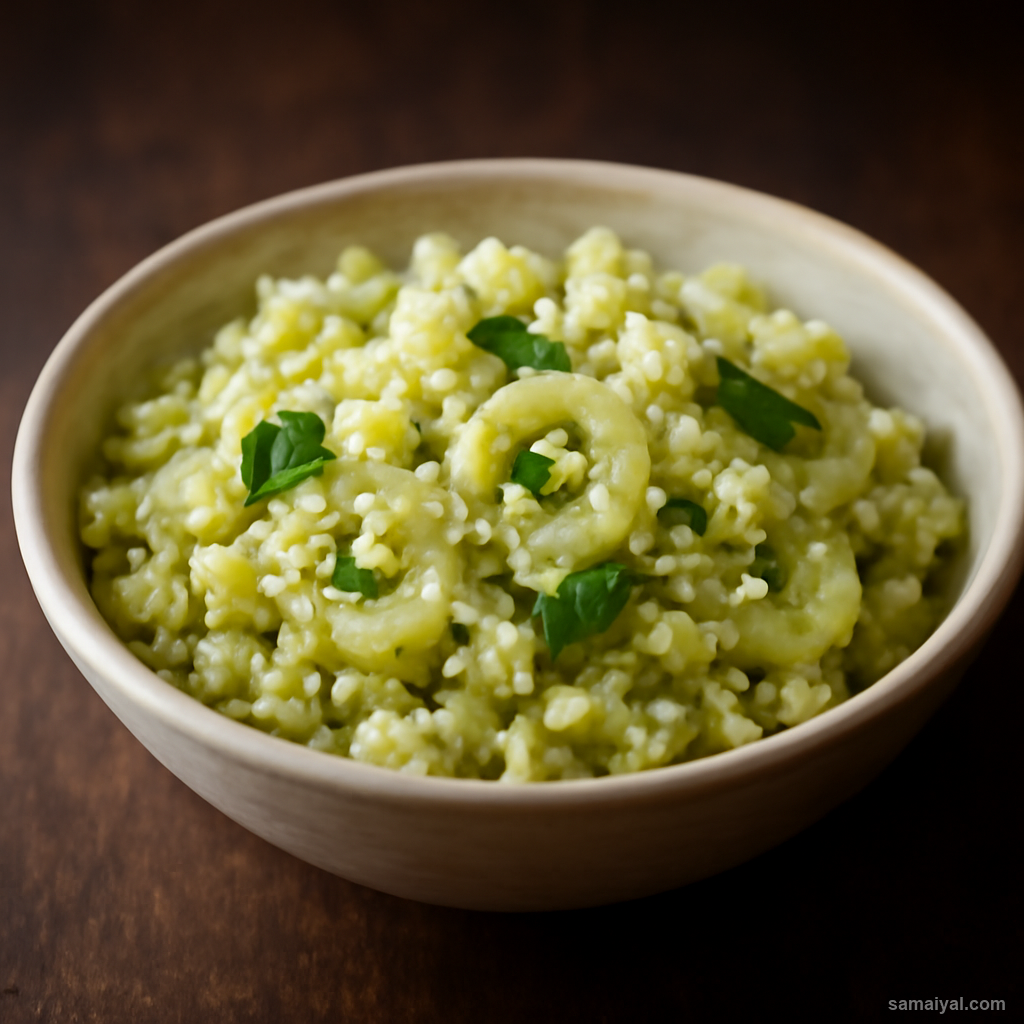
About Snake Gourd Thoran: Snake Gourd Thoran is the light Kerala dry stir-fry of snake gourd (padavalanga) with fresh coconut and coconut oil. Snake gourd is a long, pale green tropical squash that's genuinely beloved across South India for its mild flavour and substantial water content — perfect for hot weather cooking.
Follow the foundational thoran technique: See Beans Thoran (recipe id 578).
Gather ingredients: 300g snake gourd (called padavalanga in Malayalam, podalanga in Tamil), 1/2 cup fresh grated coconut, 2 tbsp coconut oil, 1 tsp mustard seeds, 2 dried red chillies, 1 sprig curry leaves, 2 finely chopped green chillies, 3 finely sliced shallots, 1/4 tsp turmeric, 1 tsp cumin seeds, salt to taste.
Wash and prepare: Choose firm snake gourd with smooth pale green skin (avoid yellowing or soft specimens). Rinse under cold water. Trim both ends. Halve lengthwise. Use a small spoon to scrape out and discard the seeds and spongy core. Cut into thin half-rounds (about 5mm thick).
The critical salt-and-squeeze step: Place cut snake gourd in a wide bowl. Sprinkle with 1/2 tsp salt. Toss. Let rest 10 minutes — moisture pools at the bottom. Then take handfuls and squeeze HARD between your palms to expel excess water. Discard the squeezed-out liquid.
Why salt-and-squeeze: Snake gourd has very high water content. Without removing this water, the thoran becomes wet and disappointing. The salt-squeeze step is genuinely the key to good snake gourd thoran.
Make coconut mixture: In a wide bowl combine the grated coconut, turmeric, cumin seeds, chopped green chillies, and sliced shallots. Lightly pound or pulse briefly.
Tempering: Heat the coconut oil in a wide pan over medium-high heat. Add mustard seeds — wait for popping to slow.
Add remaining tempering: Add snapped dried red chillies and curry leaves. Stir for 5 seconds.
Add squeezed snake gourd: Stir to coat with the tempering. Add additional salt to taste — about 1/4 tsp (already lightly salted from the squeeze step).
Cover and cook: Reduce heat to LOW. Cover tightly. Cook 6-8 minutes, lifting the lid every 2 minutes to gently stir.
Check doneness: After 6-8 minutes, the snake gourd should be tender and slightly translucent. If still raw, cover and cook 2 more minutes.
Add coconut mixture: Open the lid. Add the coconut mixture. Toss thoroughly to integrate.
Uncovered toss: Cook on high heat 2 minutes — the coconut mixture integrates and any residual moisture evaporates.
Final taste: Should taste light and mild — tender snake gourd with sweet coconut, gentle warming spices. The flavour is delicate — a refreshing element of a Kerala meal.
Serve immediately: With rice and sambar (classic pairing). Excellent at the Kerala sadya feast as a lighter element.
For hot weather: Snake gourd is traditionally considered cooling for the body. Particularly satisfying in summer.
Variations: Some Kerala families add 1/4 cup grated coconut as additional garnish at the end. Others add 1/4 cup green peas during the covered cook for colour.
A nutritional note: Snake gourd provides exceptional hydration (very high water content), fibre, vitamin C, and minerals. Genuinely nutritious and gentle on the digestive system.
Leftover storage: Fridge for 1 day. The texture firms slightly when cold. Refresh briefly in a hot dry pan.
⭐ Featured
Creamy tomato-based curry with soft paneer cubes — the all-time favourite of Indian...
 ⭐ Featured
Velvety spinach curry with golden-fried paneer — nutritious, vibrant and absolutely delicious.

Bold, tangy chickpea curry packed with spices — a street food staple that works as a main dish.

Dry-spiced potatoes and cauliflower — simple, aromatic, and endlessly satisfying.
Comments & Tips
Be the first to share your experience with this recipe!
Leave a Comment