 ⭐ Featured
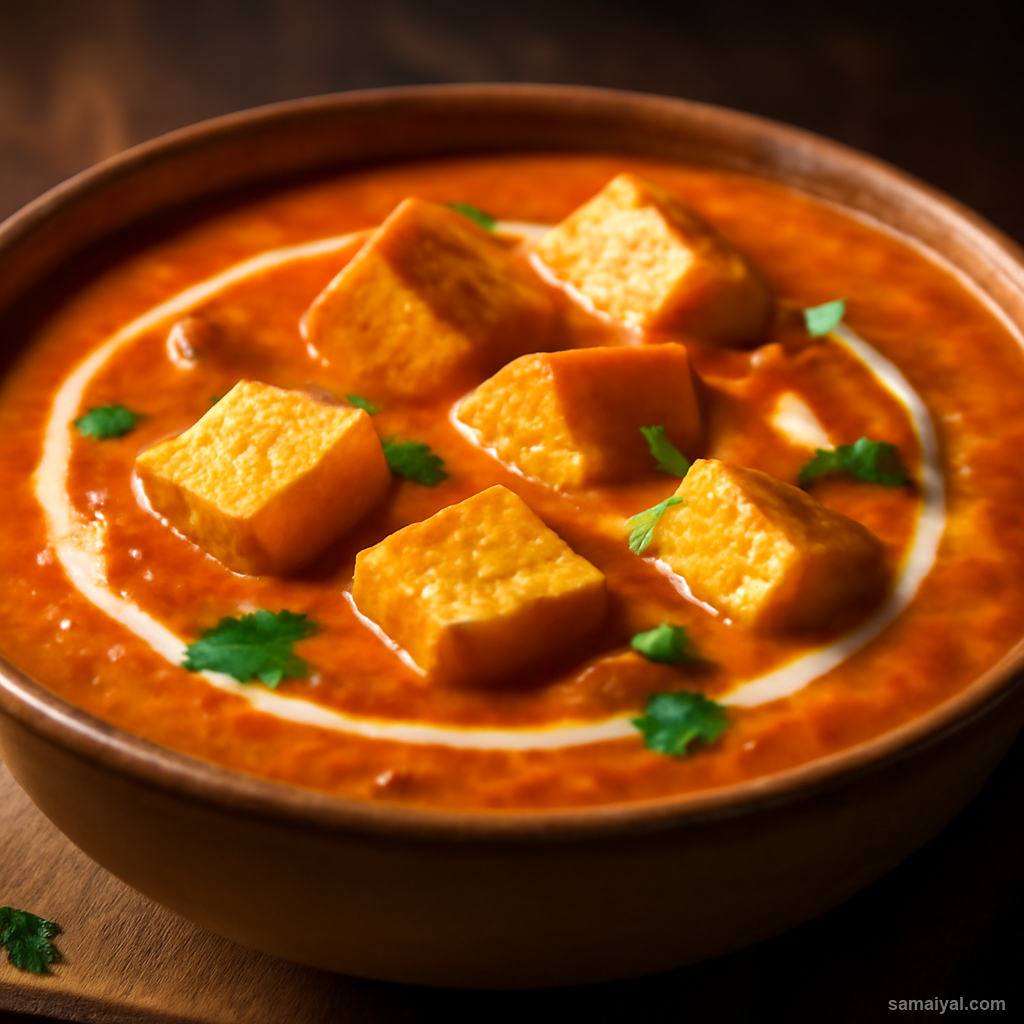
Butter Paneer Masala
Creamy tomato-based curry with soft paneer cubes — the all-time favourite of Indian...
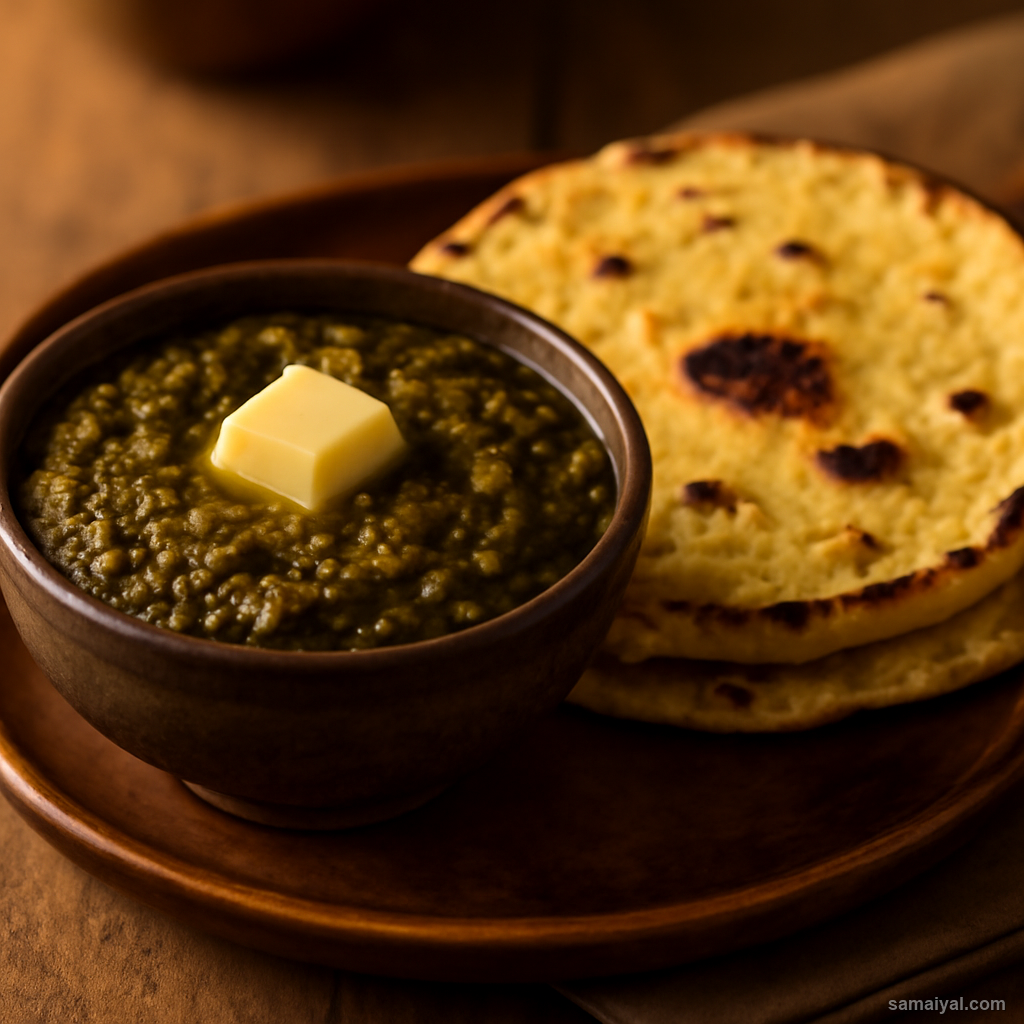
Mustard greens slow-cooked with spinach and spices until thick, served with a thick corn flour flatbread and a large knob of butter. The winter meal of Punjab — eaten from November to February when mustard greens are in season.
Boil the greens: Wash the mustard leaves, spinach and bathua thoroughly. Tear into large pieces. Place in a large pot with the slit green chilli, chopped ginger and 3 cups water. Bring to a boil then cook on medium heat for 25 to 30 minutes until the greens are very soft and wilted.
Blend the cooked greens: Let the greens cool slightly. Using a hand blender or a mixer, blend the cooked greens coarsely — not fully smooth. Sarson da saag should have some texture — it should look rough and thick, not like a smooth puree.
Add maize flour and cook: Return the blended greens to the pot on low heat. Add 2 tbsp maize flour. Stir it in — the flour thickens the saag and is the traditional thickening agent used in Punjab. Cook on low heat stirring for 5 minutes until the saag thickens. Add salt.
Make the tadka for the saag: Heat 2 tbsp ghee or butter in a small pan on medium. Add the finely chopped onion. Cook for 8 minutes until golden. Add garlic paste — stir 1 minute. Add red chilli powder — stir 30 seconds on low heat.
Combine tadka and saag: Pour the fried onion tadka into the pot of cooked greens. Stir well. Simmer on low heat for 5 more minutes for the flavours to merge.
Make the makki di roti dough: Place 2 cups maize flour and a tiny pinch of salt in a bowl. Add warm water little by little — about 1/2 to 3/4 cup — mixing with your hands each time. Maize flour has no gluten — the dough will feel grainy and will not stretch like wheat. Add water until a soft, firm dough forms that holds together. Work quickly — maize dough dries out fast.
Shape the makki di roti by hand: Take a portion of dough. Place between two sheets of plastic wrap. Using your palm, press outward from the centre to form a round about 15 cm in diameter and 5 mm thick. Alternatively, wet your palms and shape it directly in your hand. The roti will have uneven edges — this is normal.
Cook the makki di roti: Heat a flat griddle on medium-high heat. Place the roti on the griddle. Cook for 2 to 3 minutes until light brown spots appear on the bottom. Flip. Cook 2 more minutes. Then using tongs hold the roti directly over a gas flame for 15 to 20 seconds on each side to get char spots. Apply ghee immediately.
Repeat for all rotis: Make all the rotis. Keep warm under a cloth.
Serve together: Ladle the hot sarson da saag into a bowl. Place a large knob of butter on top — it melts into the saag. Serve with 2 hot makki di rotis and raw onion on the side. In Punjab, jaggery (gur) is also eaten alongside as a palate cleanser between bites.
Note: Sarson Da Saag with Makki Di Roti is the most well-known winter food of Punjab. It is eaten only from November to February when fresh mustard leaves are available. The saag takes hours in the traditional village method — cooked in a clay pot on a wood fire overnight. The maize flour thickening and the butter on top are both essential. Eating this without the butter on top is considered incomplete in Punjab.
⭐ Featured
Creamy tomato-based curry with soft paneer cubes — the all-time favourite of Indian...
 ⭐ Featured
Velvety spinach curry with golden-fried paneer — nutritious, vibrant and absolutely delicious.

Bold, tangy chickpea curry packed with spices — a street food staple that works as a main dish.

Dry-spiced potatoes and cauliflower — simple, aromatic, and endlessly satisfying.
Comments & Tips
Be the first to share your experience with this recipe!
Leave a Comment