 ⭐ Featured
Aloo Paratha
Stuffed whole-wheat flatbread with spiced potato filling — the quintessential Punjabi...
Sago with roasted peanuts and cumin — the Ekadashi fasting food of Bihar
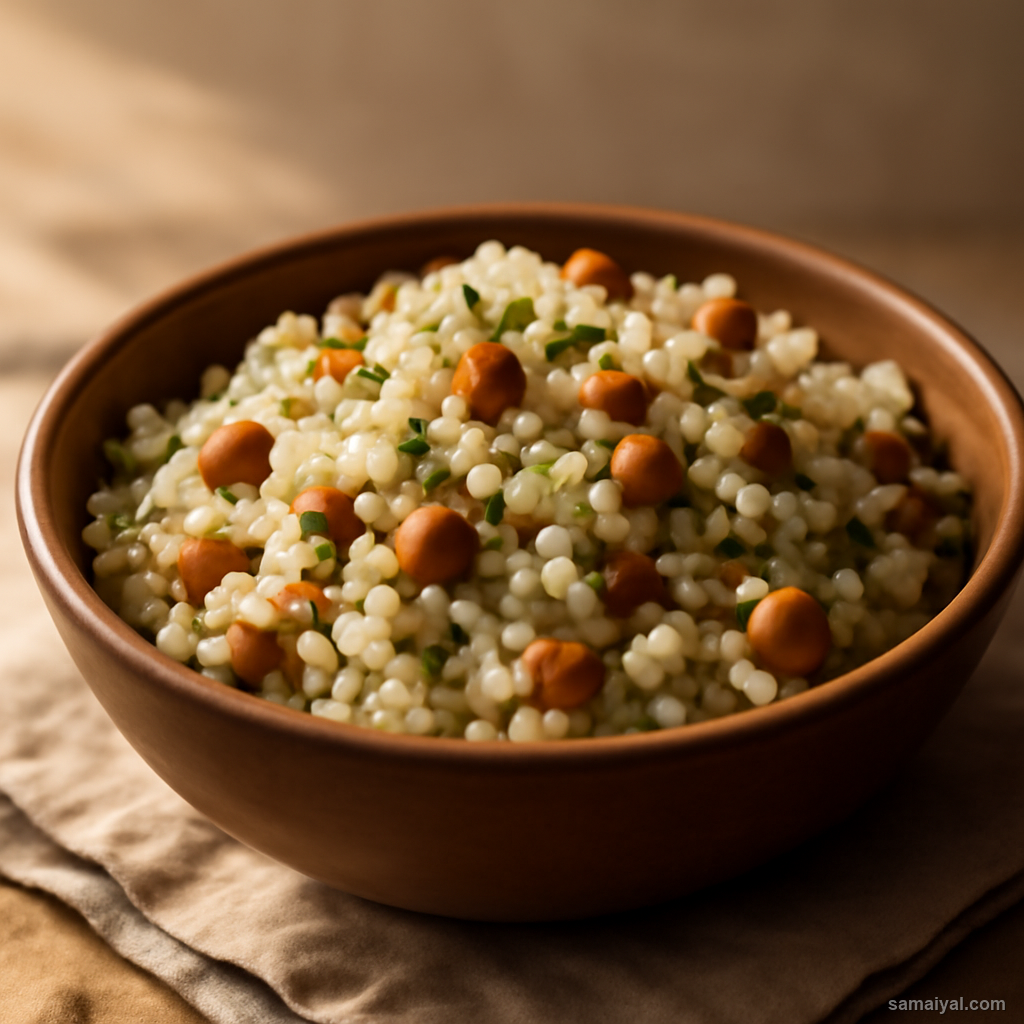
About Sabudana Khichdi Bihar: Sabudana Khichdi is the standard Ekadashi and Navratri fasting food across Bihar — high energy, gluten-free and very satisfying. Sago pearls (sabudana) are translucent starch beads from cassava root, traditionally permitted during Hindu fasts. Combined with peanuts, potato and gentle spices, the dish breaks the typical fasting pattern of restraint by providing a genuinely delicious and substantial meal.
Understand sabudana: Use 2 cups of sabudana (sago) — small white pearls available at every Indian grocer. Two main grades exist — small pearls (3mm) and medium pearls (5-6mm). Medium pearls are the traditional choice for khichdi as they hold their shape better.
The critical overnight soak: Soak the sabudana the night before. Place in a wide bowl. Cover with just enough water to submerge the pearls by 1cm — about 2 cups of water. Soak for 8 hours or overnight.
The water-level matters: Too much water during soaking produces mushy pearls; too little leaves them hard in the centre. The water should just barely cover the sabudana — they will absorb most of it during soaking.
The morning check: After soaking, the pearls should be plump, tender when squeezed (not crunchy), and white-translucent. Check by squeezing one between your fingers — it should mash without resistance but still hold its shape.
Drain thoroughly: Drain in a colander. Let drip dry for 30 minutes. The 30-minute drain is critical — wet sabudana clumps together when stir-fried; properly drained sabudana stays separated.
The critical fluffing: After draining, gently fluff the sabudana with a fork to separate any clumps. Each pearl should look distinct.
Prepare the peanuts: Use 1/2 cup raw peanuts. Heat a heavy dry pan over medium heat. Dry-roast the peanuts for 4-5 minutes, shaking often, until the skins darken and they smell deeply nutty.
Let the peanuts cool: Tip onto a plate and cool for 5 minutes. Skin removal is optional — many Bihari homes leave skins on for nutrition.
Crush the peanuts: Crush coarsely using a rolling pin, mortar, or grinder pulses (5 short pulses). The texture should be coarse — about half whole, half broken pieces. Smoothly ground peanuts disappear into the dish; coarsely crushed peanuts provide bursts of nutty crunch.
Prepare the green chillies: Take 2 fresh green chillies. Slice into thin rounds.
Prepare the potato: Take 1 medium potato. Peel and cube into 1cm dice. Drop into a bowl of cold water as you go to prevent browning.
Pre-fry the potato: This step is essential for Bihari sabudana khichdi. Heat 2 tbsp ghee in a small pan over medium heat. Drain the potato cubes and pat dry. Add to the hot ghee. Fry for 5-6 minutes, stirring often, until lightly golden and tender.
Lift potato out: Use a slotted spoon to lift the fried potato pieces out. Set aside on a plate. Keep the ghee in the pan.
Prepare the cumin: Use 1 tsp cumin seeds. Have ready beside the stove.
Return ghee to medium heat: The same pan with the remaining ghee — add a little more if needed (you should have at least 2 tbsp ghee in the pan).
Temper with cumin: Add the 1 tsp cumin seeds. They will sizzle and turn golden brown within 10-15 seconds. As soon as they smell deeply nutty, move on.
Add green chillies: Add the sliced green chillies. Stir for 15 seconds.
Return the fried potato: Add the fried potato pieces back to the pan. Stir to coat with the cumin-chilli mixture.
Add the sabudana: Add the drained, fluffed sabudana to the pan. The pan will be relatively crowded — that is fine.
The critical first toss: Use a flat spatula to fold and toss the sabudana through the potato and spices for 1 minute. Lift from underneath and turn over rather than stirring round and round.
The critical translucence stage: Continue stir-frying on medium heat for 5 minutes total, tossing every 30 seconds. The sabudana will gradually transform — the white opaque pearls will turn translucent (you will be able to see through them slightly). This translucence is the doneness marker.
Watch the colour: Properly cooked sabudana is glossy and translucent. White-opaque sabudana indicates undercooked; brown sabudana indicates overcooked or burnt — switch off heat immediately if browning starts.
Add peanuts and salt: Add the crushed peanuts and salt to taste — about 3/4 tsp. Stir gently for 2 minutes to integrate. The peanuts add their nutty character and protein to the dish.
The critical lemon timing: Switch off the heat. Take the pan off the burner. Squeeze in the juice of half a fresh lemon — about 1 tbsp. Adding lemon off-heat keeps the bright fresh aroma; boiling lemon juice turns it bitter.
Fold in the lemon: Stir gently to distribute the lemon juice evenly through the khichdi.
Final taste: Dip a clean spoon and taste. The dish should hit you with multiple flavours — translucent slightly chewy sabudana, soft fried potato, crunchy peanut, gentle cumin, sharp chilli, bright lemon, ghee richness. Adjust salt or chilli to your liking.
Garnish: Sprinkle 2 tbsp finely chopped fresh coriander over the top.
Serve immediately: Sabudana Khichdi tastes best within 15 minutes of cooking, while the sabudana is at peak texture. As it cools, the pearls can clump together and lose their separated quality.
The traditional fasting meal: For Ekadashi or Navratri fasting, this dish is often the main meal. Pair with a glass of cold lassi (yogurt drink) and a few slices of cucumber for a complete fasting plate. Avoid serving with regular breads or grains during religious fasting.
For non-fasting meals: This dish makes an excellent breakfast or light lunch any day of the year. Pair with a small bowl of yogurt, a few slices of fresh fruit, and a cup of strong tea.
Serving variations: Some Bihari homes add 1 tsp grated ginger along with the chillies for extra warmth. Others add 1 tbsp finely chopped fresh curry leaves for South Indian-influenced flavour. Both variations are common and delicious.
A cultural note: The sabudana fasting tradition is Hindu in origin — sago, being from a non-grain plant (cassava), is permitted during fasts that prohibit grains. The Bihari version distinguishes itself with the pre-fried potato and the cumin-heavy tempering — making it richer than the Maharashtrian or Karnataka versions of the same dish.
Leftover storage: Stored in the fridge in an airtight container, sabudana khichdi keeps for 1 day. The pearls firm up considerably when cold; refresh by reheating in a pan with 1 tsp ghee over low heat, stirring gently to restore the glossy texture. Avoid microwaving — it makes the sabudana rubbery.
⭐ Featured
Stuffed whole-wheat flatbread with spiced potato filling — the quintessential Punjabi...
 ⭐ Featured
Thin crispy rice-lentil crepe filled with spiced potato masala — the iconic South...
 ⭐ Featured
Steamed fermented rice cakes served with tangy lentil vegetable soup — South India's...

Crispy ring-shaped lentil fritters with fluffy interior — a South Indian must-have with sambar.
Comments & Tips
Be the first to share your experience with this recipe!
Leave a Comment