 ⭐ Featured
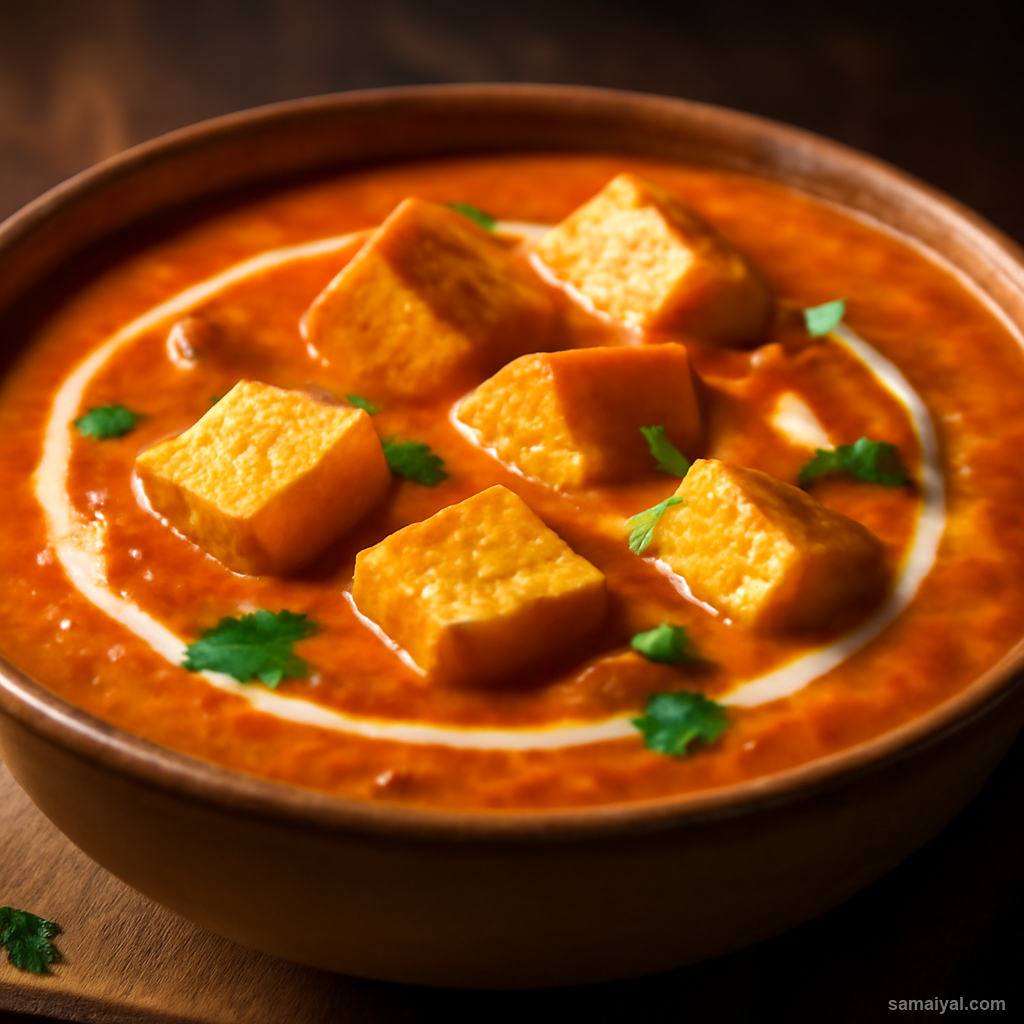
Butter Paneer Masala
Creamy tomato-based curry with soft paneer cubes — the all-time favourite of Indian...
Yellow pumpkin curry with poppy seeds — a classic Assamese vegetarian preparation

About Rongalao Kumura: Rongalao Kumura (yellow pumpkin with posto) showcases the natural sweetness of pumpkin against a creamy poppy paste. The dish is uniquely Bengali-Assamese — both states share the deep love for poppy seeds in vegetarian cooking. The Assamese version uses mustard oil as the cooking fat and emphasises the natural sweetness of pumpkin without overshadowing it with heavy spices. It is the kind of weekday vegetarian dish that turns simple ingredients into something memorable.
Understand white poppy seeds: Use 2 tbsp white poppy seeds (khus khus or posto). They are tiny, pale cream-coloured, and have no narcotic properties — they are a culinary ingredient. Available at every Indian grocery.
Wash the poppy seeds: Place the poppy seeds in a small fine-mesh sieve. Rinse under cold water for 10 seconds — this removes any dust. Drain.
The critical 30-minute soak: Place the rinsed poppy seeds in a small bowl with 4 tbsp warm water. Soak for 30 minutes. Soaking softens them so they grind smoothly. Without soaking, they stay grainy and the paste becomes sandy.
Grind the poppy seed paste: Drain the soaked poppy seeds. Place in a small grinder. Add 2 tbsp cold water. Grind for 2-3 minutes — long grinding is essential for a truly smooth paste. The paste should look like thick white-cream cake batter, with no visible seed grains.
The smoothness test: Rub a tiny drop between your thumb and finger. It should feel completely smooth, not sandy. If gritty, grind 1 more minute with 1 tsp more water.
Choose the right pumpkin: Use 500g of yellow pumpkin (kumura in Assamese). The flesh should be deep yellow-orange, firm, and dense. Avoid butternut squash (too sweet and watery for this dish) or pale-flesh pumpkins (which lack the proper character).
Prepare the pumpkin: Cut the pumpkin in half. Scoop out and discard the seeds and stringy fibres. Peel the skin using a sturdy knife or peeler.
Cube the flesh: Cut the peeled pumpkin into 3cm cubes. Uniform cubes ensure even cooking — uneven sizes mean some are mushy while others are still hard.
Prepare the onion: Take 1 medium onion. Peel and finely chop into 5mm dice.
Prepare the garlic: Take 3 garlic cloves. Crush, peel and mince finely.
Prepare the green chilli: Take 1 fresh green chilli. Slit lengthwise.
Use a wide pan: Use a wide kadhai or heavy frying pan. The pumpkin needs space to cook evenly without overcrowding.
Heat the mustard oil correctly: Pour 1 tbsp mustard oil into the pan over medium-high heat. Heat for 30-45 seconds until just smoking, to remove the raw bitter edge.
Fry the onion: Reduce heat to medium. Add the chopped onion. Stir-fry for 4-5 minutes, stirring often, until soft and just turning golden at the edges.
Add the garlic: Add the minced garlic. Stir for 1 minute until fragrant.
Add the pumpkin and turmeric: Add the cubed pumpkin to the pan. Sprinkle 1 tsp turmeric powder over the pumpkin. Stir to coat every cube.
The critical first stir-fry: Cook on medium heat for 5 minutes, stirring gently every minute. The pumpkin will soften slightly at the edges and absorb the spiced oil.
Add poppy paste, chilli, and water: Add the prepared poppy seed paste, the slit green chilli, and 1/2 cup hot water. Stir gently to combine.
Add salt: Add salt to taste — about 3/4 tsp.
The simmer: Reduce heat to medium-low. Cover the pan with a lid. Cook for 15 minutes, lifting the lid every 5 minutes to gently stir.
Why cover: The covered cooking allows the pumpkin to steam-cook through evenly, while the poppy paste integrates with the pumpkin's natural moisture.
Check doneness at 15 minutes: Pierce a pumpkin cube with a fork — it should slide in with no resistance. The cubes should still hold their shape but feel completely soft.
If still firm: Cover and cook 3-5 more minutes.
The creamy gravy: After cooking, the pumpkin will have released some natural moisture, which will combine with the poppy paste to produce a beautiful creamy yellow-orange gravy. The colour is striking — bright orange-yellow.
Mash some pumpkin for body: Use the back of a wooden spoon to lightly crush 4-5 pumpkin cubes against the side of the pan. This naturally thickens the gravy and gives the dish texture variety.
The consistency: The dish should be moderately thick — like a thick stew with chunks of pumpkin in a glossy creamy gravy. If too thin, simmer uncovered for 2-3 minutes; if too thick, stir in 1/4 cup hot water.
Final flavour check: Taste a piece of pumpkin with gravy. The dish should hit you with multiple subtle flavours — sweet pumpkin, nutty creamy poppy, gentle chilli warmth, aromatic garlic, pungent mustard oil. The pumpkin sweetness should be the dominant note.
Garnish: Switch off the heat. Sprinkle 2 tbsp finely chopped fresh coriander over the top.
Serve with rice: Serve hot over plain steamed rice — the most traditional Assamese pairing. The creamy poppy-pumpkin gravy is meant to mix into the rice.
For a complete vegetarian meal: Pair with a dal (Mati Dail recipe id 1220 or Masur Dal recipe id 1241) and a small portion of pickle. The combination is hearty Assamese vegetarian cooking.
For a non-vegetarian meal: Surprisingly, this gentle vegetable dish pairs beautifully alongside fish curries — the sweet pumpkin balances rich fish dishes.
A cultural note: The poppy seed tradition spans Bengal, Assam, and Bihar, with each region using poppy seeds in different ways. The Assamese version of poppy-pumpkin is gentler than the Bengali (which often uses panch phoron) and richer than the Bihari (which uses mustard oil and chilli powder more aggressively). It represents the Assamese culinary preference for letting natural ingredients shine through.
Leftover storage: Stored in the fridge in an airtight container, this dish keeps for 2-3 days and tastes even better the next day. The pumpkin absorbs more of the poppy gravy overnight. Reheat gently on the stovetop with a splash of water if too thick.
⭐ Featured
Creamy tomato-based curry with soft paneer cubes — the all-time favourite of Indian...
 ⭐ Featured
Velvety spinach curry with golden-fried paneer — nutritious, vibrant and absolutely delicious.

Bold, tangy chickpea curry packed with spices — a street food staple that works as a main dish.

Dry-spiced potatoes and cauliflower — simple, aromatic, and endlessly satisfying.
Comments & Tips
Be the first to share your experience with this recipe!
Leave a Comment