 ⭐ Featured
Gulab Jamun
Soft milk-solid dumplings soaked in fragrant rose sugar syrup — India's most beloved sweet.
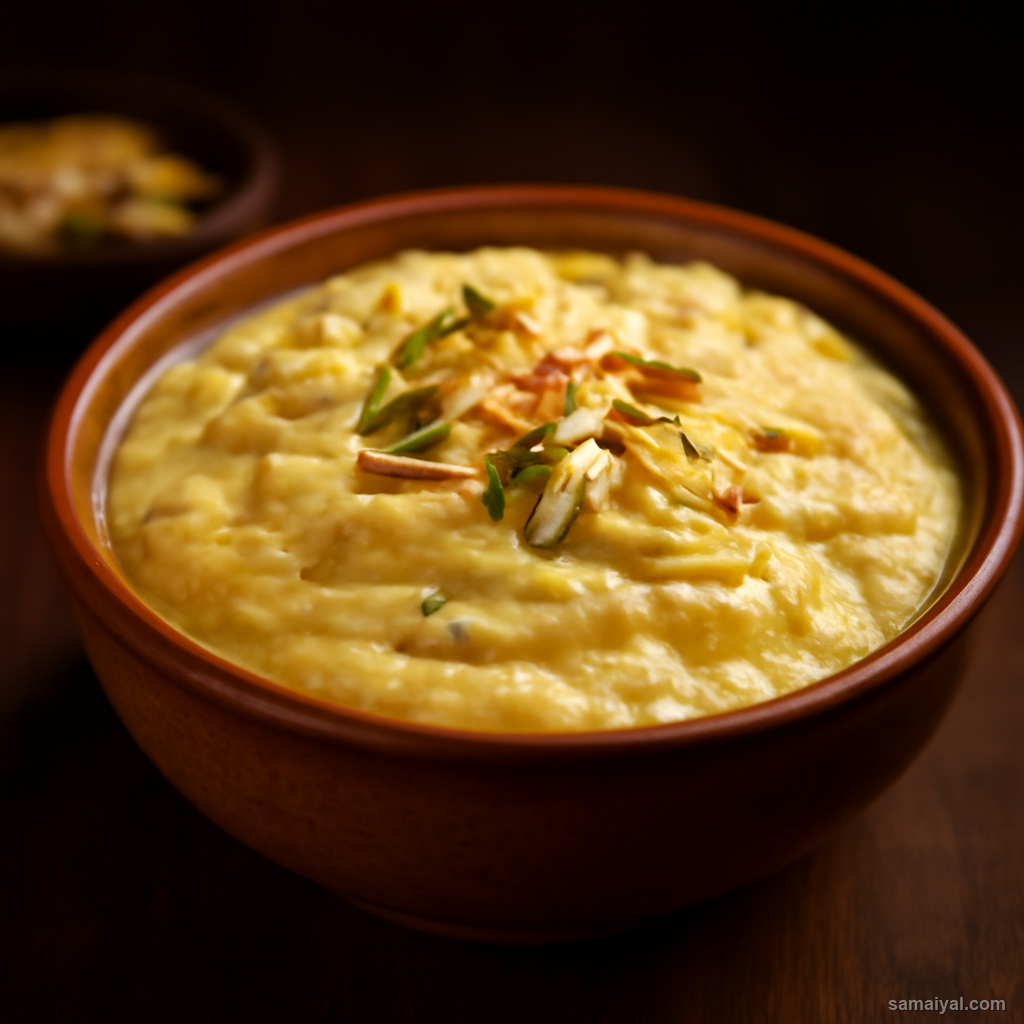
Full-fat milk slow-simmered for hours until it reduces to a thick, layered, clotted cream dessert sweetened with sugar and fragrant with saffron and cardamom. The most time-consuming and prized milk dessert of North India.
Use a wide heavy pot: Pour 1.5 litres full-fat milk into a wide heavy-bottomed pot. A wide pot accelerates reduction. Bring to a full boil on medium-high heat, stirring frequently.
Reduce the heat and begin slow simmering: Once the milk boils, reduce heat to medium-low. The milk should be at a steady gentle simmer — not a rolling boil, not just hot. You should see small bubbles around the edges and occasional larger ones in the centre.
Stir every 3 to 4 minutes: Stir the milk every 3 to 4 minutes, scraping the bottom. As the milk heats, a skin layer forms on the surface. Push this skin to the sides of the pot with a spoon — do not discard it. This skin formation is the beginning of the clotted cream layers that define rabdi.
Layer the skin against the pot sides: Each time you stir, push the surface skin toward the sides of the pot. Over time, multiple layers of skin will build up on the sides. These layered skins are the characteristic texture of rabdi — each layer is like a thin clotted cream sheet. This process continues throughout the long cooking time.
Cook for 60 to 75 minutes total: Continue simmering and stirring for 60 to 75 minutes. The milk will reduce to about one-third its original volume. The texture will become thick, the colour will turn slightly golden, and the pot sides will be coated with layered skins.
Add sugar: Once the milk has reduced sufficiently, add 1/2 cup sugar. Stir for 3 minutes until fully dissolved. Cook for 5 more minutes.
Add saffron and cardamom: Add the saffron milk and cardamom powder. Stir to distribute the saffron colour evenly.
Scrape the side skins into the rabdi: Using a spoon, carefully scrape all the layered cream from the sides of the pot back into the main rabdi. These layers are the most prized part. Stir gently — you want to see layers and flecks of cream in the thick milk, not a fully smooth uniform texture.
Check consistency: The finished rabdi should be very thick — thicker than basundi. It should hold a shape when scooped. It will thicken further as it cools.
Serve warm or cold: Serve in small bowls — rabdi is very dense so small portions are enough. Garnish with sliced pistachio and almonds. Serve warm (most traditional) or cold.
Note: Rabdi is the thicker, more intensely reduced version of what becomes basundi in Gujarat and Maharashtra. It is a prized dessert sold in earthen cups (matkas) at sweet shops across Rajasthan, Uttar Pradesh and Haryana. The city of Mathura in Uttar Pradesh is particularly famous for rabdi. In Rajasthan it is served at festivals and as a dessert after major meals. The time and patience required — over one hour of continuous attention — makes it a labour of respect.
⭐ Featured
Soft milk-solid dumplings soaked in fragrant rose sugar syrup — India's most beloved sweet.

Slow-cooked rice pudding with cardamom, saffron, nuts and rose water — pure comfort in a bowl.

Slow-cooked grated carrot pudding with ghee, milk and cardamom — a winter celebration classic.

Spongy soft chenna balls cooked in light sugar syrup — the iconic Bengali sweet.
Comments & Tips
Be the first to share your experience with this recipe!
Leave a Comment