 ⭐ Featured
Dal Makhani
Slow-cooked black lentils in a rich buttery tomato gravy — a Punjabi classic that...
Pork belly slow-cooked with bamboo shoots and local mountain chillies — the definitive Arunachali dinner
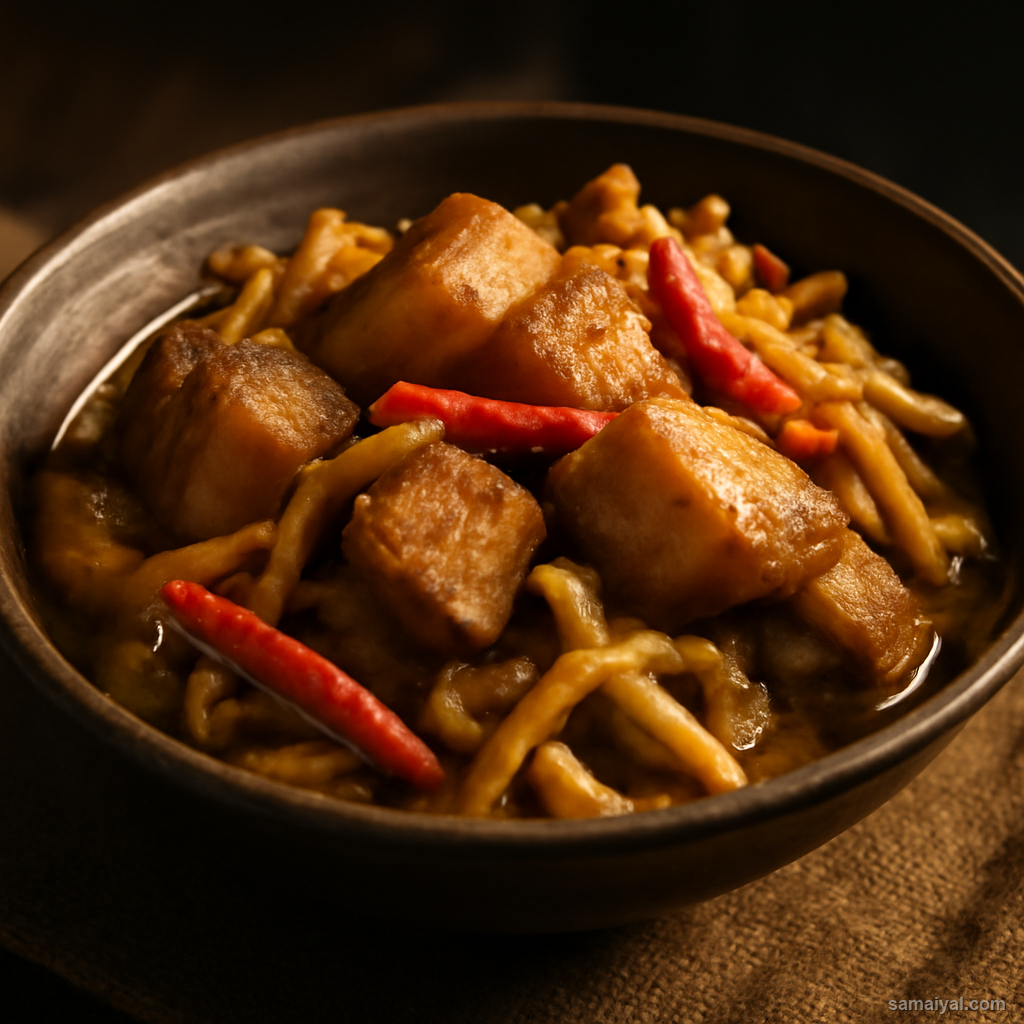
About Pork with Mountain Chilli Bamboo: This simple pork preparation represents the distilled essence of Arunachali home cooking — few spices, slow heat, maximum flavour. The dish lets four ingredients (pork, bamboo, chilli, mustard oil) create something far greater than their sum. It is the kind of weeknight dinner that feeds Arunachali highland families across all the major tribes — Adi, Galo, Apatani, Mishmi — with regional variations on the basic theme.
Understand mountain chillies: Traditional Arunachali "mountain chillies" include several local varieties — green chillies grown in highland village gardens, and (in some regions) the genuinely fierce bhoot jolokia (ghost pepper) for heat-loving households. For most home cooks, fresh green Indian chillies provide the right level of heat.
If using bhoot jolokia: This is the iconic ultra-hot chilli of Northeast India. EXTREMELY HOT — wear gloves when handling, work in a well-ventilated kitchen, and use far less than typical chillies (1/2 chilli for an entire dish is plenty). Most home cooks should not use bhoot jolokia.
For regular cooking: Use 4 fresh green Indian chillies. The dish is meant to be moderately hot — Arunachali style. Adjust quantity to your heat tolerance.
Choose pork belly: Use 600g of pork belly, cubed into 3-4cm pieces. The cut should have visible layers of fat alternating with meat — about 60% meat to 40% fat is ideal. The fat melts during slow cooking and produces the rich gravy character.
If pork belly unavailable: Pork shoulder works as substitute. Avoid lean pork loin — it dries out during slow cooking.
Clean the pork: Wash the pork pieces under cold running water. Pat very dry with kitchen paper.
Understand bamboo shoots: Use 250g of fresh or fermented bamboo shoots. The traditional Arunachali version uses fermented bamboo (called eup or khorisa) for tangy umami depth.
If using fermented bamboo: Drain and rinse briefly to balance the saltiness.
If using fresh bamboo: Peel away tough outer layers, slice into 5mm rounds, and blanch in salted boiling water for 5 minutes. Drain.
If using canned bamboo: Drain and rinse thoroughly.
Prepare the onion: Take 1 medium onion. Peel and finely chop into 5mm dice.
Prepare the garlic: Take 6 garlic cloves. Crush, peel and mince finely. Generous garlic is essential for pork dishes.
Use a heavy pot with tight lid: Use a heavy-bottomed Dutch oven, large kadhai with lid, or thick-bottomed casserole. The lid must seal well.
Heat the mustard oil correctly: Pour 2 tbsp mustard oil into the pot over high heat. Heat for 2 minutes until smoking heavily. The smoking-then-cooling cycle is essential.
Reduce heat: Reduce heat to medium-high. Adding aromatics to violently smoking oil will burn them.
Fry the aromatics: Add the chopped onion and minced garlic. Stir-fry for 3 minutes, stirring often, until soft and just turning golden.
The critical pork sear: Increase heat to high. Add the pork cubes. Spread in a single layer. Sear hard for 8 minutes, stirring and turning every 2 minutes. The pork will release some liquid initially, then start to dry and brown deeply.
Why hard sear matters: The deep browning at high heat creates the foundation flavour. Without proper searing, the dish tastes flat.
Add bamboo, chilli, turmeric, and salt: Add the prepared bamboo shoots, slit green chillies, 1 tsp turmeric powder, and salt to taste — about 3/4 tsp; remember the fermented bamboo carries some salt. Stir for 1 minute to integrate.
Add water: Pour in 1 cup of hot water. Stir well to lift any caramelised bits stuck to the bottom.
The critical low simmer: Bring to a gentle simmer. Reduce heat to the absolute lowest setting your stove allows. Cover the pot tightly.
Cook for 45 minutes: Cook covered for 45 minutes, lifting the lid every 10 minutes to gently turn the pork pieces and check the moisture.
Watch the moisture: The braising liquid should always be present. If it gets too low (less than 2 tbsp visible), add 2-3 tbsp hot water.
Check doneness at 45 minutes: Pierce a piece of pork with a fork. It should slide in with no resistance, and the meat should pull apart easily. The fat should look translucent and rendered.
Uncover and reduce: Remove the lid. Increase heat to medium-high. Stir gently every 1-2 minutes for the next 5-7 minutes, allowing the gravy to reduce to a thick glossy sauce that clings to the pork. Stop when the sauce coats the back of a spoon thickly.
The consistency: The dish should be moderately wet — like a thick stew with chunks of pork in a glossy sauce. Not soupy, not dry. The bamboo shoots should be tender but still hold their shape.
Final flavour check: Taste a piece of pork with sauce. The dish should hit you with multiple flavours — rich pork, sharp tangy fermented bamboo, mountain chilli heat, sweet caramelised onion, mustard oil pungency, deep aromatic garlic. The simplicity belies the complex layered flavour.
Garnish: Switch off the heat. Sprinkle 2 tbsp finely chopped fresh coriander over the top.
Serve with rice: Serve hot over plain steamed rice — the most traditional pairing. The rich pork and tangy bamboo demand the neutral foundation of plain rice.
For a complete weeknight dinner: Pair with a stir-fried green vegetable (mustard saag, recipe id 1299) and a bowl of clear soup. The combination is hearty highland eating.
A cultural note: This dish is the unofficial signature of Arunachali home cooking — every household across the highland tribes has its own version. The basic technique (sear pork, braise with bamboo and chilli) is universal; the variations (different chillies, herbs, additional vegetables) reflect family preferences passed down through generations. Cooking this dish is participating in the most fundamental Arunachali tradition.
Leftover storage: Stored in the fridge in an airtight container, this dish keeps for 3-4 days and tastes even better the next day after the flavours have deepened. The bamboo flavour mellows beautifully overnight. Reheat gently on the stovetop with a splash of water — never boil aggressively, which can toughen the meat.
⭐ Featured
Slow-cooked black lentils in a rich buttery tomato gravy — a Punjabi classic that...

Red kidney beans in a thick spiced tomato gravy, best eaten with steamed basmati rice.

Royal Mughlai-style paneer in a cashew-cream gravy — rich, indulgent and perfect for...

Soft potato-paneer dumplings in a luscious cashew gravy — the vegetarian showstopper.
Comments & Tips
Be the first to share your experience with this recipe!
Leave a Comment