 ⭐ Featured
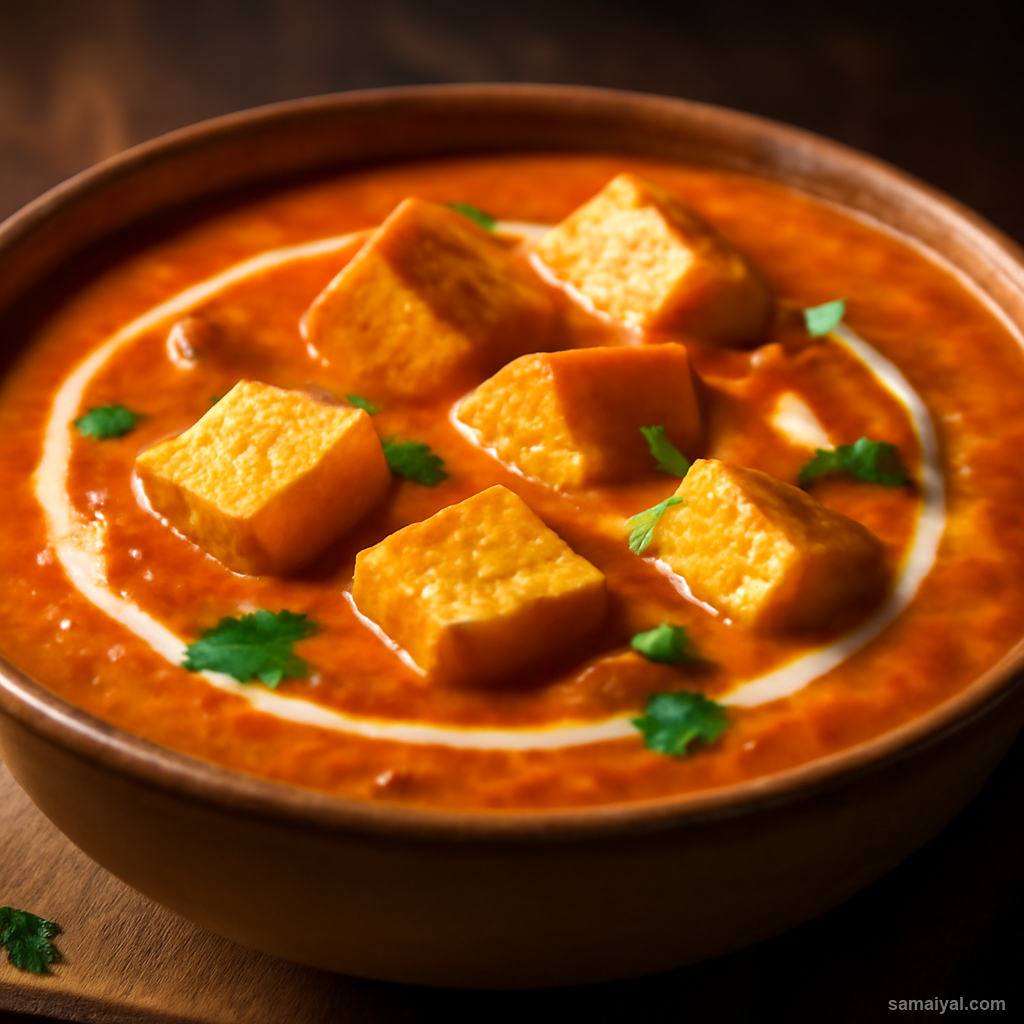
Butter Paneer Masala
Creamy tomato-based curry with soft paneer cubes — the all-time favourite of Indian...
Raw papaya cooked in alkaline banana-ash khar solution — Assam's most unique and ancient dish

About Khar Papaya: This is one of the most singular and ancient dishes in all of Indian cooking — and the dish that defines Assamese cuisine more than any other. Khar is the alkaline cooking liquid traditionally filtered from the ash of dried banana peels. It transforms ordinary vegetables into something with an extraordinary mineral depth and a slippery silky texture. Khar Papaya is the most beloved of the khar dishes, served as the opening course of an Assamese meal.
Understand khar: Khar is alkaline, similar in chemistry to lye. It is made traditionally by burning sun-dried banana peels (specifically the variety called bhim kol or athiya kol), collecting the ash, soaking it in water, and filtering through a cloth. The resulting liquid is golden, clear and strongly alkaline. Outside Assam, the closest substitute is 1/2 tsp of food-grade baking soda dissolved in 3 cups of water — different in nuance but functionally similar.
Source khar if you can: If you have access to authentic kola khar from an Assamese kitchen or specialty store, use 2 tbsp of the strained liquid. If not, use the baking soda substitute. Never use household lye or industrial alkali — only food-grade.
Choose the papaya: Use 1 medium raw green papaya — about 500g. The papaya should be firm, fully green, with no yellowing whatsoever. Ripe papaya will not work in this dish — it falls apart and tastes wrong.
Peel safely: Wear gloves if you are sensitive to papaya latex (the white sap that comes from the cut skin can irritate skin). Peel away the green skin with a vegetable peeler. Cut the papaya in half lengthwise and scoop out the white seeds and any soft inner flesh with a spoon.
Dice the papaya: Cut the peeled deseeded papaya into 2cm cubes. Try to keep them roughly even so they cook at the same rate. Set aside.
Prepare the khar solution: In a heavy saucepan or kadai, combine 2 tbsp khar (or the baking soda solution) with 3 cups of water. Bring to a rolling boil over medium-high heat. The water will turn slightly cloudy from the alkali — this is normal.
Add the papaya: Carefully tip the diced papaya into the boiling khar liquid. The papaya will bob on the surface initially. The solution should cover the papaya fully — add a little more water if not.
Reduce and simmer: Reduce heat to medium. Simmer uncovered for 12–15 minutes. The papaya will turn from opaque green to almost translucent and develop a soft yielding texture. Test by piercing with a fork — it should slide in with no resistance.
Drain carefully: Set a colander over the sink. Drain the cooked papaya, discarding the alkaline liquid. Rinse the papaya gently under cold running water — this removes any residual alkali. Drain thoroughly.
Return to a clean pan: Heat a clean dry pan on medium heat. Add 1 tsp mustard oil. The oil should warm but not smoke.
Mash gently: Tip the drained papaya into the warm oil. Use the back of a wooden spoon to gently mash about half of the cubes — the rest should remain as soft chunks. This combination of mashed and chunky is the signature texture.
Add salt and warm through: Add 1/2 tsp salt and toss gently for 1 minute on medium heat. The mash should become uniformly silky and slightly glossy.
Add green chilli: Slit 2 green chillies lengthwise and add to the pan. Cook 30 seconds — long enough to wilt the chillies but keep them bright green.
Fresh garnish: Remove from heat. Add a generous handful of fresh coriander leaves, finely chopped.
Final touch: Drizzle 1/2 tsp raw mustard oil over the top — yes, raw, just before serving. This is the Assamese signature flourish that brings the dish alive.
Serve: Khar Papaya is traditionally served as the very first course of an Assamese meal — even before the dal — to open the appetite and prepare the palate. Serve in small portions over a mound of plain steamed rice. The first bite is meant to be at the start of the meal.
A cultural note: Khar dishes are deeply medicinal in Assamese tradition — believed to aid digestion, balance the system, and prepare the body for the heavier dishes that follow. Treat khar with respect for its long cultural history.
⭐ Featured
Creamy tomato-based curry with soft paneer cubes — the all-time favourite of Indian...
 ⭐ Featured
Velvety spinach curry with golden-fried paneer — nutritious, vibrant and absolutely delicious.

Bold, tangy chickpea curry packed with spices — a street food staple that works as a main dish.

Dry-spiced potatoes and cauliflower — simple, aromatic, and endlessly satisfying.
Comments & Tips
Be the first to share your experience with this recipe!
Leave a Comment