 ⭐ Featured
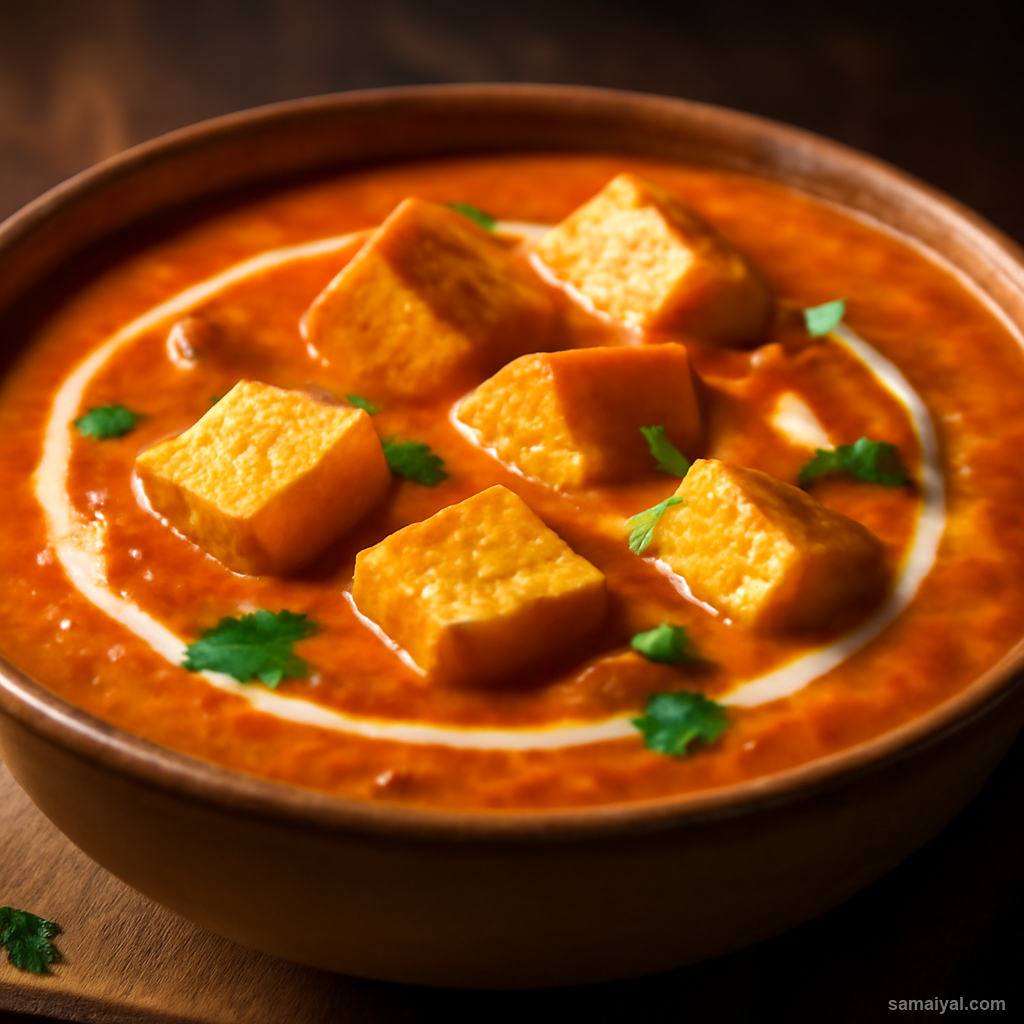
Butter Paneer Masala
Creamy tomato-based curry with soft paneer cubes — the all-time favourite of Indian...
The complete Gujarati thali sequence — toor dal with jaggery and lemon, sauteed seasonal vegetable, rice and chapati served together. Understanding how to assemble this daily meal teaches the logic behind all Gujarati home cooking.

Cook the toor dal first: Pressure cook 1 cup toor dal with 3 cups water and 1/2 tsp turmeric for 4 to 5 whistles. Mash well and add water to flowing consistency. This can be done in advance.
Make the dal tadka: Heat 2 tbsp ghee. Add mustard seeds — pop. Add curry leaves, asafoetida, dried red chilli. Add ginger paste and garlic paste — stir 1 minute. Add chopped tomato — cook 4 minutes. Turn to low. Add spice powders — stir 1 minute. Pour into the cooked dal. Add jaggery, lemon juice and salt. Simmer 5 minutes. The Gujarati dal should be slightly sweet, slightly sour and lightly spiced all at once.
Make the shaak: Heat 2 tbsp oil. Add mustard seeds and curry leaves. Add cubed potato. Cook on medium heat for 3 minutes. Add turmeric, red chilli powder and coriander powder — stir 2 minutes on low heat. Add 1/4 cup water. Cover and cook 10 minutes until tender. Add jaggery and lemon juice. Cook 2 minutes. The shaak should have the Gujarati sweet-sour balance.
Cook the rice: Wash 1.5 cups rice. Cook by absorption — add rice to 2.5 cups water, bring to a boil, reduce to lowest heat, cover and cook 18 minutes. Rest 5 minutes covered. Fluff gently.
Make the rotli dough: Mix 2 cups wheat flour with a few drops of oil and enough water — about 3/4 cup — to form a soft, smooth dough. Knead 5 minutes. Rest 10 minutes. Divide into 12 balls.
Roll the rotli very thin: Gujarati rotli (chapati) is rolled much thinner than North Indian chapati — almost transparent. Roll each ball into a very thin round, about 20 to 22 cm, dusting with flour as needed.
Cook the rotli on high heat: Heat a flat griddle on high. Place one rotli on it. Cook 30 seconds — small bubbles will appear. Flip. Cook 30 seconds. Then hold directly over a medium gas flame with tongs for 5 to 10 seconds on each side until brown spots appear and the rotli puffs. Apply ghee immediately. Keep in a covered container.
Warm the papad: Roast a papad directly over a low gas flame, rotating constantly for 30 seconds until it puffs and develops brown spots. Or fry in hot oil for 10 seconds.
Assemble the thali: On a round steel plate (thali), place a small bowl of dal, a portion of the shaak, a mound of rice, 2 to 3 rotli, the papad, a small portion of pickle and a few slices of raw onion.
The sequence of eating: In Gujarat, the meal is not eaten course by course but simultaneously — a bite of rice with dal, a bite of rotli with shaak, a piece of papad between. Begin by pouring a little dal over the rice. Add ghee over the rotli before eating.
Note: The Gujarati thali is considered one of the most balanced regional meals in India — it includes protein (dal), carbohydrate (rice and rotli), seasonal vegetable, probiotic (pickle), digestive (papad). The sweet-sour-spicy balance (mithu-khatu-tiku) present in both the dal and the shaak is the defining flavour principle of all Gujarati cooking.
⭐ Featured
Creamy tomato-based curry with soft paneer cubes — the all-time favourite of Indian...
 ⭐ Featured
Velvety spinach curry with golden-fried paneer — nutritious, vibrant and absolutely delicious.

Bold, tangy chickpea curry packed with spices — a street food staple that works as a main dish.

Dry-spiced potatoes and cauliflower — simple, aromatic, and endlessly satisfying.
Comments & Tips
Be the first to share your experience with this recipe!
Leave a Comment