 ⭐ Featured
Aloo Paratha
Stuffed whole-wheat flatbread with spiced potato filling — the quintessential Punjabi...
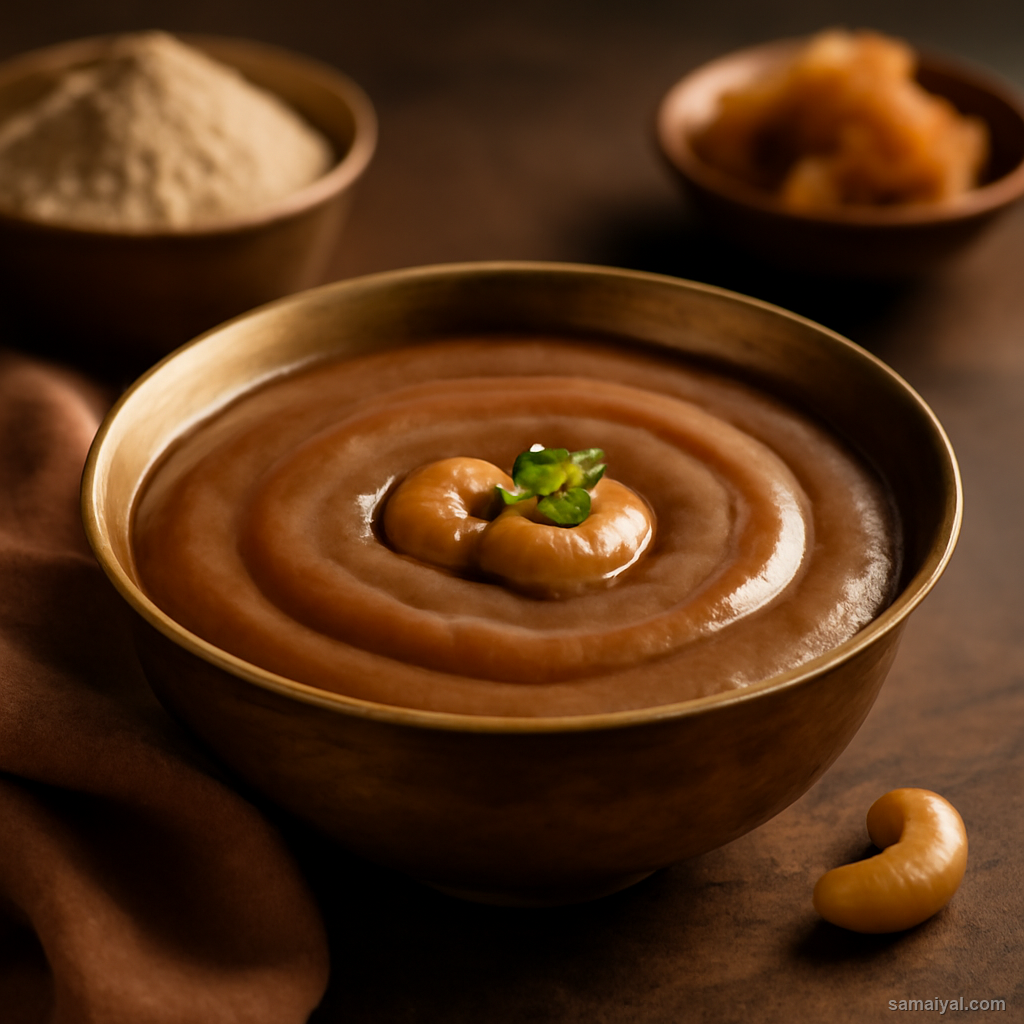
Amaranth flour cooked with ghee and jaggery into a warm, flowing porridge — consumed during Navratri fasting in Gujarat when no grain is permitted but rajgira (amaranth) is. A warming, sweet preparation that sustains through the day's fasting.
Fry cashews: Heat 1 tsp ghee. Fry cashews until golden. Keep aside.
Heat ghee: Heat 2 tbsp ghee in a heavy pot on medium-low.
Roast amaranth flour: Add rajgira flour to the hot ghee. Stir continuously for 2 to 3 minutes until the flour darkens one shade and smells faintly nutty. Amaranth flour roasts faster than wheat — watch carefully.
Heat milk separately: In a separate pot, heat 2 cups milk (or water) to near-boiling.
Add hot milk to roasted flour: Pour the hot milk into the roasted rajgira flour while stirring vigorously. Add in a thin stream while stirring to prevent lumps.
Stir continuously: The porridge thickens rapidly — stir continuously for 3 minutes on medium heat until smooth and flowing.
Add jaggery: Remove from heat. Add grated jaggery. Stir until dissolved.
Add cardamom and dry ginger: Stir.
Add fried cashews: Stir in the fried cashews.
Serve hot: The rajgira raab should be smooth, flowing and fragrant with ghee and cardamom. Serve in a bowl for the Navratri morning.
Note: Rajgira (amaranth) is one of the few foods permitted during the Navratri fast in Gujarat and Maharashtra — the nine-night festival dedicated to Goddess Durga. Regular grains (wheat, rice) are forbidden during the fast but rajgira, which is technically a seed rather than a grain, is permitted. The Navratri fast is observed by millions of Gujaratis across two periods in the year (spring and autumn) — creating a specific category of fasting recipes (upwas ka khana) that are inventive and substantial.
⭐ Featured
Stuffed whole-wheat flatbread with spiced potato filling — the quintessential Punjabi...
 ⭐ Featured
Thin crispy rice-lentil crepe filled with spiced potato masala — the iconic South...
 ⭐ Featured
Steamed fermented rice cakes served with tangy lentil vegetable soup — South India's...

Crispy ring-shaped lentil fritters with fluffy interior — a South Indian must-have with sambar.
Comments & Tips
Be the first to share your experience with this recipe!
Leave a Comment