 ⭐ Featured
Dal Makhani
Slow-cooked black lentils in a rich buttery tomato gravy — a Punjabi classic that...
Clear bamboo shoot broth with egg swirled in — quick and nourishing weeknight dinner of valley communities
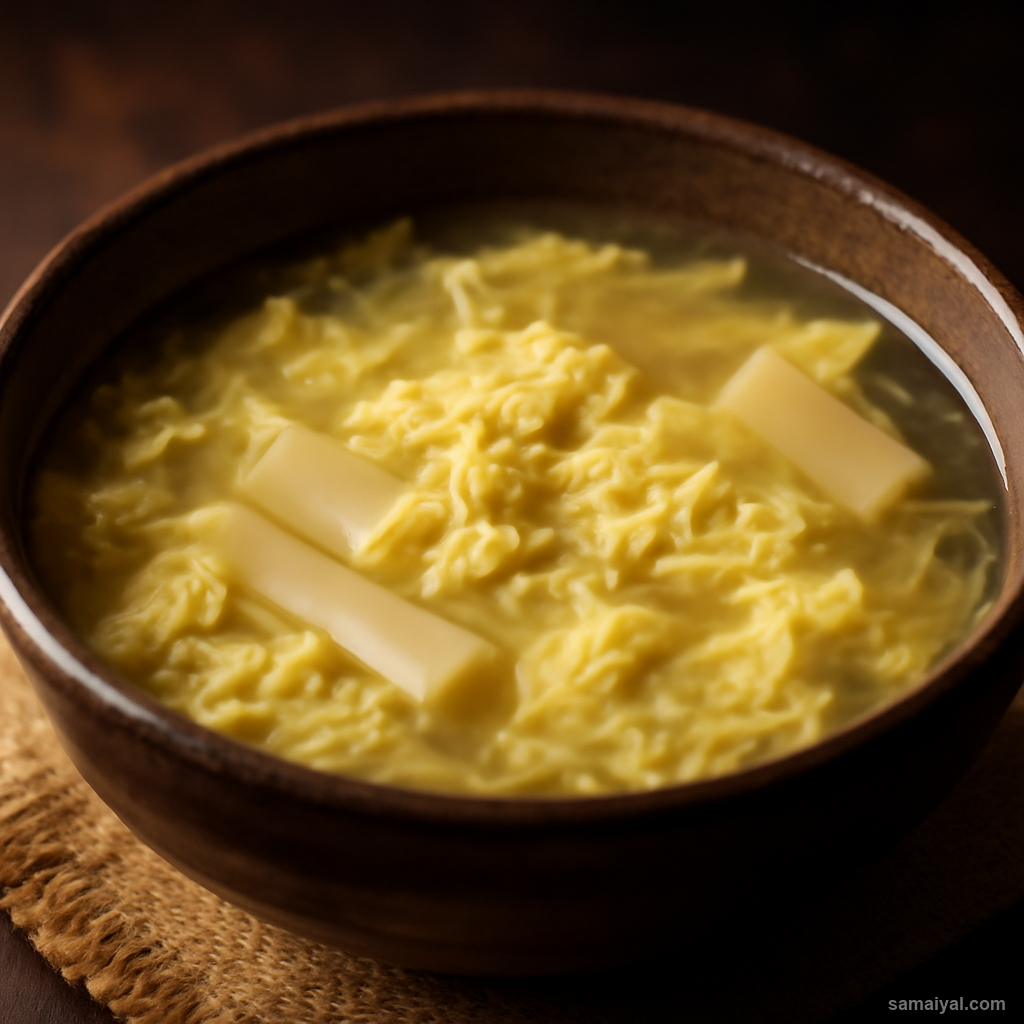
About Egg Drop Bamboo Soup: Quick egg drop soup using bamboo shoot broth is the go-to weeknight dinner across Brahmaputra valley communities. Ready in 15 minutes from start to finish, the soup is a perfect example of how Chinese culinary technique (the egg-drop swirl) has integrated into Arunachali home cooking through generations of cultural exchange across mountain borders. It is filling, nutritious, and deeply satisfying — the kind of dinner that hits the spot on a tired Tuesday evening.
Understand the technique: Egg drop is a Chinese technique where beaten eggs are slowly streamed into hot broth while stirring. The eggs cook instantly into delicate ribbon-like strands, creating beautiful texture and adding protein. Master this and you have a fundamental cooking technique that opens up many possibilities.
Understand bamboo shoots: Use 100g of bamboo shoots, sliced thinly. Fresh, canned, or fermented all work — fresh is most authentic, canned is most convenient.
If using fresh bamboo shoots: Peel away the tough outer layers, then slice thinly. The critical step — blanch in salted boiling water for 5 minutes to remove the bitter cyanogenic compounds in raw bamboo. Drain.
If using canned bamboo shoots: Drain and rinse thoroughly. Canned shoots are pre-cooked, no blanching needed.
If using fermented bamboo shoots: Drain and rinse briefly to reduce the sourness. The slight tang adds complexity but should not dominate.
Use fresh eggs: Use 2 large eggs at room temperature. Fresh eggs produce more vibrant yellow ribbons. Cold-from-fridge eggs work but may temporarily lower the soup temperature when added.
Prepare the eggs: Crack the eggs into a small bowl. Beat lightly with a fork — about 15 seconds. The whites and yolks should be combined but not over-beaten. Stop when streaks of yolk are still visible.
Why not over-beat: Over-beating creates a uniform yellow that produces solid scrambled-egg pieces rather than delicate ribbons. The slightly streaky beaten egg produces the most beautiful ribbons.
Prepare the ginger: Take a 1-inch piece of fresh ginger. Peel and julienne — cut into thin matchsticks. Generous ginger is the soul of this soup.
Prepare the green chilli: Take 1 fresh green chilli. Slit lengthwise.
Prepare the spring onions: Take 2 spring onions (scallions). Wash and slice into thin rounds.
Use a clean stainless steel pot: Use a clean pot with at least 2-litre capacity.
Bring water to boil: Pour 4 cups of water (or light chicken/vegetable broth for richer flavour) into the pot. Bring to a rolling boil over high heat.
Add bamboo and ginger: Add the prepared bamboo shoots and julienned ginger. Reduce heat to medium.
The simmer: Simmer uncovered for 8 minutes. The bamboo will release its flavour into the broth and the ginger will infuse warming character.
Add seasoning: Add 1 tsp soy sauce (light soy preferred), the slit green chilli, salt to taste (about 1/2 tsp), and 1/4 tsp freshly ground black pepper.
The critical egg drop technique: This is the defining moment of the dish. The broth must be at a gentle simmer (small bubbles, not violent boiling) for the egg drop to work properly.
The stir-and-pour technique: Use a wooden spoon or chopsticks to stir the soup in a slow circular motion. While stirring, slowly pour the beaten egg in a thin steady stream into the centre of the swirling broth.
The stream technique: Pour from a height of about 15cm — this creates a thinner stream that produces finer ribbons. Move your hand slightly as you pour to spread the egg around the pot.
Do not stir aggressively: Once the egg hits the broth, do not stir wildly. Continue the gentle circular stir for 30 seconds — the eggs will form into delicate yellow ribbons throughout the broth.
The ribbon test: Properly done egg drop should produce thin, almost translucent yellow strands distributed throughout the soup. Thick chunks indicate the egg was added too quickly or the broth was at full boil.
Do not over-cook: After the egg ribbons form (within 20-30 seconds), the soup is done. Continued cooking makes the eggs tough.
Final aromatics (optional): Switch off the heat. Some Arunachali traditions add 1/2 tsp toasted sesame oil at the end for nutty aromatic depth. This is optional but excellent.
Final taste: Dip a clean spoon and taste. The soup should hit you with multiple gentle flavours — clean broth, tender bamboo, sharp ginger, mild chilli, soft egg ribbons, savoury soy. The flavour should be subtle and harmonious, not punchy.
Garnish: Sprinkle the sliced spring onions over the top. The fresh spring onion adds bright contrast against the soft soup.
Ladle and serve: Pour into deep bowls. Make sure each bowl gets a good mix of broth, bamboo, and egg ribbons. Serve immediately — the egg ribbons firm up over time and the soup is at its best fresh.
Serve with rice: Pair with a small bowl of plain steamed rice. The combination of broth, bamboo, egg, and rice is a complete light meal.
For a more substantial meal: Add 100g sliced cooked chicken or 50g shredded smoked meat to the broth before adding the egg. This produces a heartier dinner.
For invalids: This soup is exceptionally easy to digest — the soft eggs and tender bamboo are gentle on sensitive stomachs. Many Arunachali families serve it during recovery from illness.
A cultural note: The egg drop technique came to Arunachali kitchens through centuries of trade and migration across the China-Myanmar-India borders. The Chinese name (蛋花湯, "egg flower soup") describes the visual beauty of the dish — delicate yellow flowers floating in clear broth. The Arunachali version uses the Chinese technique with local bamboo shoots and Indian aromatics, creating a uniquely regional fusion. Eating this soup connects you to the deep cross-cultural exchange that defines Northeast Indian cuisine.
Leftover storage: Egg drop soup is best made fresh and eaten immediately. Stored in the fridge in an airtight container, it keeps for 1 day. The egg ribbons firm up overnight and the texture changes; the soup remains good but loses its delicate quality. Reheat gently — never boil aggressively, which can make the eggs rubbery.
⭐ Featured
Slow-cooked black lentils in a rich buttery tomato gravy — a Punjabi classic that...

Red kidney beans in a thick spiced tomato gravy, best eaten with steamed basmati rice.

Royal Mughlai-style paneer in a cashew-cream gravy — rich, indulgent and perfect for...

Soft potato-paneer dumplings in a luscious cashew gravy — the vegetarian showstopper.
Comments & Tips
Be the first to share your experience with this recipe!
Leave a Comment