 ⭐ Featured
Butter Paneer Masala
Creamy tomato-based curry with soft paneer cubes — the all-time favourite of Indian...
Fiddlehead fern stir-fried with mustard oil — the most prized vegetable in all of Assam
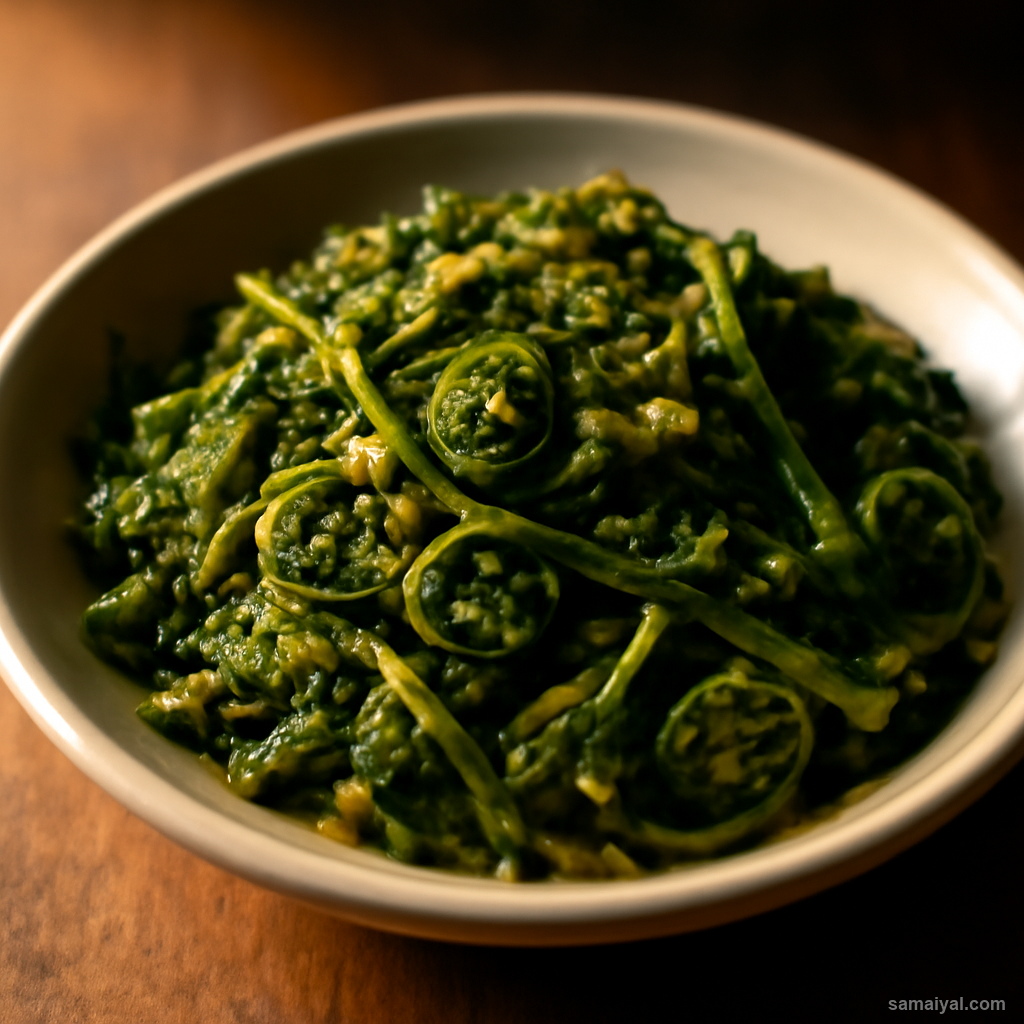
About Dhekia Xaak: Dhekia (fiddlehead fern) is the most prized vegetable in all of Assam — celebrated in poetry, song and Bihu festival foods. Available only in spring (March-May), when the young fern fronds emerge curled like a violin head, dhekia is a forager's prize gathered from forest edges and hill slopes. The Assamese stir-fry preparation is minimalist, letting the fern's unique mossy-mineral flavour shine through.
Understand fiddlehead ferns: Fiddleheads are the tightly coiled young fronds of certain ferns. The Assamese dhekia is specifically the lady fern (Diplazium esculentum) variety, but other fiddlehead types like ostrich fern work too. Each frond looks like a small green spiral — about 5-7cm long.
The critical safety warning: Some fern species contain mild toxins that are destroyed by cooking but cause stomach upset if eaten raw. Always blanch fiddleheads thoroughly — never eat raw. The blanching step is non-negotiable.
Source fresh fiddleheads: Use 300g of fresh fiddlehead ferns. They should be tightly curled, bright green, with brown papery scales (these come off during washing). Avoid uncoiled or wilted ferns — they are past their prime.
If you cannot find fresh fiddleheads: Frozen fiddleheads are sold at specialty stores. Bamboo shoots are not a substitute — completely different flavour. As a last resort, baby asparagus tips work as a vague stand-in, though the experience is different.
Clean the fiddleheads carefully: Wash thoroughly under cold running water. The brown papery scales on the curled heads come off during washing — rub gently with your fingers. Repeat until the water runs clear.
Snap off the brown ends: Each fiddlehead has a small straight stem at the base. The bottom 1-2cm is often woody or dried out. Snap off this brown end with your fingers — the fern will break naturally at the right point.
The critical blanching step: Bring a large pot of water to a rolling boil with 1 tsp salt. Add the cleaned fiddleheads all at once. Boil for 3-5 minutes uncovered. The 3-minute minimum destroys any potentially harmful compounds; longer is fine and produces more tender ferns.
Check doneness: A blanched fiddlehead should be tender but still hold its curled shape. Bite into one — it should chew easily without being mushy. Use 5 minutes if the ferns are large or older.
Drain and rinse cold: Drain in a colander. Immediately rinse under cold running water for 30 seconds. The cold rinse stops the cooking and locks in the bright green colour.
Let drain very thoroughly: Spread the blanched fiddleheads on a clean kitchen towel. Pat dry. Wet ferns dilute the dish and stop the spices adhering properly.
Prepare the chillies: Take 2 dried red chillies. Snap each in half. Tap out and discard most of the seeds for milder heat.
Prepare the garlic: Take 3 garlic cloves. Peel and slice thinly into rounds. Sliced rather than minced — the slices stay visible in the final dish.
Use a wide pan: Use a wide kadhai or large frying pan. The fiddleheads need room to stir-fry rather than steam.
Heat the mustard oil correctly: Pour 1 tsp mustard oil into the pan over medium-high heat. The amount is small — dhekia xaak is not a deeply oiled dish. Heat for 30-45 seconds until just smoking, to remove the raw bitter edge.
Temper with chillies and garlic: Reduce heat to medium-high. Add the broken dried red chillies. They will sizzle and turn a darker red. Add the sliced garlic. Stir for 30-45 seconds until the garlic turns light golden. Do not let it go dark.
Add the blanched ferns: Add the dried blanched fiddleheads to the pan. Use a flat spatula to toss them through the spiced oil.
Add turmeric: Sprinkle 1/2 tsp turmeric powder over the ferns. Stir for 15 seconds — turmeric burns very quickly so move on.
The critical high-heat stir-fry: Increase heat to high. Stir-fry constantly for 4 minutes, lifting and turning with the flat spatula. The high-heat is essential — it dries out any residual moisture and concentrates the flavour. The ferns should turn glossy and just starting to colour at the edges.
Add salt: Sprinkle salt to taste — about 1/2 tsp. Stir for 30 seconds. Adding salt at the end keeps the texture firm.
Final taste check: Taste a fern. It should be tender, slightly mineral-mossy in flavour (the unique character of fiddleheads), with a clear chilli-garlic backbone and the pungent mustard oil shining through. The cooked ferns should still hold their curled shape.
Serve immediately: Dhekia xaak is at its best within 10 minutes of cooking, while still bright green and glossy. The unique fern flavour fades within hours of cooking — this is a dish meant for fresh eating.
Serve with rice: Serve hot alongside steamed rice and dal — the most traditional Bihu pairing. During Bihu festival in mid-April, dhekia xaak is one of the dishes served on the festive thali, alongside other spring vegetables.
Variations: For a more substantial dish, add 1 cup boiled diced potato — produces a quick dhekia aloo. For a luxurious upgrade, add 100g cubed paneer or 4 cooked prawns. The basic technique remains the same.
A cultural note: Dhekia is so culturally important in Assam that it features in Bihu folk songs as a symbol of spring renewal. The brief season (just 6-8 weeks each spring) and forest-foraging requirement make it a special-occasion vegetable. Eating it connects you to the natural rhythm of Assam's ecology.
Leftover storage: Stored in the fridge in an airtight container, dhekia xaak keeps for 1-2 days but the unique flavour fades fast. Best eaten the day it is made.
⭐ Featured
Creamy tomato-based curry with soft paneer cubes — the all-time favourite of Indian...
 ⭐ Featured
Velvety spinach curry with golden-fried paneer — nutritious, vibrant and absolutely delicious.

Bold, tangy chickpea curry packed with spices — a street food staple that works as a main dish.

Dry-spiced potatoes and cauliflower — simple, aromatic, and endlessly satisfying.
Comments & Tips
Be the first to share your experience with this recipe!
Leave a Comment