 ⭐ Featured
Aloo Paratha
Stuffed whole-wheat flatbread with spiced potato filling — the quintessential Punjabi...
Steamed rice with thick yogurt and mustard temper — the cooling probiotic Assamese summer morning meal
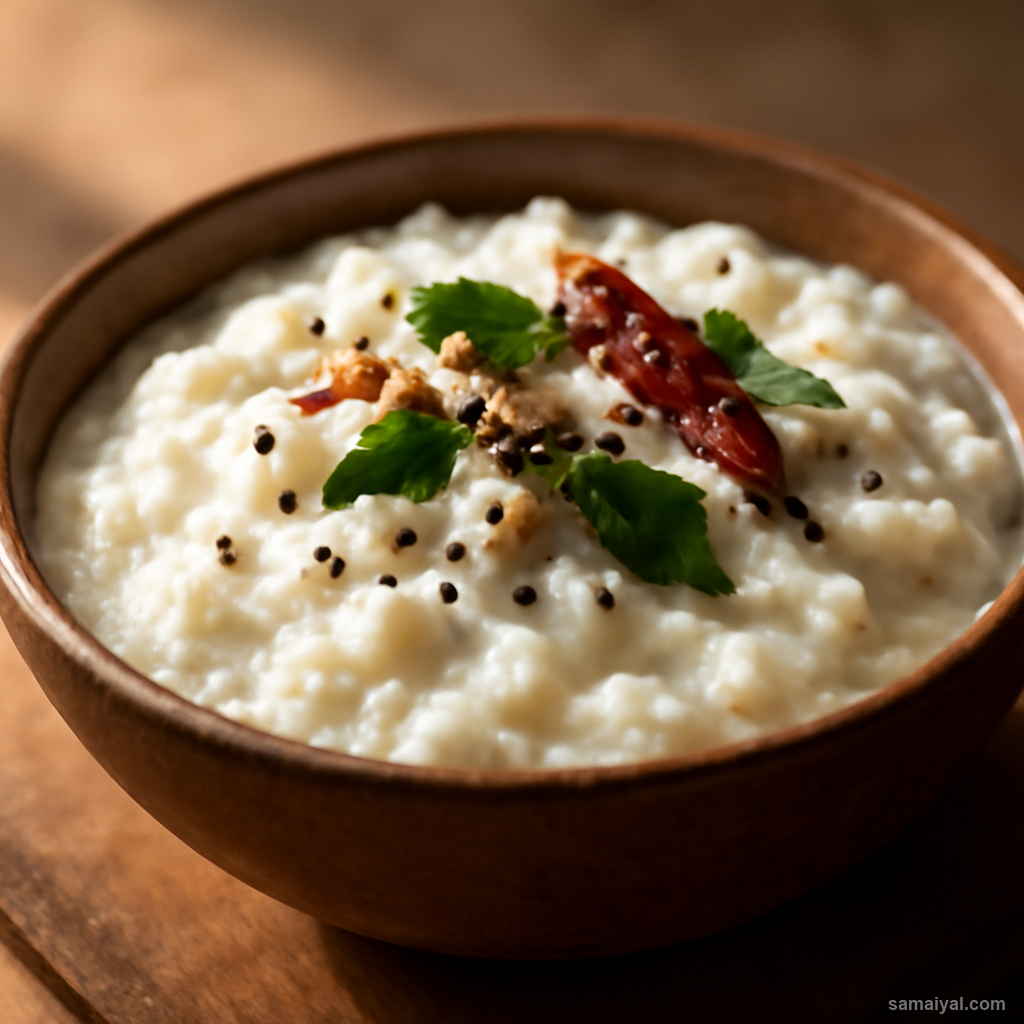
About Dahi Bhaat: Dahi Bhaat (yogurt rice) is the Assamese summer cooling meal — leftover steamed rice mixed with thick yogurt and finished with a sizzling mustard-seed tempering. It is probiotic, light, deeply satisfying and ready in 5 minutes once you have cooked rice. It is also gentle on the stomach and is often given to recovering invalids and during heat-stressed days.
Use the right rice: Use 2 cups of cooked rice. Day-old rice from the fridge is actually preferred — fresh hot rice releases too much starch into the yogurt and produces a gummy texture. Joha rice from Assam works beautifully, but any plain steamed rice is fine.
Cool the rice to room temperature: If your rice is hot, spread it on a wide plate and let cool to room temperature for 10-15 minutes. If using fridge-cold rice, take it out 15 minutes before mixing — fridge-cold rice with cold yogurt produces a chilly, less flavourful bowl.
Fluff and break clumps: Spread the rice on a plate. Use a fork to gently break any clumps so each grain is loose. Avoid pressing — broken grains turn the dish starchy and gummy.
Choose thick yogurt: Use 1 cup of thick, full-fat plain yogurt. Greek-style or hung curd works best. Thin watery yogurt produces a runny dahi bhaat. Yogurt that is gently tangy (about 1 day old) is ideal; very fresh sweet yogurt lacks character, very sour old yogurt overpowers.
Bring yogurt to room temperature: Take the yogurt out of the fridge 10-15 minutes before mixing. Cold yogurt thickens further when mixed with rice; room-temperature yogurt blends smoothly.
Whisk yogurt smooth first: Place the yogurt in a wide bowl. Whisk vigorously with a wire whisk for 30-45 seconds until completely smooth and creamy. This step is essential — unwhisked yogurt looks lumpy when mixed with rice and the salt does not distribute evenly.
Mix yogurt and rice: Tip the cooled rice into the bowl with the whisked yogurt. Add salt to taste — about 3/4 tsp. Use a flat spoon to fold gently — lift from underneath and turn over, do not stir round and round, which crushes the rice.
Adjust the consistency: The mixture should be thick but flowing — like very thick porridge, where the yogurt clings to every grain. If too thick, stir in 2 tbsp cold water or 1 tbsp more yogurt. If too thin, add 1/4 cup more rice.
Prepare the tempering ingredients: Have ready 1 tsp mustard seeds in a small bowl, 1 dried red chilli broken in half, and 1 tbsp neutral oil (or mustard oil for more authentic Assamese flavour). For optional flavour, also have 1 tsp grated fresh ginger and 8-10 fresh curry leaves washed and dried.
Heat the oil for tempering: Pour 1 tbsp oil into a small tempering pan or any small pan over medium-high heat. If using mustard oil, heat for 30 seconds until just smoking, to remove the raw bitter edge. Reduce heat to medium.
Pop the mustard seeds: Add the mustard seeds. Within 5-10 seconds they will start popping vigorously and jumping in the pan. Have a splatter screen handy or hold a pan lid loosely over the top — the seeds jump aggressively. Wait until the popping slows down, about 20 seconds.
Add the dried chilli: Add the broken dried red chilli. It will sizzle and turn a darker red. Fry for 15 seconds.
Optional aromatics: If using ginger and curry leaves, add them now. Fry for 30 seconds until the curry leaves crisp up and the ginger turns lightly golden. The kitchen will fill with the signature Assamese tempering aroma.
Pour over the rice: Switch off the heat. Immediately pour the entire sizzling tempering directly over the yogurt rice. The bowl will hiss and sizzle dramatically.
Fold the tempering in: Use a flat spoon to gently fold the tempering through the rice — lift from underneath and turn over 4-5 times until the spices and oil are evenly distributed. The dahi bhaat will turn from white to pale cream-yellow with visible specks of mustard seed and chilli.
Taste and adjust: Dip a clean spoon and taste. The dish should taste cooling, lightly tangy, gently salted, and faintly aromatic from the tempered spices. Adjust salt to your liking.
Garnish and serve: Sprinkle 2 tbsp finely chopped fresh coriander over the top. Some Assamese also add 1 small ripe tomato finely diced for fresh contrast, or 2 tbsp pomegranate seeds for sweetness — both optional but excellent.
Serve immediately: Dahi Bhaat tastes best within 30 minutes of mixing — the rice keeps absorbing the yogurt and slowly becomes denser. Serve at room temperature, alongside a small Indian pickle for tang or a piece of crisp papad for crunch. Pairs beautifully with a glass of cold water or sweet lime juice.
⭐ Featured
Stuffed whole-wheat flatbread with spiced potato filling — the quintessential Punjabi...
 ⭐ Featured
Thin crispy rice-lentil crepe filled with spiced potato masala — the iconic South...
 ⭐ Featured
Steamed fermented rice cakes served with tangy lentil vegetable soup — South India's...

Crispy ring-shaped lentil fritters with fluffy interior — a South Indian must-have with sambar.
Comments & Tips
Be the first to share your experience with this recipe!
Leave a Comment