 ⭐ Featured
Butter Paneer Masala
Creamy tomato-based curry with soft paneer cubes — the all-time favourite of Indian...
Mustard greens cooked with ginger and garam masala — the Bihar winter saag
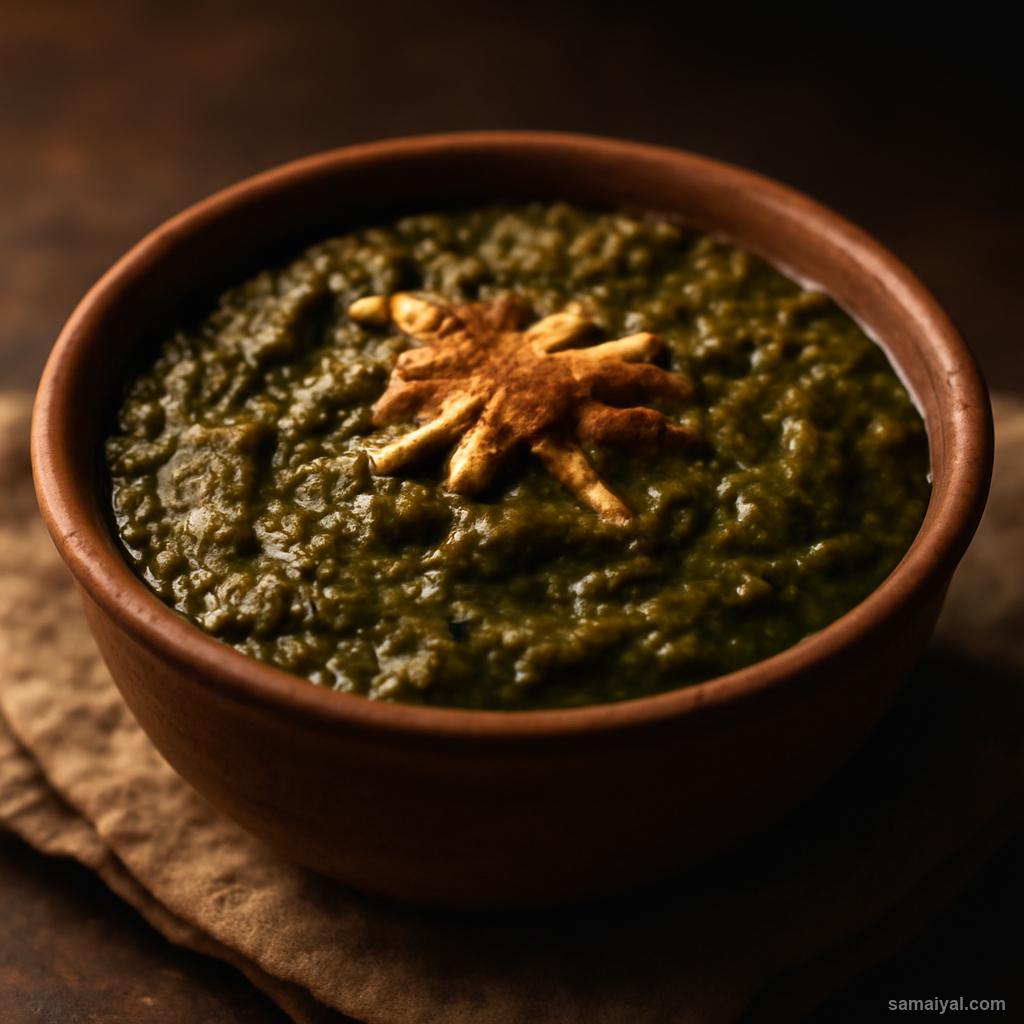
About Bihari Sarson Ka Saag: Sarson Ka Saag is the Bihar winter saag — bitter mustard greens slow-cooked until completely tender and fragrant with ginger. While the more famous Punjabi version uses corn flour and cream, the Bihari version is leaner — relying purely on the natural body of the greens, with mustard oil and a generous hand on garam masala. It pairs beautifully with hot makkai roti and a knob of butter.
Understand the seasonality: Mustard greens are a winter vegetable in India, available primarily from November through February. In peak season (December-January) they are at their most tender and most flavourful.
Choose tender mustard greens: Use 500g of fresh mustard greens (sarson). The leaves should be dark green with prominent veins, slightly crinkled, and feel crisp to the touch. Yellowed or limp leaves are old and will taste excessively bitter.
Add spinach for balance: Use 200g of fresh spinach (palak) alongside the mustard greens. The spinach moderates the sharpness of the mustard, producing a more balanced final dish.
Wash thoroughly: Mustard greens hide grit in their crinkles. Submerge both greens in a big bowl of cold water and swish around to dislodge soil. Lift out — do not pour through, or grit comes back. Repeat with fresh water 2-3 times until no grit settles at the bottom.
De-stem and chop: Pull the leaves off any thick lower stalks (which are too fibrous to eat). The thin upper stems can stay. Roughly chop both greens into 3-4cm pieces.
The critical mustard blanching: Bring a large pot of water to a rolling boil. Add 1 tsp salt. Add only the chopped mustard greens (not the spinach yet). Blanch for 5 minutes — this softens the greens and removes some of the harsh bitter edge.
Drain the blanched mustard: Drain the mustard greens in a colander. Reserve the spinach for later — it does not need blanching as it cooks much faster.
Cool slightly: Let the blanched mustard cool for 5 minutes — easier to handle without burning hands.
Prepare the ginger: Take a 1-inch piece of fresh ginger. Peel and grate finely to get 1 tsp.
Prepare the garlic: Take 3 garlic cloves. Crush, peel and mince finely to get 1 tsp.
Use a heavy-bottomed pot: Use a wide kadhai or heavy pot — the saag cooks for a while and thin pots will scorch the bottom.
Heat the mustard oil: Pour 2 tbsp mustard oil into the pot over medium-high heat. Heat for 30-45 seconds until just smoking, to remove the raw bitter edge.
Fry ginger and garlic: Reduce heat to medium. Add the grated ginger and minced garlic. Stir for 1 minute until fragrant. Do not let them burn.
Add all the greens: Add the blanched chopped mustard greens and the raw chopped spinach to the pot. Sprinkle in 1 tsp turmeric powder. Stir to combine.
The long slow cook: Reduce heat to medium-low. Cook uncovered for 25 minutes, stirring every 3-4 minutes. The greens will gradually break down, release their moisture and dry it back out, and turn from bright green to a deep, almost dark green colour. This slow cooking is what develops the saag flavour fully.
Why 25 minutes matters: Bihari sarson ka saag is meant to be deeply cooked — much longer than a quick stir-fry. The long cook allows the bitter compounds in mustard greens to mellow into a rich complex flavour. Skipping or shortening this step produces a sharp, harsh saag.
The critical mashing: After 25 minutes, use the back of a wooden spoon, or a potato masher, to coarsely mash the saag against the sides of the pot. Bihari saag should be roughly mashed — not pureed smooth, not chunky like sauteed spinach. Some leaf pieces should still be visible.
Final cook to incorporate: Cook for 3 more minutes after mashing, stirring constantly, to incorporate everything. The saag should be thick, glossy and dark green.
Add salt: Add salt to taste — about 3/4 tsp. Stir well.
Add garam masala: Sprinkle in 1 tsp garam masala. Stir to combine. The garam masala is the Bihari signature — it transforms simple mustard saag into something more layered and warming.
Why garam masala matters: The Bihari version uses more garam masala than the Punjabi sarson da saag, which relies more on cream for richness. The garam masala adds warming aromatic complexity that balances the mustard's sharpness.
Finish with raw mustard oil: Switch off the heat. Drizzle 1 tsp raw mustard oil over the saag. The Bihari touch — the raw oil at the end provides the signature pungent aroma layer.
Final taste check: Taste a spoonful. The saag should hit you with multiple flavours — mellow but still slightly bitter mustard, warming garam masala, sharp ginger and garlic, pungent mustard oil. The bitterness is part of the appeal — not masked, just balanced.
Serve immediately: Sarson ka saag is at its peak within 30 minutes of cooking. Serve hot in deep bowls.
The traditional pairing: Serve with hot makkai roti (corn flatbread) — the iconic North Indian winter pairing. The slightly sweet corn bread balances the bitter saag perfectly. Place a knob of butter on top of the saag — it melts into the warm greens beautifully.
Alternative breads: If makkai roti is not available, serve with regular wheat roti, paratha, or even with a generous mound of steamed rice. All work well.
For a complete winter meal: Pair with a piece of fish (or paneer for vegetarians) and a glass of buttermilk. The combination is deeply nourishing and satisfying for cold winter days.
Leftover storage: Stored in the fridge in an airtight container, sarson ka saag keeps for 3-4 days and tastes even better the next day after the flavours have deepened. The greens darken slightly overnight but the flavour matures beautifully. Reheat gently on the stovetop with a splash of water.
A cultural note: Sarson ka saag with makkai roti is the iconic winter meal across all of North India — Bihar, Punjab, UP, Haryana, and parts of Rajasthan all have their version. The dish reflects the agricultural cycle of these regions: mustard greens flourish in winter, corn is harvested in autumn for storage. Eating this combination connects you to the deep agricultural rhythm of the North Indian plains.
⭐ Featured
Creamy tomato-based curry with soft paneer cubes — the all-time favourite of Indian...
 ⭐ Featured
Velvety spinach curry with golden-fried paneer — nutritious, vibrant and absolutely delicious.

Bold, tangy chickpea curry packed with spices — a street food staple that works as a main dish.

Dry-spiced potatoes and cauliflower — simple, aromatic, and endlessly satisfying.
Comments & Tips
Be the first to share your experience with this recipe!
Leave a Comment