 ⭐ Featured
Aloo Paratha
Stuffed whole-wheat flatbread with spiced potato filling — the quintessential Punjabi...
A thick, rough-textured maize flatbread made by the Bhil tribal communities of southern Rajasthan (Dungarpur, Banswara) — eaten with wild greens and raw onion. The Bhil version is thicker and coarser than the plains maize roti, using the hand-pressing method traditional to hill communities.
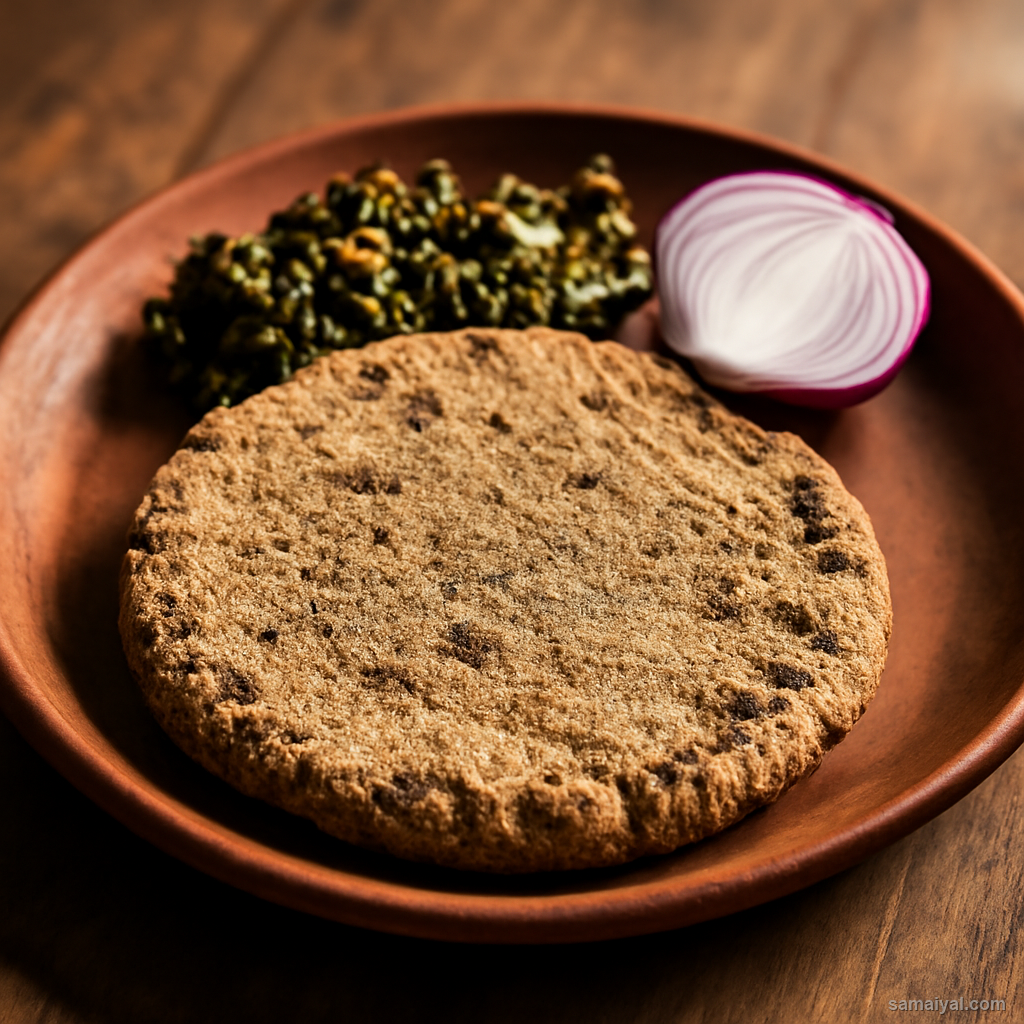
Mix dough with hot water: Place 2 cups coarse maize flour and salt in a wide bowl. Pour hot water gradually while mixing. Knead into a smooth, soft dough — the coarser maize flour requires slightly more water than finer varieties. Knead 3 minutes.
Divide into 6 portions: Divide immediately. Keep covered — maize dough dries fast.
Shape using wet palms: Wet both palms generously. Take one portion. Press and rotate between wet palms, spreading outward, creating a round about 13 to 14 cm in diameter and about 7 to 8 mm thick. The Bhil version is deliberately thicker than the urban maize roti.
Sprinkle water on surface: Sprinkle a few drops of water on the top surface.
Cook on a hot griddle: Place on a medium-high griddle.
Flick water: Flick more water drops on the top surface while on the griddle.
Cook first side: Cook 3 to 4 minutes until the bottom is golden and the surface dry.
Flip: Flip carefully with a wide spatula.
Cook second side: Cook 3 to 4 minutes.
Serve with raw accompaniments: The Bhil tradition is to eat this thick maize roti with raw onion, raw green chilli and any available forest greens — no elaborate sabzi. The simplicity is the tradition.
Note: The Bhil are one of the largest tribal communities of Rajasthan and India — concentrated in the Dungarpur, Banswara and Pratapgarh districts of southern Rajasthan where they have lived in the forested hills for millennia. Their food culture is among the most minimal and direct in Rajasthan — maize, local millets and forest produce form the diet. The thick coarse maize roti with raw onion is a preparation that has been eaten in this form for hundreds of years and continues to be the daily bread of Bhil communities.
⭐ Featured
Stuffed whole-wheat flatbread with spiced potato filling — the quintessential Punjabi...
 ⭐ Featured
Thin crispy rice-lentil crepe filled with spiced potato masala — the iconic South...
 ⭐ Featured
Steamed fermented rice cakes served with tangy lentil vegetable soup — South India's...

Crispy ring-shaped lentil fritters with fluffy interior — a South Indian must-have with sambar.
Comments & Tips
Be the first to share your experience with this recipe!
Leave a Comment