 ⭐ Featured
Gulab Jamun
Soft milk-solid dumplings soaked in fragrant rose sugar syrup — India's most beloved sweet.
Soft spongy cottage cheese balls in light sugar syrup — Bengali-Assamese shared sweet
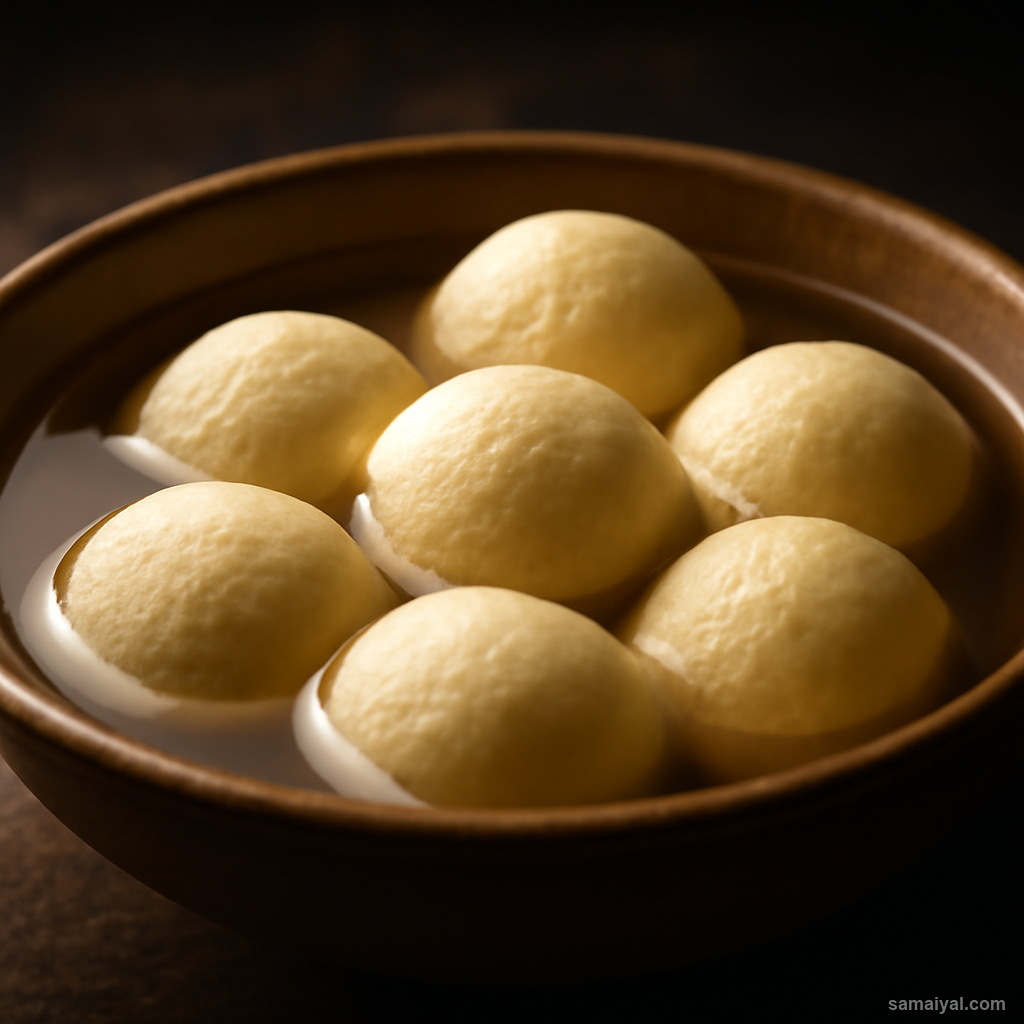
About Assam Rasgolla: Rasgolla made with Assamese chhana (fresh cottage cheese) is a shared tradition with Bengal — light, spongy, soaked in cardamom-fragrant sugar syrup. Across Assam and Bengal (which historically were one cultural region), rasgolla is the iconic milk-based sweet — appearing at weddings, festivals, and celebrations. Assam's version uses local milk, traditional techniques refined over centuries, and the same fundamental approach as Bengal's famous "Rasgulla" — a simpler, lighter sweet than the heavy ghee-laden sweets common in other Indian regions.
Understand the dish: Rasgolla is essentially fresh cheese (chhana) made from curdled milk, formed into balls, then poached in sugar syrup until light and spongy. The texture should be exceptionally light — like clouds that absorb the syrup throughout. Distinct from heavier Bengali sweets like sandesh or rosomalai.
Gather ingredients: 1 litre full-fat milk (full-fat is essential — low-fat or skim milk produces dry hard rasgolla; the fat content is necessary for proper texture; substitute with whole milk if "full-fat" is unavailable), 2 tbsp lemon juice or 1 tsp citric acid (for curdling), 1.5 cups granulated sugar, 4 cups water, 1/4 tsp cardamom powder, optional 5-6 saffron threads soaked in 1 tbsp warm milk for 10 minutes, optional 1/4 tsp rose water for elaborate version.
Make the chhana: In a heavy-bottomed pot, bring 1 litre milk to a gentle boil over medium-high heat. Watch carefully — milk loves to overflow. As soon as the milk is boiling, reduce heat to low. Add the 2 tbsp lemon juice (or citric acid). Stir gently for 30 seconds — the milk will curdle visibly into white solid curds and clear yellow whey. If curdling is incomplete, add 1 more tbsp lemon juice.
Drain the chhana: Line a fine-mesh sieve with several layers of clean muslin cloth. Pour the curdled milk through the sieve. The cheese curds collect in the cloth; the whey drains through. Save the whey if desired for cooking other dishes (highly nutritious). Once drained, gather the muslin into a bundle and rinse the chhana under cold running water for 10 seconds — removes excess sour lemon character.
Press and squeeze: Squeeze the muslin bundle gently to remove most of the moisture. Hang the bundle for 30 minutes (tie to a kitchen tap or hook) to drain further. The chhana should look firm but moist — not dripping water but not bone-dry either.
The critical kneading: Place the drained chhana on a clean surface or large plate. Use the heel of your hand to knead the chhana for 5-7 minutes. The kneading transforms the cheese from grainy to smooth. The texture should change from crumbly to smooth and pliable. Properly kneaded chhana is uniformly smooth, holds together when squeezed, and has a slightly oily appearance from the milk fats releasing.
Shape the rasgolla balls: Pinch off small portions of kneaded chhana — about 20g each (about 16-20 balls total). Roll each portion between your palms into smooth round balls about 3cm diameter. The balls should be smooth — any cracks or rough surfaces will produce unsightly final rasgolla.
Make the sugar syrup: In a wide heavy-bottomed pot, combine 1.5 cups sugar and 4 cups water. Stir to dissolve. Bring to a vigorous boil over high heat. Once boiling, the syrup should be at the right concentration for poaching rasgolla.
Poach the rasgolla: Once syrup is at a vigorous rolling boil, gently slide the chhana balls into the boiling syrup one at a time. Do not crowd — the balls expand significantly during cooking; allow at least 2cm between each.
The critical poaching: Cover the pot. Reduce heat to medium-high — vigorous boiling, but not so vigorous that syrup overflows. Cook for 15-18 minutes. Do not lift the lid. The covered cooking is essential — keeps the steam in, expands the rasgolla, produces light spongy texture.
Doneness check: After 15-18 minutes, lift the lid. The rasgolla should have expanded to about 2-3 times their original size. They should feel spongy when pressed with a spoon. The colour should be uniform white-cream throughout. Pierce one with a thin knife — should come out clean and the rasgolla should spring back when pressed. If undersized or hard, simmer 5 more minutes covered.
Add cardamom and finish: Switch off the heat. Sprinkle in 1/4 tsp cardamom powder. Add the saffron-milk mixture if using. Stir gently. Add 1/4 tsp rose water if using. Let the rasgolla rest in the syrup for at least 30 minutes — preferably 1 hour or more — at room temperature. The resting period is essential — the rasgolla absorb the cardamom and saffron flavours from the syrup throughout this time.
Final taste and serving: Should taste deeply light and fragrant — soft spongy cheese, fragrant cardamom, gentle saffron warmth, sweet but not too sweet. The texture is the key feature — exceptionally light, almost cloud-like. Most traditional Assamese serving is at room temperature, but chilled rasgolla is also excellent (refrigerate in syrup for 1-2 hours). Serve in small bowls with some of the syrup poured over each. Each diner should receive 2-3 rasgolla per portion.
Serve at festivals, for guests, and variations: At weddings, Bihu festivals, and celebrations, rasgolla is one of the iconic sweets. Pack in small clay or glass containers as traditional gift sweet for honouring guests. Children love rasgolla — an excellent introduction to Indian sweets. Variations: add 1 tbsp finely chopped pistachios as garnish; 1 tsp lemon zest to the syrup for brightness; or 1/4 tsp rose water plus saffron for more aromatic complex version.
A cultural and historical note: Rasgolla represents the shared culinary heritage of Assam and Bengal. The dish has been part of both regional cuisines for centuries. Modern Assamese rasgolla maintains the traditional technique that produces the distinctive light spongy texture — distinct from the harder, more compact rasgolla found in other parts of India. As industrial sweets have become available, traditional handmade rasgolla has declined; cooks who maintain the tradition are valuable cultural keepers. The dish provides moderate calories — much lighter than heavy ghee-laden sweets. Genuinely lighter and healthier than typical Indian celebration sweets.
Leftover storage: Stored in syrup in fridge in an airtight container, rasgolla keeps for 5-7 days. Texture firms slightly when cold but flavour remains beautiful. Bring to room temperature before serving for traditional eating.
⭐ Featured
Soft milk-solid dumplings soaked in fragrant rose sugar syrup — India's most beloved sweet.

Slow-cooked rice pudding with cardamom, saffron, nuts and rose water — pure comfort in a bowl.

Slow-cooked grated carrot pudding with ghee, milk and cardamom — a winter celebration classic.

Spongy soft chenna balls cooked in light sugar syrup — the iconic Bengali sweet.
Comments & Tips
Be the first to share your experience with this recipe!
Leave a Comment