 ⭐ Featured
Butter Paneer Masala
Creamy tomato-based curry with soft paneer cubes — the all-time favourite of Indian...
Young papaya leaves stir-fried with mustard oil — slightly bitter and packed with enzymes
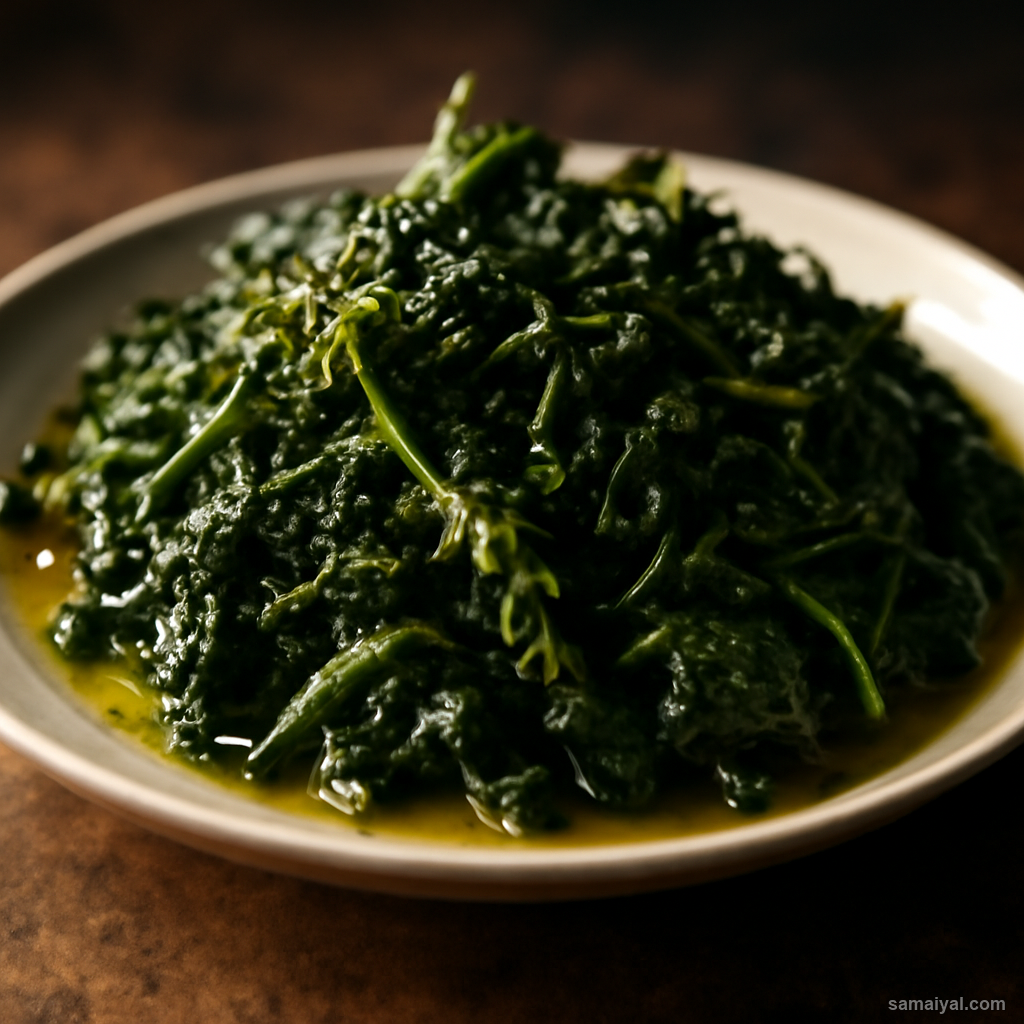
About Amita Xaak: Papaya leaf is a deeply nutritious and slightly bitter green used in Assamese cooking as a daily health food. The leaves are rich in enzymes (especially papain, which aids digestion), vitamins A and C, and have been used in Assamese folk medicine for centuries to treat fever, support liver health, and aid digestion. The dish is bitter — this is its character — but properly cooked, the bitterness becomes appealing rather than off-putting.
Understand the bitterness: Papaya leaves are inherently bitter. The blanching step before cooking removes most (but not all) of the bitterness. The remaining bitterness is what gives the dish its medicinal character.
Source papaya leaves: Use 2 cups of young papaya leaves. Available at Indian groceries with Northeast Indian or Bengali sections, or directly from papaya plants if you grow them. Young leaves are milder and more tender than mature ones.
The age of leaves matters: Use the youngest, lightest-green leaves you can find. Dark green mature leaves are too bitter even after blanching. Old yellowing leaves are past their prime — discard.
Safety check: Make sure you are using leaves from the edible papaya plant (Carica papaya). Decorative ornamental papaya varieties may be different — only use leaves from the food-producing papaya tree.
Wash thoroughly: Rinse the papaya leaves under cold running water for 30 seconds, gently rubbing the surfaces to remove any dust or insects.
Remove the tough midribs: Each papaya leaf has a thick central midrib that runs from the stem to the tip. Cut along both sides of the midrib to remove it — the midrib is too fibrous to eat. The thinner secondary veins are tender enough to keep.
Chop roughly: Stack the de-ribbed leaves and cut into thin chiffonade ribbons (1cm wide).
The critical blanching step: Bring a large pot of water to a rolling boil. Add 1 tsp salt — the salt helps tenderise the leaves and reduces bitterness. Add the chopped papaya leaves all at once.
Blanch for the full time: Boil for 5 minutes uncovered. The 5-minute blanch is critical — it removes most of the bitter compounds and makes the leaves more tender. Less than 5 minutes leaves them too bitter.
Drain and rinse: Drain in a colander. Rinse very briefly under cold water for 15 seconds. Squeeze the blanched leaves between your palms to remove excess water.
For extra-bitter sensitivity: If you are very sensitive to bitter flavours, do a second blanch with fresh boiling water for another 3 minutes. The flavour will be less medicinal but more palatable.
Prepare the chillies: Take 2 dried red chillies. Snap each in half. Tap out and discard most of the seeds for milder heat.
Prepare the garlic: Take 3 garlic cloves. Peel and slice thinly into rounds.
Use a wide pan: Use a wide kadhai or large frying pan.
Heat the mustard oil correctly: Pour 1 tbsp mustard oil into the pan over medium-high heat. Heat for 30-45 seconds until just smoking, to remove the raw bitter edge.
Temper with chillies: Reduce heat to medium. Add the broken dried red chillies. They will sizzle and turn a darker red. Fry for 15 seconds.
Add the garlic: Add the sliced garlic. Stir for 30-45 seconds until the garlic turns light golden. Do not let it go dark.
Add the blanched leaves: Add the squeezed-dry blanched papaya leaves to the pan. Use a flat spatula to break up the squeezed clumps and spread evenly.
Add turmeric: Sprinkle 1/2 tsp turmeric powder. Stir for 15 seconds — turmeric burns very quickly so move on. The leaves will turn a beautiful pale yellow-green.
The stir-fry: Stir-fry on medium heat for 4 minutes, lifting and turning with the flat spatula. The leaves should fully integrate with the spices and any remaining moisture should evaporate.
Season with salt: Add salt to taste — about 1/2 tsp. Stir for 30 seconds. Adding salt at the end keeps the texture firm.
Check the cooked texture: Taste a small piece. The leaves should be completely tender, with a pleasant slight bitterness rather than a harsh one.
Final taste: Adjust salt to your liking. The dish should taste mildly bitter, gently aromatic from garlic and turmeric, with the mustard oil providing pungent depth.
Serve with rice: Serve hot alongside steamed rice. The bitterness of the papaya leaf balances plain rice beautifully and provides a uniquely Assamese flavour. Pair with a piece of fish or a dal for a complete meal.
Serving as medicine-food: Many Assamese families serve amita xaak deliberately for its health properties — particularly during fever recovery, for new mothers, or as a weekly digestive aid.
A medical and cultural note: Papaya leaf has been studied scientifically for its potential to support platelet count during dengue fever (a serious tropical disease common in Assam). Many Assamese households grow papaya specifically for the leaves rather than just the fruit.
Leftover storage: Stored in the fridge in an airtight container, amita xaak keeps for 1-2 days. Best eaten the day it is made, while the bitter character is fresh.
⭐ Featured
Creamy tomato-based curry with soft paneer cubes — the all-time favourite of Indian...
 ⭐ Featured
Velvety spinach curry with golden-fried paneer — nutritious, vibrant and absolutely delicious.

Bold, tangy chickpea curry packed with spices — a street food staple that works as a main dish.

Dry-spiced potatoes and cauliflower — simple, aromatic, and endlessly satisfying.
Comments & Tips
Be the first to share your experience with this recipe!
Leave a Comment