 ⭐ Featured
Aloo Paratha
Stuffed whole-wheat flatbread with spiced potato filling — the quintessential Punjabi...
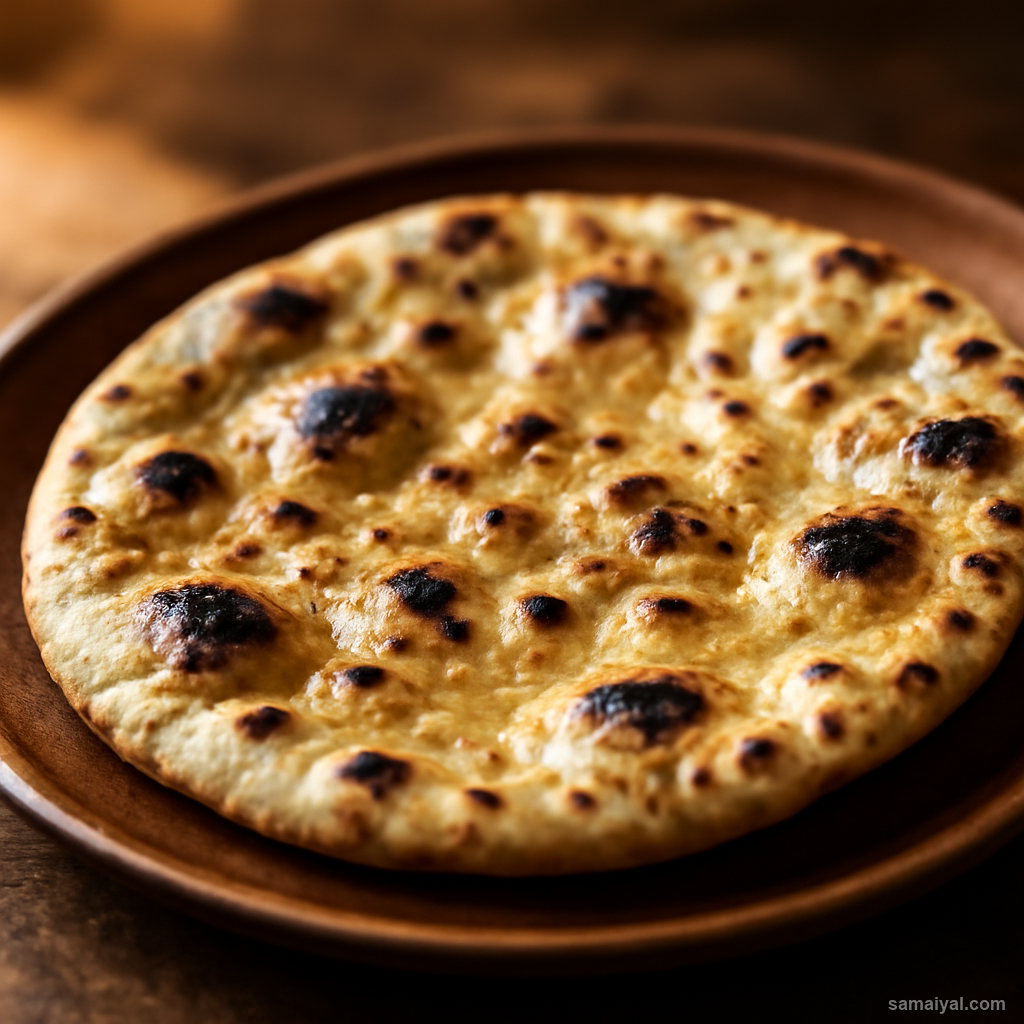
Whole wheat flatbread baked on the wall of a clay oven or replicated on a stovetop — slightly thick, with charred spots, coated with ghee or butter. The everyday bread of Punjab eaten with any curry or dal.
Make the dough: In a wide bowl combine wheat flour, salt and oil. Mix oil into flour with fingertips until slightly sandy. Add warm water gradually — about 3/4 cup — kneading between each addition. Knead for 7 to 8 minutes until a smooth, soft dough forms. It should spring back when pressed. Cover with a damp cloth. Rest for 20 minutes.
Divide into portions: Divide the rested dough into 8 equal balls. Roll each into a smooth ball.
Roll the roti: On a lightly floured surface, roll one dough ball into a round about 18 to 20 cm in diameter. Tandoori roti is slightly thicker than a regular chapati — about 3 to 4 mm thick. Do not roll too thin.
Wet one side with water: Using your palm or a brush, apply a thin layer of water to one side of the rolled roti. This wet side is what sticks to the wall of the clay oven in the traditional method.
Cook on a very hot griddle for stovetop method: Heat a flat cast iron or heavy griddle on the highest heat until extremely hot — much hotter than for a regular chapati. Place the rolled roti on the griddle, wet side down first.
Flip and finish on flame: After 1.5 minutes, once the bottom has brown patches, flip the roti. Cook 1 minute on the second side. Then pick up the roti with tongs and hold it directly over a medium-high gas flame for 15 to 20 seconds on each side — rotating so all parts are exposed to the flame. Brown spots will appear and the roti will puff slightly.
Apply butter or ghee: Remove from flame. Apply 1/2 tsp butter or ghee immediately on the surface. The fat will melt into the hot bread.
Keep warm: Place the finished roti in a clean cloth or container lined with a cloth. The cloth keeps the roti soft and warm.
Repeat: Make all the remaining roti in the same way.
Serve: Serve hot alongside any dal, curry, sabzi or yogurt.
Note: Tandoori Roti gets its name from the tandoor — the clay oven used across Punjab, Haryana and Uttar Pradesh in every household and at every dhabha (roadside eatery). In the traditional method, the raw dough is slapped directly onto the clay wall of the preheated tandoor and comes away when cooked with characteristic dark spots from the clay wall. The stovetop and flame method replicates this result. Tandoori roti from a proper tandoor has a specific flavour that comes from the clay and the high heat — nothing fully replicates it but the direct flame method comes close.
⭐ Featured
Stuffed whole-wheat flatbread with spiced potato filling — the quintessential Punjabi...
 ⭐ Featured
Thin crispy rice-lentil crepe filled with spiced potato masala — the iconic South...
 ⭐ Featured
Steamed fermented rice cakes served with tangy lentil vegetable soup — South India's...

Crispy ring-shaped lentil fritters with fluffy interior — a South Indian must-have with sambar.
Comments & Tips
Be the first to share your experience with this recipe!
Leave a Comment