 ⭐ Featured
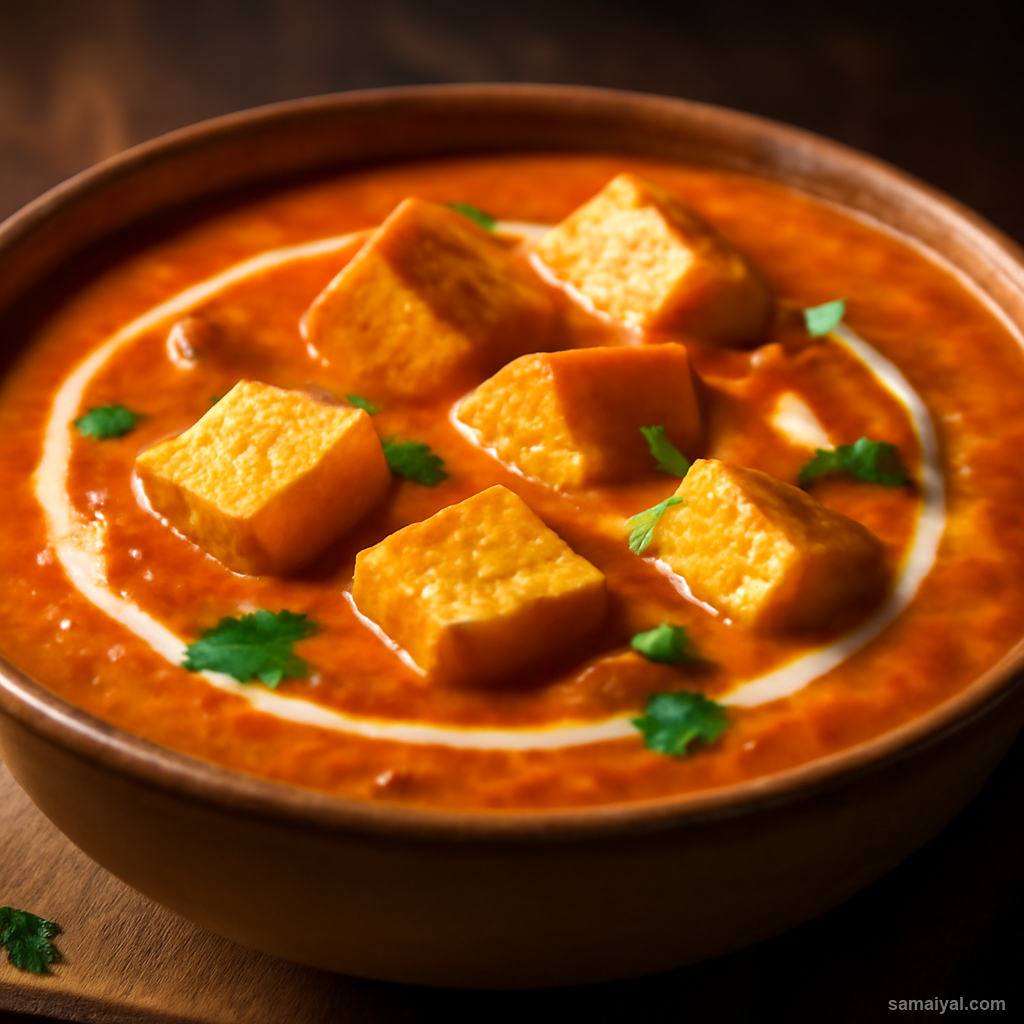
Butter Paneer Masala
Creamy tomato-based curry with soft paneer cubes — the all-time favourite of Indian...
Classic Tamil Nadu dry stir-fry with taro root, tempered mustard seeds and fresh coconut.

Prepare taro root: Peel 250g seppankizhangu (taro root) — wear gloves as the skin can cause itching. Cut into thin rounds or small cubes.
Parboil: Pressure cook taro with a pinch of turmeric and salt for 2 whistles. Do not overcook — it should be firm. Drain and cool.
Fry until crispy: Heat 3 tbsp oil in a wide pan. Add the parboiled taro in a single layer. Fry on medium-high heat 6-8 minutes without stirring until golden and crispy on the bottom.
Flip and fry: Turn each piece and fry another 5-6 minutes until crispy on all sides.
Make tempering: Push taro to the side. Add 1 tsp mustard seeds — when they pop add 1 sprig curry leaves.
Add spices: Add half tsp turmeric, half tsp red chilli powder and salt. Toss everything together.
Cook together: Cook on medium heat 3-4 minutes mixing the spices with the crispy taro.
Add coconut: Add 3 tbsp freshly grated coconut. Toss on high heat 1-2 minutes.
Taste and adjust: The taro should be crispy outside and soft inside — adjust salt.
Serve: Seppankizhangu poriyal is one of the most popular Tamil Nadu side dishes. Serve with steamed rice, rasam and sambar.
⭐ Featured
Creamy tomato-based curry with soft paneer cubes — the all-time favourite of Indian...
 ⭐ Featured
Velvety spinach curry with golden-fried paneer — nutritious, vibrant and absolutely delicious.

Bold, tangy chickpea curry packed with spices — a street food staple that works as a main dish.

Dry-spiced potatoes and cauliflower — simple, aromatic, and endlessly satisfying.
Comments & Tips
Be the first to share your experience with this recipe!
Leave a Comment