 ⭐ Featured
Dal Makhani
Slow-cooked black lentils in a rich buttery tomato gravy — a Punjabi classic that...
Chicken braised in local apong rice wine with ginger — the celebratory non-veg of Adi tribe feasts
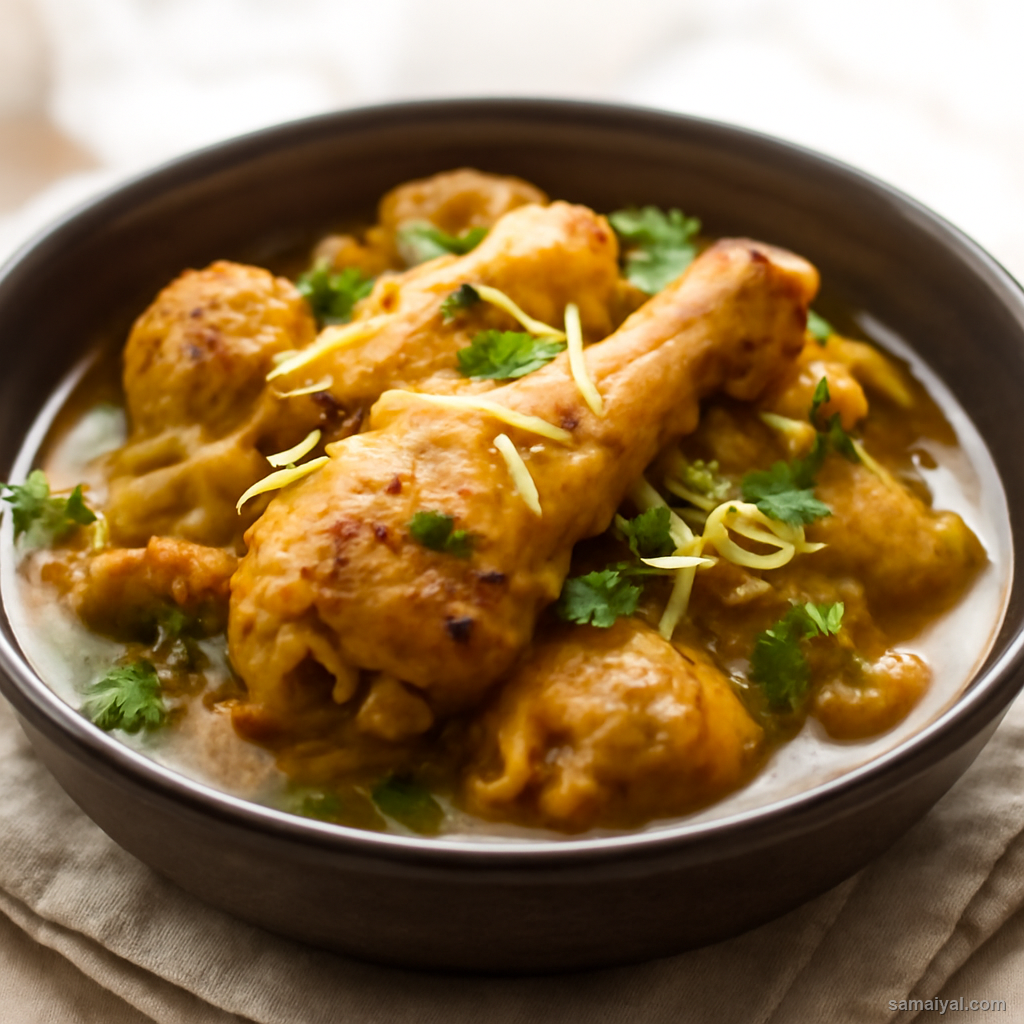
About Rice Wine Chicken Arunachal: Braising chicken in rice wine is a festive technique of the Adi tribe. The wine tenderises the meat and adds a subtle tangy sweetness. Note that this recipe uses apong (rice wine) as a cooking liquid — most of the alcohol evaporates during the long braise, but small amounts remain in the finished dish. The dish is suitable for adults; check local guidelines if cooking for those who avoid alcohol.
Understand apong: Apong is the traditional rice wine of the Adi people, brewed in homes across upper Arunachal. It has a mild tangy character similar to a young rice wine. Available at some specialty Northeast Indian groceries; otherwise substitute with sake (Japanese rice wine), Korean makgeolli, or even a dry white wine.
If no rice wine at all: Substitute with 1/2 cup chicken stock plus 1 tsp white vinegar — the result will lack the depth of true apong but the technique still works.
Note on alcohol cooking: As the dish simmers for 30 minutes uncovered, most alcohol evaporates (typical Indian braise leaves 5-10% of the original alcohol content). For those completely avoiding alcohol, use the stock substitute above.
Choose bone-in chicken: Use 1 kg of bone-in chicken pieces. Bone-in is essential — bones release flavour during cooking and produce a richer dish.
Clean the chicken: Wash the chicken pieces under cold running water. Pat very dry with kitchen paper.
Make the marinade: In a wide bowl combine 1 tsp turmeric powder and 1 tsp salt. Add the chicken and toss to coat.
Marinate the chicken: Cover and rest for 20 minutes at room temperature. The brief marinade is sufficient — the rice wine will provide additional tenderising.
Prepare the onion: Take 1 medium onion. Peel and finely chop into 5mm dice.
Prepare the garlic: Take 6 garlic cloves. Crush, peel and mince finely. Generous garlic balances the rice wine's sweetness.
Prepare the ginger: Take a 1-inch piece of fresh ginger. Peel and grate finely or slice into thin matchsticks.
Prepare the green chillies: Take 2 fresh green chillies. Slit lengthwise.
Prepare the spring onions: Take 2 spring onions (scallions). Wash and slice into thin rounds — for finishing.
Use a heavy pot with tight lid: Use a heavy-bottomed Dutch oven, large kadhai with lid, or thick-bottomed casserole.
Heat the oil: Pour 2 tbsp neutral cooking oil into the pot over high heat. Heat for 1-2 minutes until shimmering.
The critical chicken sear: Add the marinated chicken pieces. Sear hard for 4 minutes per side without disturbing — moving too soon strips the surface and prevents browning. The pieces should turn deep golden brown on each side.
Why hard sear matters: The deep browning at high heat creates the foundation flavour. Without proper searing, the dish can taste flat against the rice wine character.
Lift the chicken out: Use a slotted spoon to remove the seared chicken. Set aside on a plate.
Fry the aromatics: Reduce heat to medium. Add the chopped onion, minced garlic, and grated ginger to the same oil. Stir-fry for 3 minutes, stirring often, until soft and fragrant.
Return the chicken: Add the seared chicken back to the pot. Stir to combine with the aromatics.
The critical rice wine addition: Pour in 1/2 cup of apong rice wine. The pot will hiss and the kitchen will fill with a faintly tangy, fermented aroma — this is the magic of the dish.
Add water and chillies: Pour in 1/2 cup of hot water. Add the slit green chillies. Stir well to combine.
Adjust salt: The chicken was already salted. Taste the cooking liquid before adding more — usually no additional salt is needed.
The critical low simmer: Bring to a gentle simmer. Reduce heat to medium-low. Cover the pot tightly. Cook for 30 minutes, lifting the lid every 10 minutes to gently turn the chicken pieces.
The alcohol evaporation: During the 30-minute braise, most of the alcohol evaporates. By the end, the dish is much milder in alcohol than the rice wine was originally.
Watch the moisture: The braising liquid should always be present. Add 2-3 tbsp hot water if too dry.
Check doneness at 30 minutes: Pierce a piece of chicken with a fork — it should slide in with no resistance. The juices should run clear, not pink.
Uncover and reduce: Remove the lid. Increase heat to medium-high. Stir gently every 1-2 minutes for the next 5-7 minutes, allowing the sauce to reduce to a thick glossy glaze that clings to the chicken. Stop when the sauce coats the back of a spoon thickly.
Why glaze rather than gravy: Adi rice wine chicken is meant to be glazed — not soupy with gravy. The reduction concentrates the flavours and produces a beautiful glossy coating.
Final flavour check: Taste a piece of chicken with glaze. The dish should hit you with multiple flavours — clean chicken, gentle tangy sweetness from the rice wine, sharp ginger and garlic, mild chilli warmth, deep onion sweetness. The rice wine character should be present but subtle — a flavour you taste rather than identify immediately.
Garnish: Switch off the heat. Sprinkle the sliced spring onions over the top. The fresh spring onion adds bright contrast against the rich glazed chicken.
Serve with sticky rice: Serve hot over steamed sticky rice (recipe id 1230 for bora saul) — the most traditional Adi pairing. The sticky rice absorbs the glossy sauce beautifully.
Serve with regular rice: Plain steamed rice also works well.
For a complete Adi celebration meal: Pair with a clear soup, a simple stir-fried green vegetable, and a small bowl of chilli paste. The rich glazed chicken is the centrepiece — supporting dishes should be milder.
The Adi festival tradition: At Adi celebrations like Solung (the major Adi festival in early September), rice wine chicken is one of the celebratory dishes. The use of apong reflects how alcohol production for ceremonial drinking and cooking has always been integrated in Adi village life.
A cultural and historical note: The Adi people are one of the major tribes of Arunachal Pradesh. Their rice wine production (apong) is a centuries-old tradition that produces beverages of varying strengths. Cooking with apong is one expression of this tradition — supporting the home-brewing tradition while creating distinctive food. As regulatory environment changes around home-brewing, the apong tradition becomes increasingly important to preserve.
For those new to rice wine cooking: The flavour is subtle — gentle tangy sweetness rather than overwhelming wine character. Most people who try this dish find the rice wine adds beautiful complexity without dominating.
Leftover storage: Stored in the fridge in an airtight container, this dish keeps for 3-4 days and tastes even better the next day. The alcohol fades further overnight. Reheat gently on the stovetop with a splash of water — never boil aggressively, which can toughen the chicken.
⭐ Featured
Slow-cooked black lentils in a rich buttery tomato gravy — a Punjabi classic that...

Red kidney beans in a thick spiced tomato gravy, best eaten with steamed basmati rice.

Royal Mughlai-style paneer in a cashew-cream gravy — rich, indulgent and perfect for...

Soft potato-paneer dumplings in a luscious cashew gravy — the vegetarian showstopper.
Comments & Tips
Be the first to share your experience with this recipe!
Leave a Comment