 ⭐ Featured
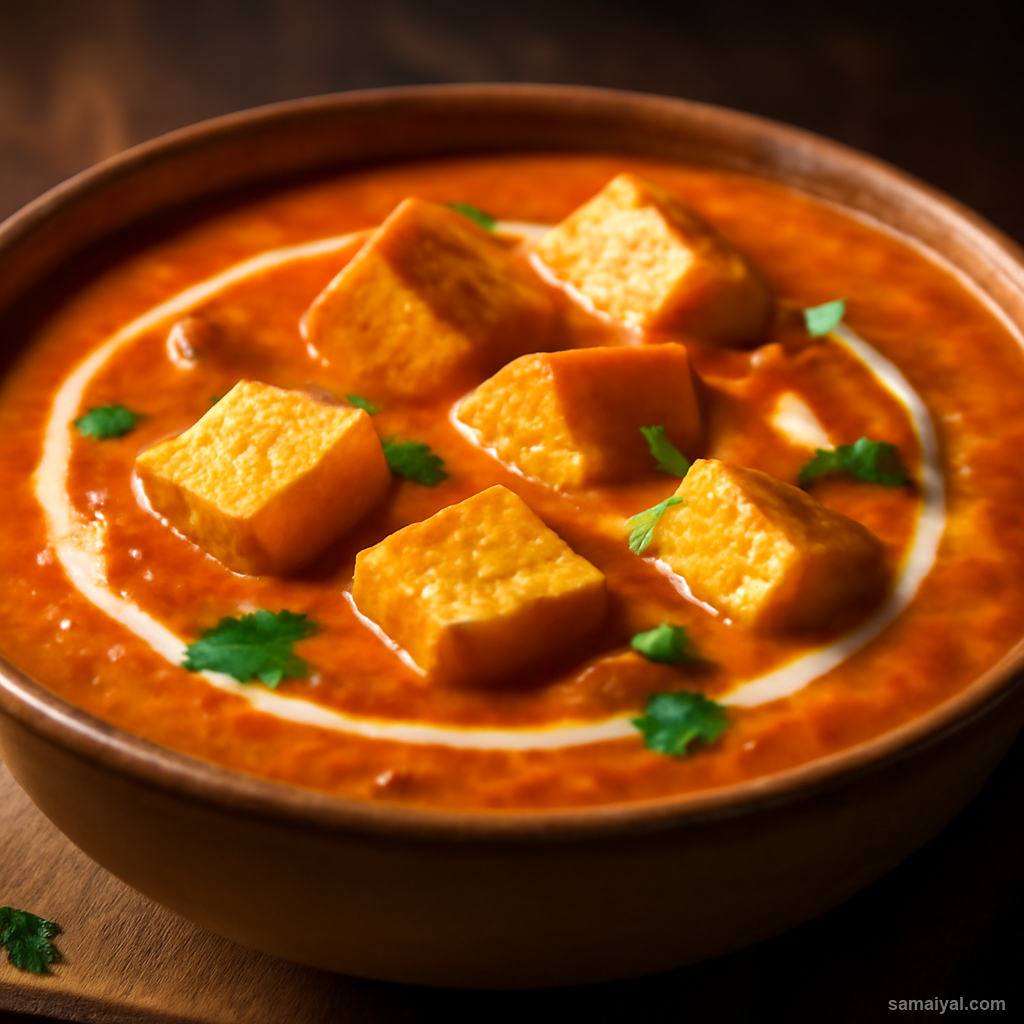
Butter Paneer Masala
Creamy tomato-based curry with soft paneer cubes — the all-time favourite of Indian...
Hard dried yak or cow milk cheese pieces cooked in mustard oil with dried red chilli and local greens — a preparation from the hill districts of North Bengal (Darjeeling and Kalimpong) that uses the hard dried cheese of the mountain communities.

Prepare the churpi: Cut hard churpi into small cubes about 1 to 1.5 cm. The cheese is very hard and dense — use a sharp, heavy knife. Each cube will soften slightly during cooking but retains its shape.
Heat mustard oil until smoking: Heat 3 tbsp mustard oil in a wide pan until smoking. Reduce to medium.
Fry the churpi pieces: Add the churpi cubes to the hot oil. Fry stirring for 3 to 4 minutes until the outside of each cube is golden and slightly crispy. The hard dried cheese can handle the high heat. Remove and keep aside.
Add garlic and dried chilli: In the remaining oil add finely sliced garlic. Fry 30 seconds until golden. Add dried red chilli. Stir 15 seconds.
Add ginger and turmeric: Add ginger paste and turmeric. Stir 30 seconds.
Add leafy greens: Add the leafy greens. They will wilt quickly in the hot oil. Stir continuously.
Cook the greens: Cook on medium-high heat for 3 to 4 minutes until the greens are wilted and any released moisture has evaporated.
Return the churpi: Add the fried churpi pieces back to the pan. Stir gently to combine with the greens.
Season: Add salt. Stir. Cook together 2 minutes so the churpi absorbs the mustard oil and garlic flavours.
Serve: Garnish with spring onions. Serve alongside steamed rice.
Note: Hard churpi is the traditional dried cheese of the hill communities of Darjeeling and Kalimpong in North Bengal — made by the Nepali, Lepcha and Tibetan communities of the region from yak or cow milk. The hill districts of North Bengal have a food culture distinct from the plains Bengali tradition — reflecting the Himalayan and Nepali influences of Sikkim and Nepal which border this region. Churpi as a cooking ingredient (rather than just a snack) is specific to this hill belt.
⭐ Featured
Creamy tomato-based curry with soft paneer cubes — the all-time favourite of Indian...
 ⭐ Featured
Velvety spinach curry with golden-fried paneer — nutritious, vibrant and absolutely delicious.

Bold, tangy chickpea curry packed with spices — a street food staple that works as a main dish.

Dry-spiced potatoes and cauliflower — simple, aromatic, and endlessly satisfying.
Comments & Tips
Be the first to share your experience with this recipe!
Leave a Comment