 ⭐ Featured
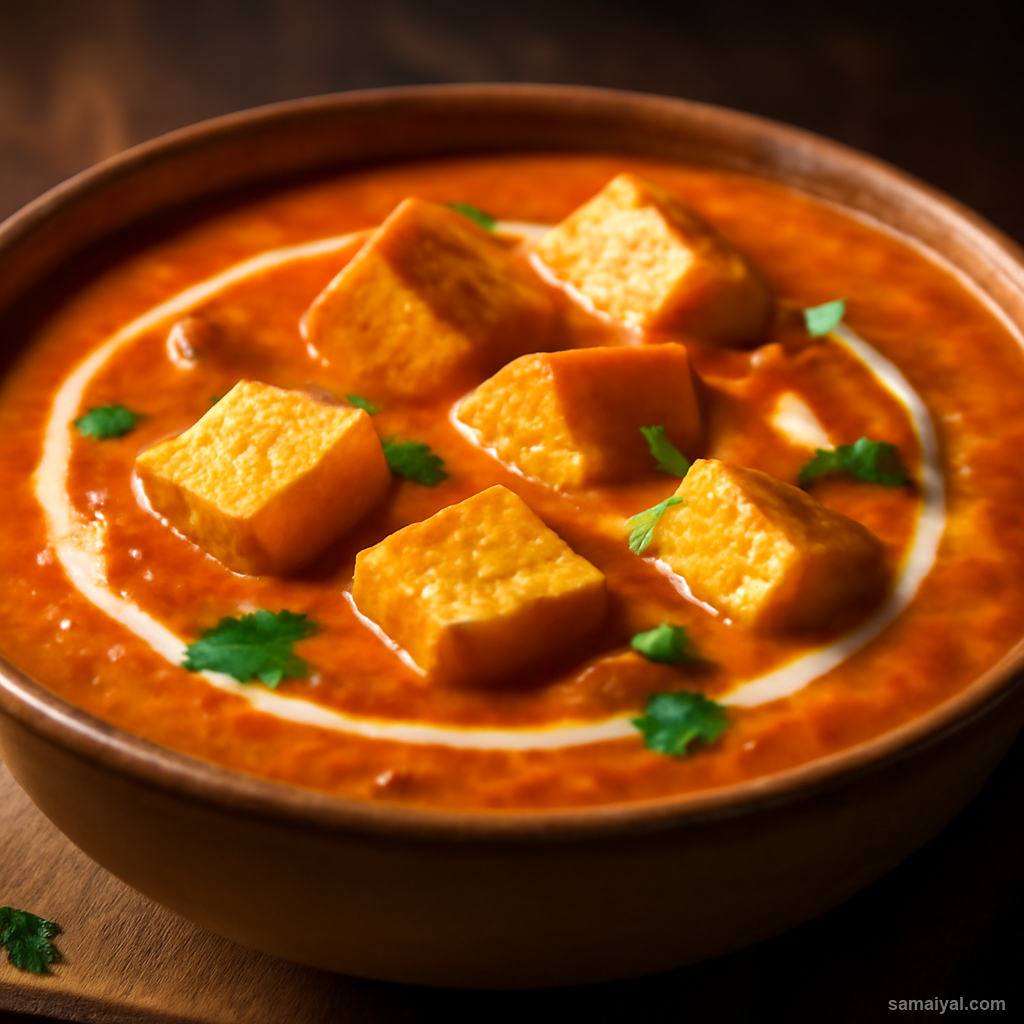
Butter Paneer Masala
Creamy tomato-based curry with soft paneer cubes — the all-time favourite of Indian...
Fish cooked in khar alkaline solution — where Assam's two defining ingredients meet
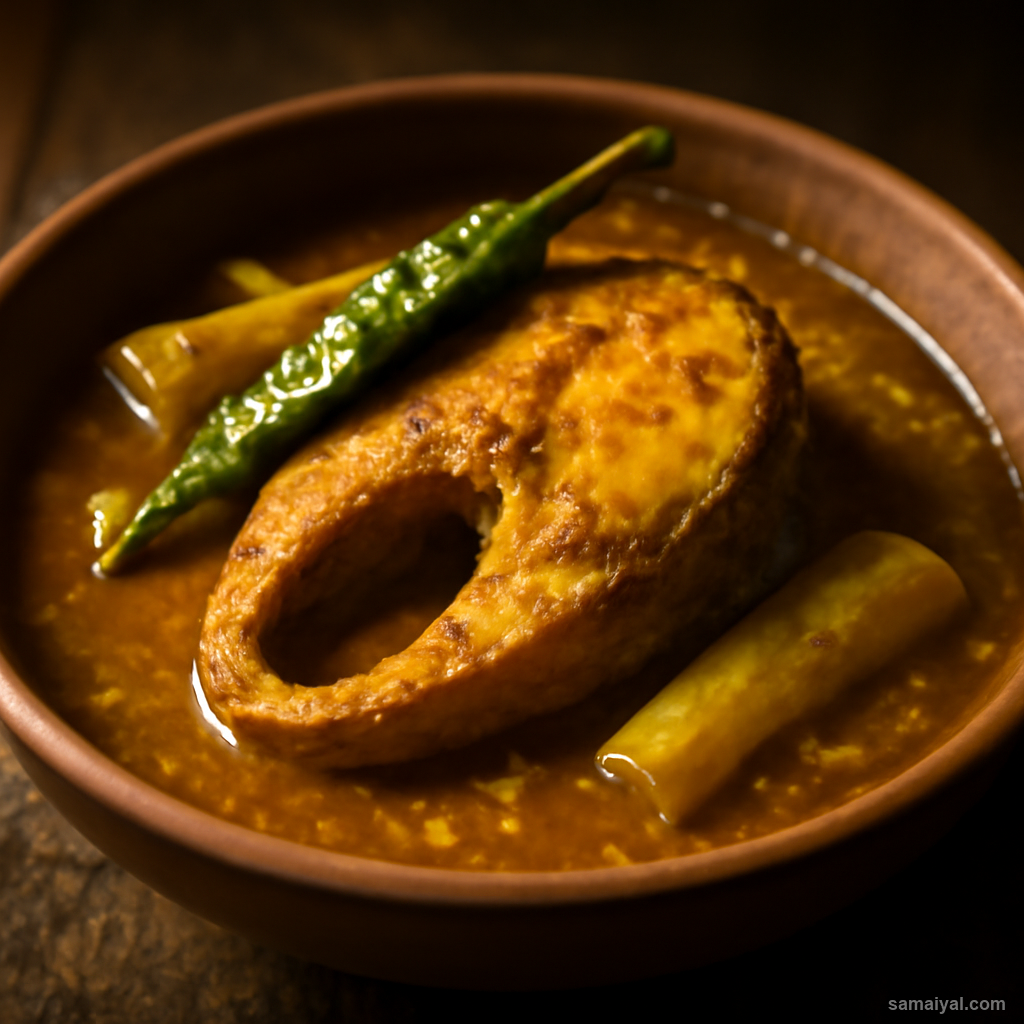
About Masor Khar: Masor Khar is the meeting of Assam's two most iconic ingredients — fish (masor) and khar (alkaline cooking solution). The combination is uniquely Assamese, found nowhere else in Indian cuisine. The alkaline khar gives fish a mineral depth and a tender, almost velvety texture that ordinary curries cannot achieve. It is the everyday Assamese fish dish for households that practice khar cooking.
Understand khar: Authentic khar (kolakhar) is made by burning sun-dried banana skins, soaking the ash in water and filtering. As a beginner, dissolve 1/2 tsp food-grade baking soda in 4 tbsp water — that is your khar substitute. If you have access to authentic Assamese khar, use 2 tbsp.
Choose Rohu fish: Use 400g of Rohu fish steaks. Rohu is the most prized Assamese river fish for khar cooking — its firm flesh holds up beautifully to the alkaline simmering. If Rohu is unavailable, use any firm freshwater white fish like catla, mrigal, or tilapia.
Buy properly: The fish should look fresh — clear bright eyes (in whole fish), pink-red gills, firm flesh that springs back when pressed.
Clean and pat dry: Rinse the fish steaks under cold running water. Pat very dry with kitchen paper. Drying is essential.
Marinate the fish: In a wide bowl combine 1 tsp turmeric powder and 1 tsp salt. Add the fish steaks and gently coat each piece. Let marinate for 15-20 minutes.
IMPORTANT: Avoid aluminium pots: Aluminium reacts with the alkaline khar — the resulting taste is metallic and unpleasant, and it can also be unsafe. Use stainless steel, enamel, or cast-iron pot only.
Prepare the onion: Take 1 medium onion. Peel and chop into fine 5mm dice.
Prepare the garlic: Take 3 garlic cloves. Crush, peel and mince finely.
Prepare the green chillies: Take 2 fresh green chillies. Slit lengthwise.
Use a wide pan: Use a wide flat heavy pan or non-stick frying pan. The fish needs space to fry in a single layer.
Heat the mustard oil correctly: Pour 2 tbsp mustard oil into the pan. Place over medium-high heat. Heat for 1-2 minutes until smoking heavily — this is essential for any fish dish, especially with khar.
Fry the fish first: Carefully slide the marinated fish steaks into the smoking-hot oil, away from yourself. Do not crowd the pan; fry in batches if needed.
The critical first sear: Do not move or touch the fish for the first 3-4 minutes. Moving fish too soon strips the marinade. After 4 minutes, the bottom should be deep golden brown.
Flip carefully: Use a flat spatula to slide under each piece and flip. Cook the second side for another 4 minutes until equally golden.
Lift the fish out: Use a slotted spatula to carefully remove the fish from the pan. Set aside on a plate.
Fry the onion: To the same oil add the chopped onion. Stir-fry on medium heat for 6-7 minutes, stirring often, until deep golden brown.
Add the garlic: Add the minced garlic. Stir for 1 minute until fragrant.
The critical khar addition: Add the prepared khar solution to the pan. The pan will hiss as the alkaline solution hits the hot oil. Stir gently for 30 seconds.
Add the green chillies: Add the slit green chillies.
Add water for the gravy: Pour in 1/2 cup of hot water. Stir well to combine.
Return the fish: Carefully slide the fried fish steaks back into the gravy. Spoon some gravy over each piece. Do not stir aggressively — gentle nudging is enough.
Simmer to finish: Reduce heat to medium-low. Simmer uncovered for 15 minutes, gently spooning gravy over the fish every 4-5 minutes. The fish will fully cook through and absorb the alkaline mineral character of the khar.
The khar transformation: As the fish simmers in the khar, you will notice a subtle change — the flesh becomes exceptionally tender, the colour deepens to a beautiful golden-orange, and the gravy develops a unique mineral character that you cannot get any other way.
Check doneness: The fish is done when the flesh easily flakes with a fork. The gravy should be thin to medium consistency — masor khar is not meant to be a thick curry.
Final flavour adjustment: Taste the gravy. The dish should hit you with multiple flavours — clean fish, pungent mustard oil, deep mineral khar, gentle chilli warmth. Adjust salt only if needed — usually no more is required since the fish was salted and khar adds some mineral salinity.
Garnish and serve: Switch off the heat. Sprinkle 2 tbsp finely chopped fresh coriander over the top. Serve hot over plain steamed rice — the most traditional Assamese pairing.
The Assamese way to eat: The traditional way to eat masor khar is to mix the gravy generously into rice with your fingers, breaking off small pieces of fish to combine.
For a complete meal: Pair with mustard greens on the side and a small portion of pickle. The combination represents Assamese cooking at its most authentic.
A cultural note: Masor khar is one of the most recognisable Assamese dishes — when you tell someone outside Assam that you cook this dish, they immediately understand you have engaged seriously with Assamese cooking. Mastering this dish is a milestone in cooking Assamese food.
Leftover storage: Stored in the fridge in an airtight container, masor khar keeps for 1-2 days. The alkaline character mellows beautifully overnight. Reheat very gently on the stovetop.
⭐ Featured
Creamy tomato-based curry with soft paneer cubes — the all-time favourite of Indian...
 ⭐ Featured
Velvety spinach curry with golden-fried paneer — nutritious, vibrant and absolutely delicious.

Bold, tangy chickpea curry packed with spices — a street food staple that works as a main dish.

Dry-spiced potatoes and cauliflower — simple, aromatic, and endlessly satisfying.
Comments & Tips
Be the first to share your experience with this recipe!
Leave a Comment