 ⭐ Featured
Aloo Paratha
Stuffed whole-wheat flatbread with spiced potato filling — the quintessential Punjabi...
Tamil Nadu breakfast — pearl millet dosa — iron-rich village breakfast.
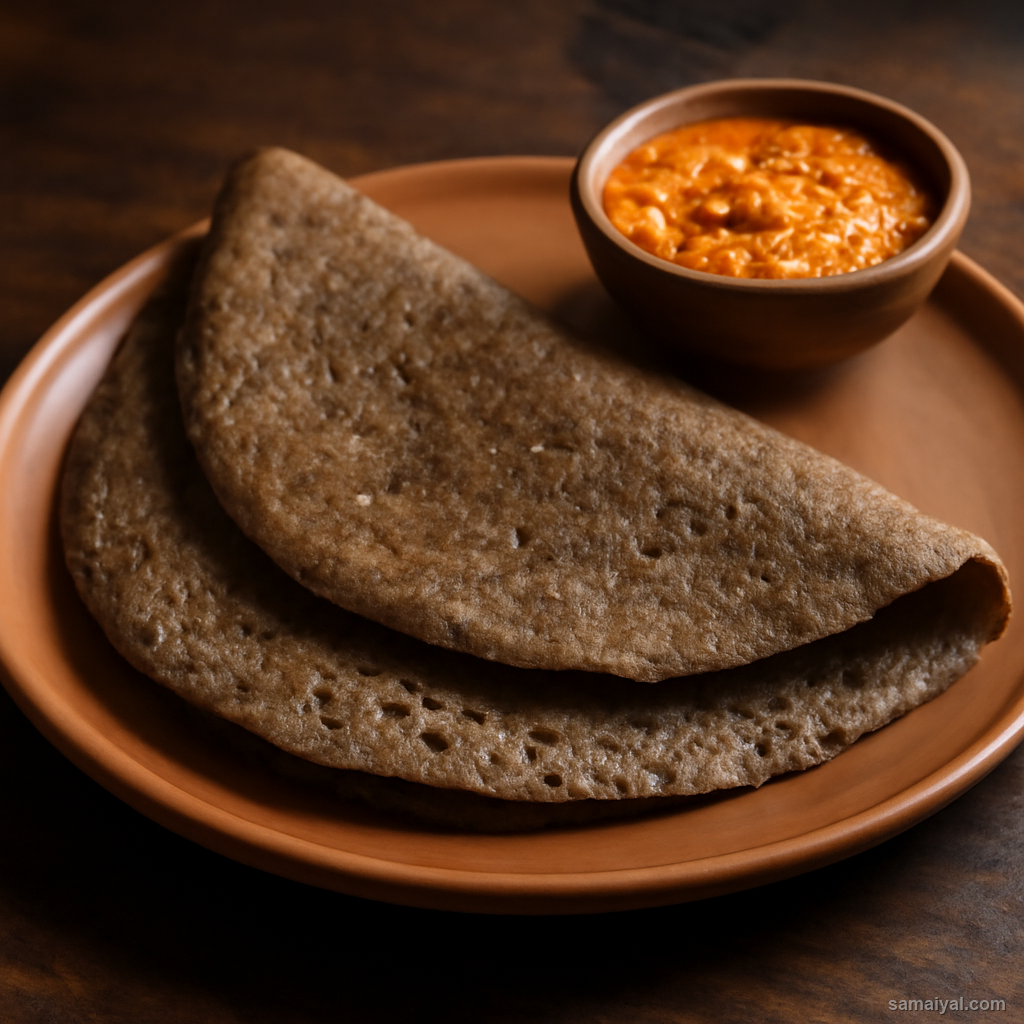
About Kambu Dosai: Kambu Dosai is the pearl millet dosa — an iron-rich ancient Tamil village breakfast. Pearl millet (kambu) is the great drought-resistant grain of Tamil Nadu's drier regions. Kambu has supported Tamil farming communities for thousands of years and is genuinely one of the most nutritious grains in Indian cuisine — exceptionally high in iron, supporting working farm families.
Gather ingredients: 1.5 cups kambu (pearl millet, also called bajra — available at South Indian groceries; small round grain with darker grey-purple colour), 1/2 cup urad dal (provides protein and fermentation character), 1 tsp fenugreek seeds (essential for fermentation), salt to taste, neutral oil or ghee for cooking.
Wash and soak kambu: Wash in 2-3 changes of cold water. Cover with plenty of cold water. Soak for 4-6 hours.
Wash and soak urad dal: Wash separately. Cover with cold water. Add the 1 tsp fenugreek seeds. Soak for 4 hours.
Drain after soaking: Drain both kambu and urad dal separately.
Grind urad dal first: Place soaked drained urad dal (with fenugreek) in a small grinder. Grind for 4-5 minutes with cold water (2-3 tbsp at a time) until very smooth and fluffy.
Grind kambu: Place soaked drained kambu in the grinder. Grind for 3-4 minutes until slightly coarse. Add 1/2 cup water gradually.
Combine and ferment: Mix both batters in a wide bowl. Add salt — about 1 tsp. Stir thoroughly.
The critical fermentation: Cover with a cloth. Leave in a warm place for 6-8 hours until bubbly. The batter rises slightly less than rice batter (lower starch content) but should develop the characteristic sour fermented aroma.
The distinctive colour: Kambu batter is naturally darker grey-brown — this is the natural pearl millet colour. Don't panic; the dosas will be darker than rice dosa.
Heat the tawa: Heat a flat tawa over medium-high heat. Test with a drop of water.
First dosa preparation: Drizzle 1/2 tsp oil on the tawa. Wipe with paper towel. Discard.
Spread the batter: Pour a ladle of batter on the centre. Spread into a thin round (20-22cm diameter).
Add oil and cook: Drizzle 1/2 tsp oil around the edges. Cook on medium heat 2-3 minutes until the bottom is golden brown. The dosa will be naturally darker than rice dosa.
Flip and cook: Flip with a wide spatula. Cook the second side 1-2 minutes.
Serve immediately: Kambu dosai has a distinctive earthy flavour and is naturally darker in colour. Serve hot with coconut chutney for the classic Tamil pairing.
For iron deficiency: Kambu provides exceptional iron — Tamil farming communities have traditionally valued kambu specifically for women, children, and labourers needing iron support.
For cool weather: Kambu is considered warming for the body in traditional Tamil medicine — particularly satisfying in cooler weather.
A nutritional note: Provides exceptional iron (more than most grains), magnesium, B vitamins, complete protein. Naturally gluten-free.
Leftover batter storage: Fridge for 2-3 days. Stir before each use.
⭐ Featured
Stuffed whole-wheat flatbread with spiced potato filling — the quintessential Punjabi...
 ⭐ Featured
Thin crispy rice-lentil crepe filled with spiced potato masala — the iconic South...
 ⭐ Featured
Steamed fermented rice cakes served with tangy lentil vegetable soup — South India's...

Crispy ring-shaped lentil fritters with fluffy interior — a South Indian must-have with sambar.
Comments & Tips
Be the first to share your experience with this recipe!
Leave a Comment