 ⭐ Featured
Aloo Paratha
Stuffed whole-wheat flatbread with spiced potato filling — the quintessential Punjabi...
A flatbread made by mixing dried mahua flowers (which have a natural sweetness) into wheat or millet flour — a preparation unique to the tribal communities of the Jharkhand forest belt. The mahua tree is sacred to tribal communities.
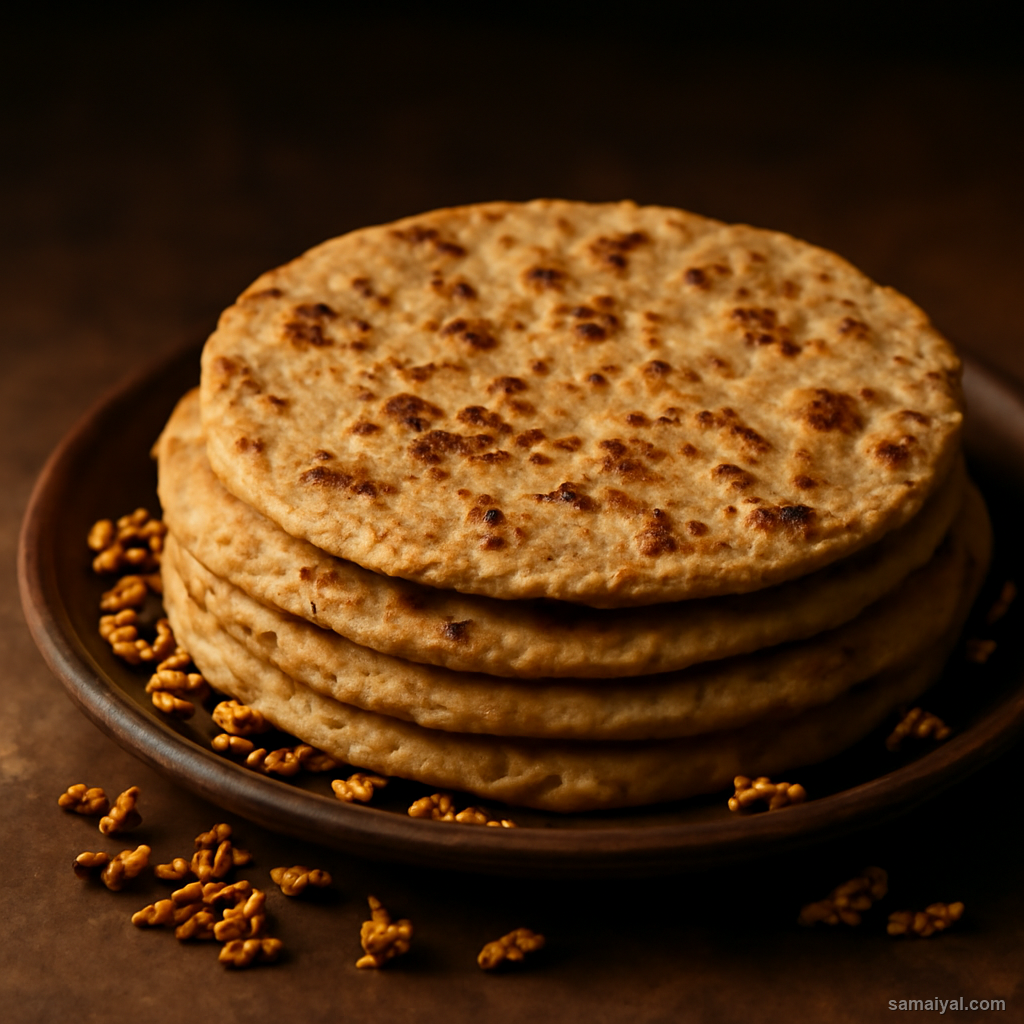
Prepare the dried mahua flowers: Dried mahua flowers look like small brown petals. They have a naturally sweet, slightly fermented, floral flavour — unlike any other ingredient. Soak them in 1/4 cup warm water for 15 minutes until softened. Drain and squeeze out excess water.
Chop the soaked mahua: Finely chop the soaked and squeezed mahua flowers. They should be soft, slightly sticky and very fragrant.
Combine with flour: In a wide bowl combine wheat flour and a pinch of salt. Add the finely chopped mahua flowers. Mix together with your hands so the mahua pieces are distributed throughout the flour.
Add water and knead: Add warm water gradually — the mahua flowers will also contribute moisture. Knead for 5 minutes until a smooth, slightly sticky dough forms. The dough will be more fragrant than plain wheat dough.
Divide into portions: Divide into 6 to 8 equal portions. Rest for 10 minutes covered.
Roll each roti: On a lightly floured surface, roll each portion into a round about 16 to 18 cm in diameter. The mahua pieces in the dough may cause slight unevenness — this is fine.
Cook on a hot griddle: Heat a flat griddle on medium-high. Cook the roti for 1.5 to 2 minutes on the first side until small brown spots appear and bubbles form.
Flip and cook second side: Flip. Cook 1.5 to 2 minutes on the second side.
Direct flame finish: Using tongs, hold the roti over a medium gas flame for 10 seconds per side for char spots.
Serve: Apply a few drops of ghee. Serve with any chutney or dal. The mahua roti will have a distinctive sweet-savoury character from the mahua flowers.
Note: The mahua tree (Madhuca longifolia) is considered sacred by the tribal communities of central and eastern India — particularly the Santhal, Munda, Oraon and Gond peoples. The flowers are used to make country liquor, dried for food, and used in traditional medicine. Making bread from mahua flowers is one of the oldest traditions of the Jharkhand tribal belt. The mahua tree is sometimes called the tribal mango — so deeply is it embedded in the culture, economy and cuisine of these communities.
⭐ Featured
Stuffed whole-wheat flatbread with spiced potato filling — the quintessential Punjabi...
 ⭐ Featured
Thin crispy rice-lentil crepe filled with spiced potato masala — the iconic South...
 ⭐ Featured
Steamed fermented rice cakes served with tangy lentil vegetable soup — South India's...

Crispy ring-shaped lentil fritters with fluffy interior — a South Indian must-have with sambar.
Comments & Tips
Be the first to share your experience with this recipe!
Leave a Comment