 ⭐ Featured
Butter Paneer Masala
Creamy tomato-based curry with soft paneer cubes — the all-time favourite of Indian...
Goat meat cooked in alkaline khar solution — the most prestigious version of Assam's signature technique
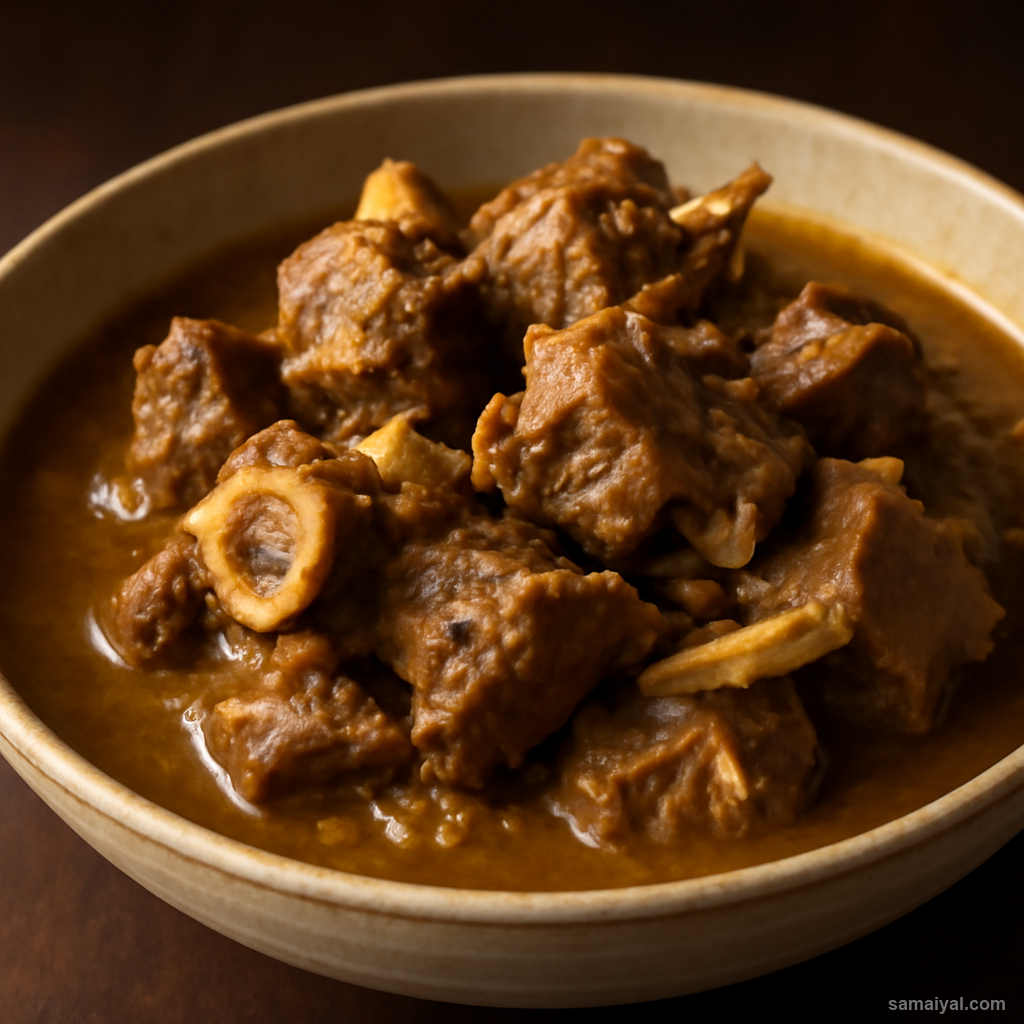
About Goat Khar: Goat Khar is the prestige version of khar cooking — the alkaline cooking technique unique to Assam, applied to goat meat. The combination of khar and goat is reserved for celebrations like weddings, important religious occasions, and gatherings of honoured guests. The result is meat with a distinctive mineral depth that ordinary cooking cannot replicate.
Understand khar: Authentic khar (kolakhar) is made by burning sun-dried banana skins, soaking the ash in water and filtering. As a beginner, dissolve 1 tsp food-grade baking soda in 4 tbsp water — that is your khar substitute. If you have access to authentic Assamese khar, use 2 tbsp.
Choose bone-in goat: Use 600g of bone-in goat pieces — leg, shoulder, or curry-cut bone-in pieces work best. Bone-in goat produces dramatically more flavourful gravy and the marrow adds richness.
Clean the goat: Wash the goat pieces under cold running water. Pat dry with kitchen paper. Drying is essential for a proper sear.
Prepare the marinade: In a wide bowl combine 1 tsp turmeric powder and 1 tsp salt. Add the goat pieces and rub the marinade into every piece. Cover and marinate for 30 minutes at room temperature, or up to 4 hours in the fridge.
Prepare the onion: Take 1 medium onion. Peel and slice thinly into half-moons. Sliced onion produces deeper caramelisation than chopped.
Prepare the garlic: Take 5 garlic cloves. Crush, peel and mince finely. The relatively large amount is essential for goat khar.
Prepare the green chillies: Take 2 fresh green chillies. Slit lengthwise.
IMPORTANT: Avoid aluminium pots: Aluminium reacts with the alkaline khar. Use stainless steel, enamel, or cast-iron pot. Aluminium will turn the gravy metallic-tasting and unsafe.
Use a heavy pot with tight lid: Use a heavy-bottomed Dutch oven, large kadhai with lid, or thick-bottomed casserole. The lid must seal well — loose lids let moisture escape and the goat dries out.
Heat the mustard oil correctly: Pour 2 tbsp mustard oil into the pot over medium-high heat. Heat for 1-2 minutes until smoking heavily. The smoking-then-cooling cycle removes the raw bitter character of mustard oil while preserving its pungent compounds — essential for khar dishes.
Fry the onion: Reduce heat to medium. Add the sliced onion. Stir-fry for 10-12 minutes, stirring often, until deep golden brown — almost mahogany at the edges. Take your time; well-browned onion provides the sweetness that balances the khar's mineral character.
Add the garlic: Add the minced garlic. Stir for 1-2 minutes until fragrant.
The critical sear: Increase heat to medium-high. Add the marinated goat pieces along with the marinade. Cook for 10 minutes, stirring and turning the pieces every 2 minutes. The goat will release some liquid initially, then start to dry and brown. The pieces should be deeply seared on all sides — almost dark brown.
Do not add water yet: Let the goat cook in its own juices and the masala. The rendered juices and slight caramelisation are what give the dish its depth.
Add the khar solution: After 10 minutes of searing, add the prepared khar solution. Stir well. The pan will hiss as the alkaline solution hits the hot meat.
Add the green chillies and water: Add the slit green chillies. Pour in 1.5 cups of hot water. The water level should come about halfway up the goat pieces. Stir well to combine.
The long slow simmer: Bring to a gentle simmer. Reduce heat to the absolute lowest setting your stove allows. Cover the pot tightly. Cook for 55 minutes, lifting the lid every 15 minutes to gently turn the goat pieces and check the moisture. Add 2-3 tbsp hot water if the bottom looks dry.
The alkaline transformation: As the goat simmers in the khar, you will notice the meat becoming exceptionally tender — far more tender than ordinary slow-cooked goat. This is the alkaline magic — the khar gently breaks down the meat fibres, producing a unique melt-in-mouth texture.
Check doneness at 55 minutes: Pierce a piece with a fork — it should slide in with no resistance and the meat should pull apart easily from the bone. The gravy should be moderately thick.
Uncover and reduce: Once tender, remove the lid. Increase heat to medium. Stir gently for 3-5 minutes, allowing the gravy to reduce to a thick clinging consistency that coats the meat.
The distinctive mineral depth: Taste a piece. The meat should have a unique mineral, slightly alkaline-tinged depth that ordinary curries cannot achieve. The salt should be balanced (do not over-salt — khar carries some natural mineral salinity).
Adjust the seasoning: Add salt only if needed — usually no more is required. Some Assamese homes add 1 tsp ghee at the end for extra richness.
Garnish and serve: Switch off the heat. Sprinkle 2 tbsp finely chopped fresh coriander over the top. Serve hot with steamed rice — the traditional pairing for any khar dish.
For a complete celebratory meal: Pair with luchi, a simple vegetable, dal, and a sweet to finish. The goat khar is the centrepiece — everything else supports it.
A cultural note: Khar cooking is unique to Assam in the world of Indian cuisine. The combination with goat represents the highest form of Assamese hospitality — reserved for honoured occasions.
Leftover storage: Stored in the fridge in an airtight container, this dish keeps for 3-4 days and tastes even better the next day. The alkaline character mellows beautifully overnight. Reheat gently on the stovetop with a splash of water.
⭐ Featured
Creamy tomato-based curry with soft paneer cubes — the all-time favourite of Indian...
 ⭐ Featured
Velvety spinach curry with golden-fried paneer — nutritious, vibrant and absolutely delicious.

Bold, tangy chickpea curry packed with spices — a street food staple that works as a main dish.

Dry-spiced potatoes and cauliflower — simple, aromatic, and endlessly satisfying.
Comments & Tips
Be the first to share your experience with this recipe!
Leave a Comment