 ⭐ Featured
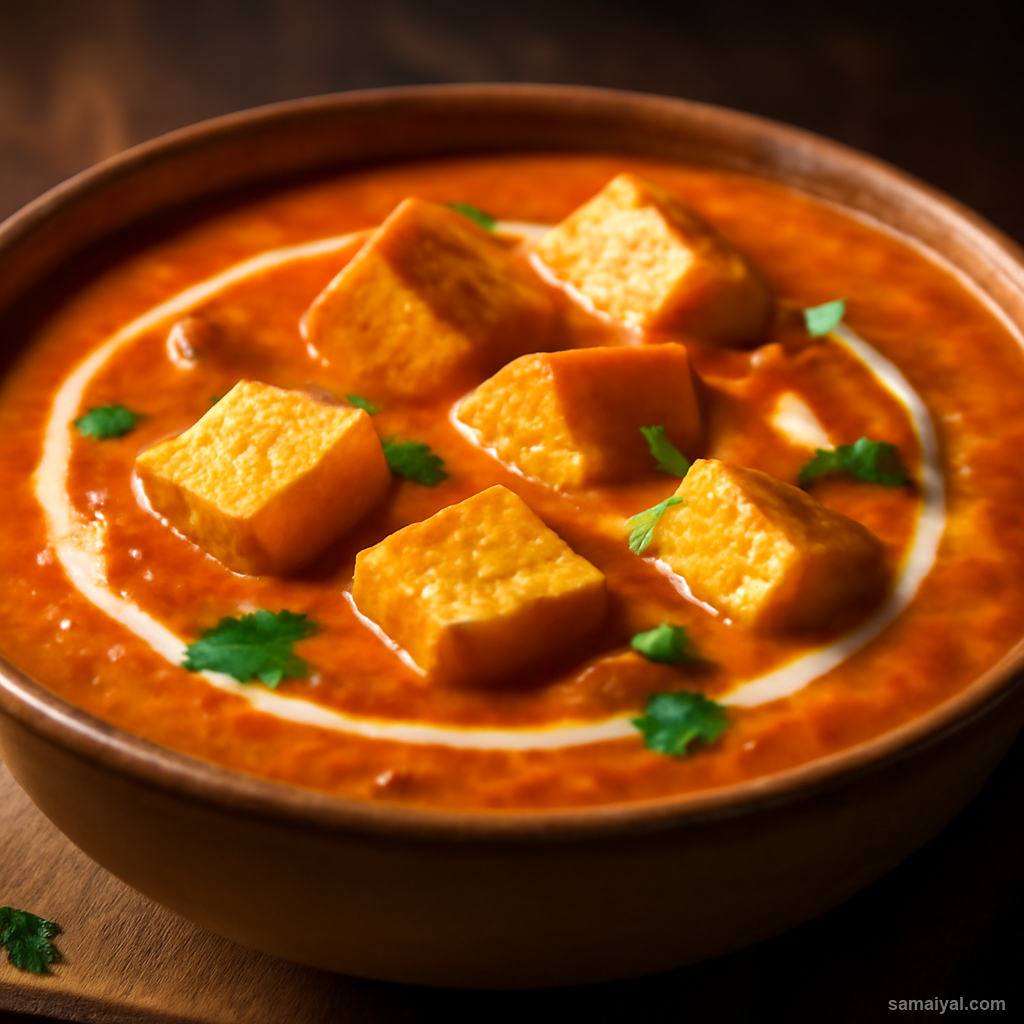
Butter Paneer Masala
Creamy tomato-based curry with soft paneer cubes — the all-time favourite of Indian...
Hard wheat balls baked over coal or in an oven, served with five-lentil dal and a sweet crushed wheat dessert. The most well-known three-part meal of Rajasthan, eaten at festivals and family gatherings.

Make the baati dough: In a large bowl combine wheat flour, semolina, 1/4 cup ghee, ajwain and salt. Mix ghee into the flour with your fingertips until it looks like damp sand. Add water gradually — about 1/2 cup — mixing until a firm, stiff dough forms. Baati dough should be much stiffer than chapati dough — if it cracks slightly when pressed, that is correct. Do not make it soft. Divide into 8 equal smooth balls.
Bake the baati: Preheat your oven to 200°C (400°F). Place the dough balls on a baking tray. Bake for 30 to 35 minutes, turning them once halfway through, until the baati are golden-brown all over. Tap one with a spoon — it should sound hollow. The outside should be firm and the inside fully cooked.
Dunk baati in ghee: As soon as the baati come out of the oven, drop them one by one into a bowl of hot melted ghee. Let each baati sit in the ghee for 1 minute absorbing it. This ghee dunking is essential — baati without ghee is considered incomplete in Rajasthan.
Cook the panchmel dal: Wash all five lentils together in several changes of water. Pressure cook with 3 cups water and turmeric for 4 to 5 whistles. Mash partially — some texture should remain.
Make the dal tadka: Heat 2 tbsp ghee in a pan. Add mustard seeds — wait for them to pop. Add cumin seeds, asafoetida. Add chopped onions and cook on medium heat for 10 minutes until deep golden. Add ginger paste, garlic paste — stir 2 minutes. Add tomatoes — cook 6 minutes until soft. Turn to low heat. Add red chilli powder, coriander powder — stir 2 minutes.
Combine dal and tadka: Pour the cooked mashed lentils into the tempered base. Add salt. Stir well. Simmer on medium-low for 8 minutes. Add garam masala at the end. The dal should be flowing but not watery.
Make the churma base: Mix wheat flour with 3 tbsp ghee until crumbly. Add just enough water to bind into a firm dough — stiffer than baati dough. Divide into small flat cakes (not balls).
Fry the churma cakes: Deep fry the flat cakes in oil on medium heat for 4 to 5 minutes until golden and fully cooked inside. Drain and let cool.
Grind the churma: Break the fried cakes into pieces. Grind in a mixer to a coarse powder — not fine, leave some texture. Mix the churma powder with 3 tbsp hot melted ghee, grated jaggery or sugar, and cardamom powder. Mix well. Taste and adjust sweetness. The churma should be slightly crumbly, fragrant and sweet.
Serve together: Place 2 ghee-dunked baati on each plate. Ladle the panchmel dal alongside. Place a small mound of churma on the side. In Rajasthan, all three are eaten together — break the baati, pour dal over it and eat with a pinch of churma.
Note: Dal Baati Churma is the three-part meal that represents Rajasthani cuisine. Baati were originally baked by warriors on desert journeys by burying them in hot sand under a fire. The hard crust protected the bread during travel. The panchmel dal (panch = five, mel = mix) uses five different lentils giving it a layered, complex taste. This meal is prepared for weddings, festivals and Makar Sankranti.
⭐ Featured
Creamy tomato-based curry with soft paneer cubes — the all-time favourite of Indian...
 ⭐ Featured
Velvety spinach curry with golden-fried paneer — nutritious, vibrant and absolutely delicious.

Bold, tangy chickpea curry packed with spices — a street food staple that works as a main dish.

Dry-spiced potatoes and cauliflower — simple, aromatic, and endlessly satisfying.
Comments & Tips
Be the first to share your experience with this recipe!
Leave a Comment