 ⭐ Featured
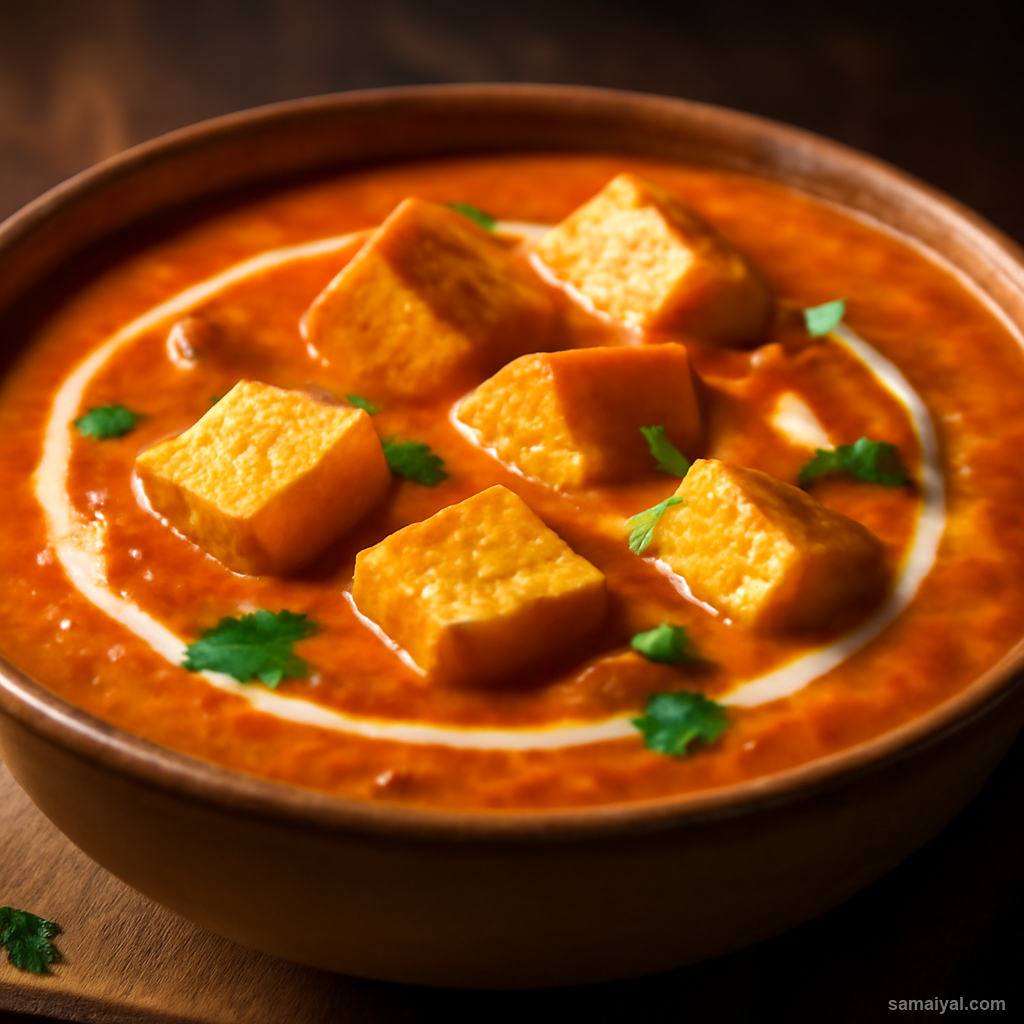
Butter Paneer Masala
Creamy tomato-based curry with soft paneer cubes — the all-time favourite of Indian...
Flame-roasted and mashed eggplant with mustard oil and green chilli — smoky Assamese bharta
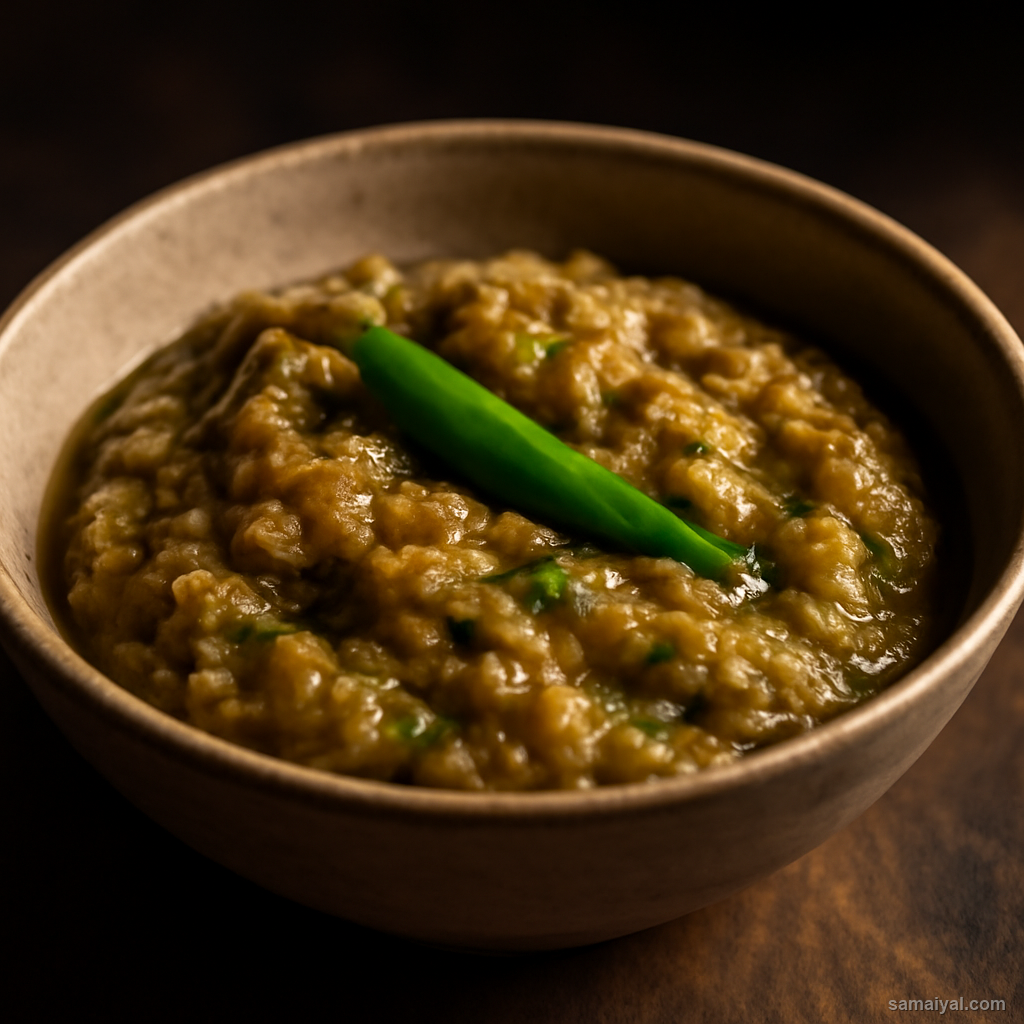
About Brinjal Pitika: Brinjal Pitika is the Assamese fire-roasted eggplant mash — the smoky cousin of the more famous baigan bharta. Where bharta is the cooked masala version, pitika is the simpler raw-finished cousin: roasted eggplant flesh mixed with raw onion, green chilli and mustard oil. The smokiness is everything; without proper fire-roasting, the dish loses its character entirely.
Choose the right eggplants: Use 2 large purple eggplants — the round, fat variety with deep purple skin. The skin should be glossy and tight; bruised or wrinkled eggplants will be bitter and seedy. Press one — it should feel firm, not spongy.
The size matters: Large eggplants work better than small ones because they have more flesh and less skin proportionally. Small Indian eggplants do not produce the same depth of smoky flesh.
Fire-roast for the smoky flavour: This is essential — the smoky char from open flame is the defining flavour of pitika. You cannot replicate it with oven-roasting alone, though oven works as a fallback. Apply 1 tsp oil to each eggplant and rub all over the skin.
The gas flame method: Place each eggplant directly on a medium gas flame, holding by the stem with long tongs (or skewer through with a metal skewer). Turn every 2-3 minutes for 15-20 minutes total. Stand back from the flame — eggplants release moisture as they roast and can spit hot juice.
Watch the eggplant collapse: As they roast, the eggplants will slowly collapse — the skin chars in patches and turns black, and the flesh inside softens dramatically. The eggplant is ready when the entire body has collapsed and feels completely soft when squeezed gently with tongs.
The oven fallback method: If you have no gas flame, place oiled eggplants on a foil-lined baking tray. Roast at 220C for 35-40 minutes, turning halfway. Add a smoky char by finishing under the broiler/grill for 2-3 minutes per side. The result is good but not as smoky as direct flame.
Charcoal or wood-fire option: For the most authentic flavour, roast over hot coals on a barbecue. This is how Assamese village kitchens prepare pitika and produces the deepest smoky character.
Let the eggplants cool: Transfer the roasted eggplants to a plate and cool for 10-15 minutes. They are too hot to handle straight off the flame, and the flesh needs time to settle.
Peel the eggplants: Once cool enough to handle, peel off all the charred black skin with your fingers — it pulls off easily. Discard the skin and the green stem. Place the soft smoky flesh in a wide bowl.
The importance of leaving smoke flecks: Some small black flecks of charred skin will inevitably end up in the flesh. Do not pick them all out — the small flecks add to the smoky character. Just remove any large pieces of skin.
Mash thoroughly: Use a fork or potato masher to mash the smoky flesh roughly. The texture should be like rough mashed potato with some larger pieces still visible. Pitika is rustic — never smooth like puree.
Prepare the onion: Take 1 small onion. Peel and chop into very fine 5mm dice. The onion goes in raw — its sharp pungency is the counterpoint to the smoky cooked eggplant.
Prepare the green chillies: Take 2 fresh green chillies. Finely chop. Remove seeds first if you prefer milder heat.
Chop the coriander: Take 2 tbsp fresh coriander leaves with their tender stems. Wash, shake dry and chop finely.
The critical mustard oil: Use 1 tbsp raw mustard oil. The Assamese pitika tradition uses raw, not heated, mustard oil — the sharp pungency is essential to the dish. If you find raw mustard oil too sharp, briefly heat 1 tbsp in a small pan for 30 seconds until it just smokes, then cool completely before using; this tames the sharpness while keeping the character.
Mix everything together: To the mashed smoky eggplant add the chopped raw onion, chopped green chillies, the 1 tbsp mustard oil, and salt to taste — about 1/2 tsp.
Mix gently with hands or spoon: Use clean hands to mix everything together — the warmth of your hand and the gentle pressure helps the flavours marry beautifully. The traditional way is by hand. If you prefer, use a flat wooden spoon and fold gently rather than stirring round and round.
Keep the rustic texture: Mix just enough to combine — over-mixing turns the pitika into a smooth puree, losing the textural variety that makes it special. Some larger pieces of eggplant should still be visible in the final mix.
Taste and adjust: Dip a clean spoon and taste. The pitika should hit you with multiple flavours — soft smoky eggplant, sharp raw onion, gentle to fierce chilli heat, pungent mustard oil. Adjust salt or mustard oil to your liking. The flavour should be vivid and assertive, with the smoke as the dominant note.
Garnish: Sprinkle the chopped coriander over the top. For an extra Assamese touch, drizzle 1/2 tsp more raw mustard oil on top.
Serve with grains: Serve at room temperature or warm alongside hot steamed rice (most traditional) or hot rotis. Eat by mixing a small amount of pitika into rice with your fingers — the proper Assamese way. The contrast of warm rice and the smoky-rustic pitika is the heart of the dish.
Serving suggestions: Brinjal pitika is excellent as a side dish alongside any Assamese meal — pair with fish curry, dal and rice for a complete dinner. It also works as a light evening snack with hot rotis and a glass of buttermilk.
Leftover storage: Stored in the fridge in an airtight container, brinjal pitika keeps for 1-2 days. The smoky character fades slightly overnight but the dish is still delicious. Bring to room temperature before serving rather than reheating.
A cultural note: The fire-roasting tradition is not unique to Assam — it appears across many world cuisines (Mediterranean baba ghanoush, Romanian zacusca, Greek melitzanosalata). The Assamese version is distinguished by its absence of garlic or yogurt and its raw mustard oil finish, making it lighter and more pungent than its global cousins.
⭐ Featured
Creamy tomato-based curry with soft paneer cubes — the all-time favourite of Indian...
 ⭐ Featured
Velvety spinach curry with golden-fried paneer — nutritious, vibrant and absolutely delicious.

Bold, tangy chickpea curry packed with spices — a street food staple that works as a main dish.

Dry-spiced potatoes and cauliflower — simple, aromatic, and endlessly satisfying.
Comments & Tips
Be the first to share your experience with this recipe!
Leave a Comment