 ⭐ Featured
Aloo Paratha
Stuffed whole-wheat flatbread with spiced potato filling — the quintessential Punjabi...
Flatbread made directly from sattu and wheat flour — the fastest Bihari sattu breakfast
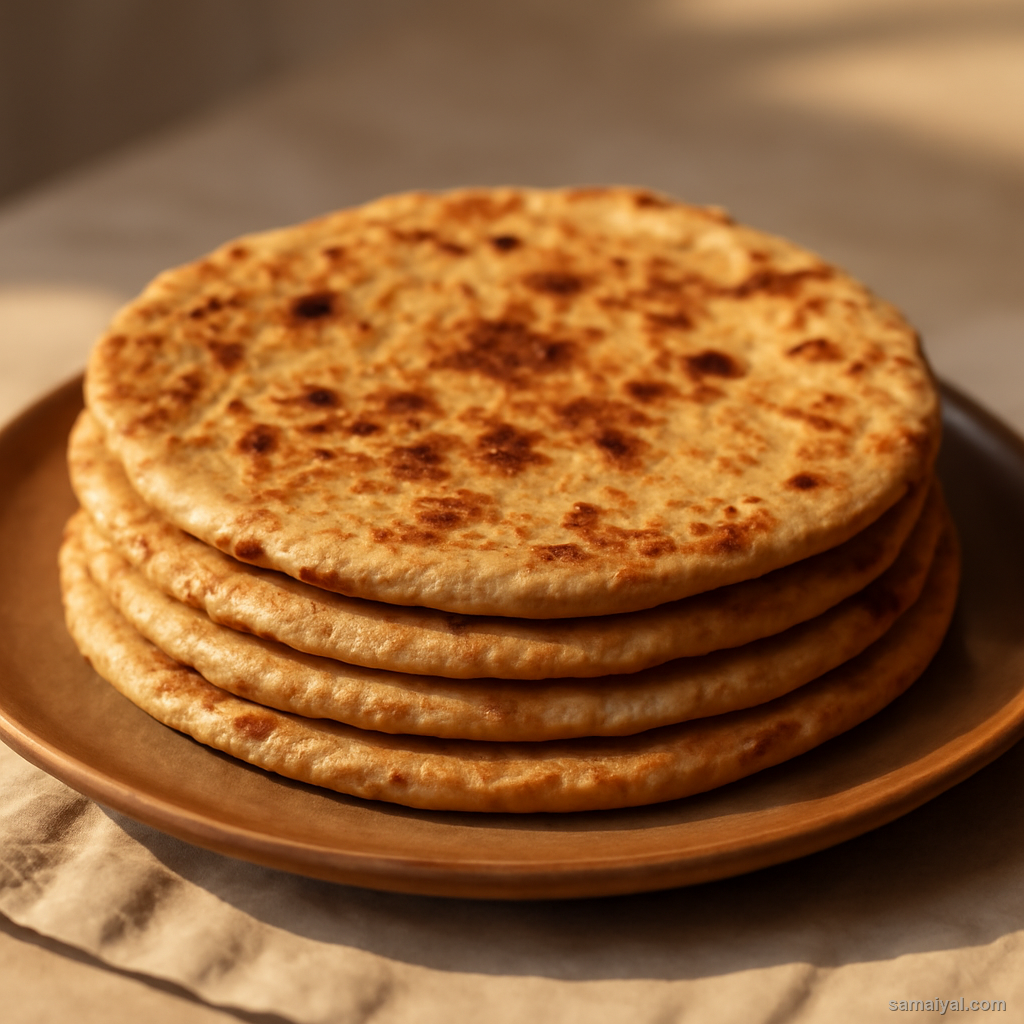
About Bihari Sattu Roti: Sattu Roti is the fastest sattu breakfast in Bihar — sattu (roasted gram flour) is mixed directly into the dough rather than used as a stuffing, so there is no rolling, sealing or risk of the filling escaping. The result is a savoury, nutty, protein-rich flatbread that you can put together in 20 minutes flat.
Choose the right sattu: Use 1 cup of fresh roasted gram flour (chana sattu), available at any Indian grocer. The colour should be golden tan and the smell deeply nutty. Old or stale sattu develops a sour edge — sniff before using and discard if it smells off.
Use whole wheat flour: Use 1 cup of whole wheat atta — the standard Indian wheat flour for chapati and roti. White flour will not work; sattu roti needs the structure of whole wheat to hold together.
Crush the ajwain: Take 1/2 tsp ajwain (carom seeds). Crush very lightly between your fingertips or in a mortar — just to wake up the aroma. Whole ajwain seeds in the dough give pleasant little flavour bursts as you eat.
Combine the dry ingredients: In a wide mixing bowl, combine the 1 cup sattu, 1 cup wheat flour, the crushed ajwain and salt to taste — usually 3/4 tsp. Whisk briefly with your fingers to distribute everything evenly.
Add water gradually: This is the most important step. Sattu absorbs water unpredictably depending on its freshness. Start with 1/2 cup warm water. Pour over the dry mix and start bringing the dough together with your fingers.
Knead and adjust: Knead for 2 minutes. The dough should form a soft, slightly tacky ball that springs back lightly when pressed. If it feels dry and crumbly, add 1 tbsp warm water at a time. If it feels wet and sticky, add 1 tbsp more wheat flour.
Knead till smooth: Continue kneading for another 5 minutes — sattu roti dough needs more kneading than regular roti dough because the sattu makes it crumbly. The final dough should be smooth, soft and pliable, with no visible flour streaks.
Rest the dough: Cover the dough with a damp cloth and rest for 10 minutes. Resting allows the gluten to relax and the sattu to fully hydrate, which makes rolling easier and the final roti softer.
Divide into balls: Pinch off lemon-sized portions of dough — you should get 6-8 balls. Roll each between your palms to a smooth ball with no cracks. Keep them covered with the damp cloth as you work.
Roll the rotis: Lightly flour a clean work surface with wheat flour (not sattu — too much sattu on the outside will burn during cooking). Press one ball flat. Using a rolling pin, roll into a thin 18cm circle, rotating the dough as you go to keep it round. Aim for about 3mm thick — sattu rotis cannot be rolled paper-thin like regular roti because they tear, but should not be thick either.
Heat the tawa: Place a heavy tawa or flat pan over medium-high heat. Wait 2 minutes for it to get properly hot. Test by sprinkling a few drops of water — they should sizzle and evaporate within seconds.
Cook the first side: Place the rolled roti on the hot dry tawa. Cook for 30-40 seconds — the surface will start showing small bubbles. Flip with a spatula or your fingers (carefully).
Cook the second side with ghee: Cook for 30 more seconds. Now flip back to the first side. Spread 1/2 tsp ghee over the top. Press gently with a folded clean cloth or the back of a spatula — pressing helps the roti puff up a little. Flip once more and ghee that side too. Each roti takes about 2 minutes total.
Serve immediately: Stack the cooked rotis in a covered casserole or wrapped in a clean kitchen towel to keep warm and soft. Serve hot with raw onion, lemon wedges, mango pickle and a generous dollop of plain yogurt — the classic Bihari accompaniments.
⭐ Featured
Stuffed whole-wheat flatbread with spiced potato filling — the quintessential Punjabi...
 ⭐ Featured
Thin crispy rice-lentil crepe filled with spiced potato masala — the iconic South...
 ⭐ Featured
Steamed fermented rice cakes served with tangy lentil vegetable soup — South India's...

Crispy ring-shaped lentil fritters with fluffy interior — a South Indian must-have with sambar.
Comments & Tips
Be the first to share your experience with this recipe!
Leave a Comment