 ⭐ Featured
Dal Makhani
Slow-cooked black lentils in a rich buttery tomato gravy — a Punjabi classic that...
Slow-cooked bone-in mutton with mustard oil and whole spices — the prestige Sunday dish of Bihar
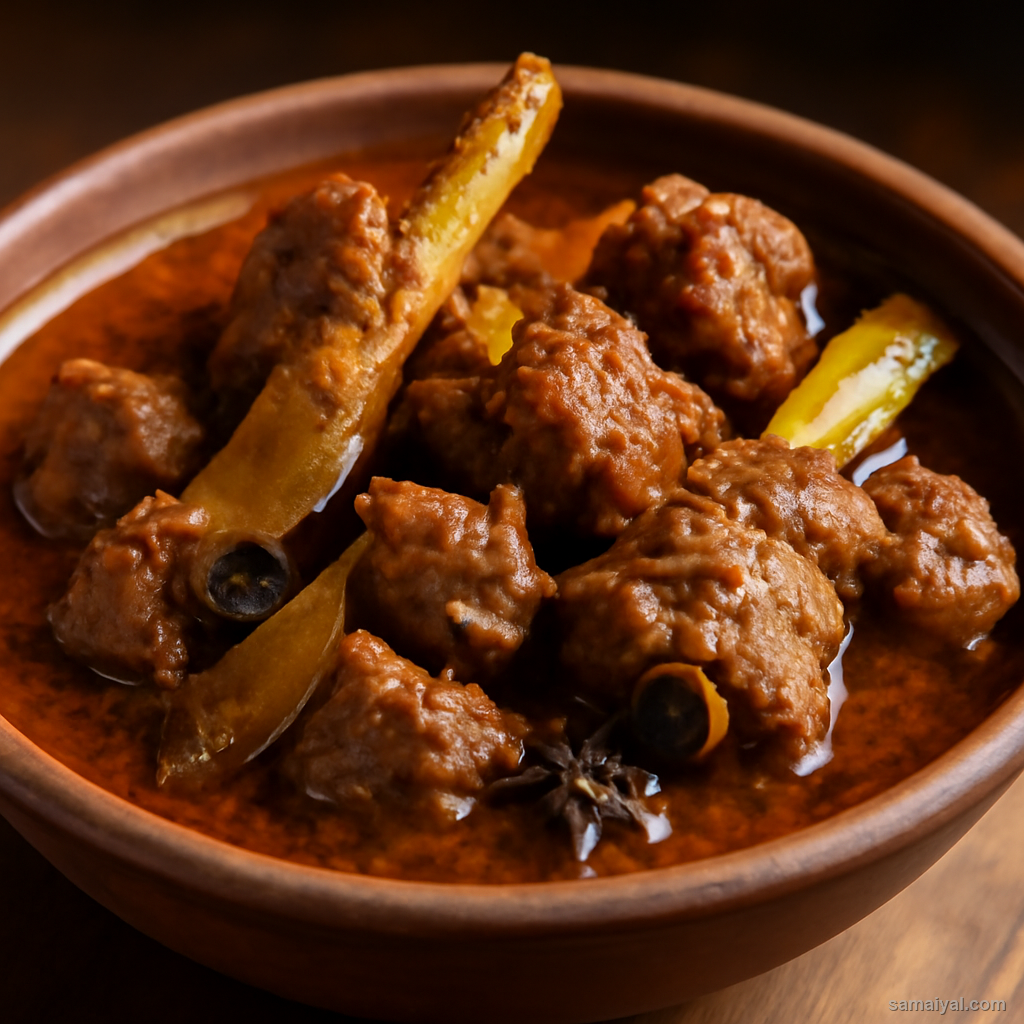
About Bihari Mutton Curry: Bihari mutton curry is the Sunday feast — slow-cooked with mustard oil and whole spices until the meat falls from the bone. While dozens of mutton curry styles exist across India, the Bihari version distinguishes itself with mustard oil as the cooking fat (rather than ghee or refined oil), the use of more whole spices (rather than ground), and the longer slow simmering. It is the prestige Sunday lunch dish across Bihar.
Choose bone-in mutton: Use 800g of bone-in mutton — leg, shoulder, or curry-cut bone-in pieces work best. Bones release collagen, calcium, and marrow during the long cook, enriching the gravy dramatically. Avoid boneless cuts — they produce a thinner, less interesting curry.
The mutton freshness check: Fresh mutton is bright pink-red with white fat marbling, firm to the touch, and smells clean.
Clean the mutton: Wash the mutton pieces under cold running water. Pat very dry with kitchen paper.
Make the marinade: In a wide bowl combine 1 tsp turmeric powder, 1 tsp salt, and 2 tbsp ginger-garlic paste (or grind 2-inch ginger with 6 garlic cloves with 2 tbsp water).
Marinate properly: Add the mutton pieces. Massage the marinade thoroughly. Cover and marinate for 2 hours minimum at room temperature, or up to 8 hours in the fridge for deeper flavour.
Why long marinating: The yogurt-free Bihari marinade relies on time alone for tenderising. Longer marinating = more tender finished mutton. 2 hours is the minimum for proper Bihari character.
Prepare the onions: Take 2 medium onions. Peel and slice thinly into half-moons. Sliced onion produces deeper caramelisation than chopped.
Prepare the tomatoes: Take 2 medium tomatoes. Chop into fine 5mm dice.
Gather the whole spices: Have ready 3 green cardamom pods (lightly cracked), 1 small cinnamon stick (broken in half), 4 cloves, and 2 bay leaves. The whole spices are essential for the Bihari character — they release their aroma slowly during the long simmer.
Use a heavy pot with tight lid: Use a heavy-bottomed Dutch oven, large kadhai with lid, or thick-bottomed casserole. The lid must seal well.
Heat the mustard oil correctly: Pour 3 tbsp mustard oil into the pot over medium-high heat. Heat for 1-2 minutes until smoking heavily.
Temper with whole spices: Reduce heat to medium. Add the cracked cardamom pods, cinnamon stick, cloves, and bay leaves to the smoking-hot oil. Fry for 30-45 seconds — they will sizzle and the kitchen will fill with their fragrance.
Fry the onions DEEPLY: Add the sliced onions. Stir-fry for 10 minutes, stirring often, until deep golden brown. Take your time — well-browned onions are the foundation.
Add the tomatoes: Add the chopped tomatoes. Cook for 6-8 minutes, stirring every 2 minutes, until the tomatoes have completely broken down into a thick paste and oil starts to separate at the edges.
Add dry spices: Sprinkle in 2 tsp red chilli powder and 1 tsp coriander powder. Stir for 30 seconds — the masala will turn a beautiful deep rust-red.
The critical mutton sear: Increase heat to high. Add the marinated mutton pieces along with all marinade. Sear hard for 10 minutes, stirring and turning every 2 minutes. The mutton will release some liquid initially, then start to dry and brown deeply.
The deep brown character: Properly seared mutton has a deeply browned exterior — almost dark mahogany. This is essential for the Bihari mutton curry character.
Add water for braising: Pour in 1 cup of hot water. Stir well to lift any caramelised bits stuck to the bottom — they hold concentrated flavour.
Adjust salt: Add salt to taste — about 3/4 tsp. Stir well.
The slow simmer: Bring to a gentle simmer. Reduce heat to the absolute lowest setting your stove allows. Cover the pot tightly. Cook for 55 minutes, lifting the lid every 15 minutes to gently turn the mutton pieces and check the moisture. Add 2-3 tbsp hot water if the bottom looks dry.
Why 55 minutes matters: Mutton becomes tender slowly. The 55-minute slow simmer allows the connective tissues to break down completely, producing the falling-off-the-bone texture this dish requires.
Check doneness at 55 minutes: Pierce a piece of mutton with a fork — it should slide in with no resistance, and the meat should pull apart easily from the bone. The fat should look translucent and rendered.
If still tough: Cover and continue simmering for another 10-15 minutes. Some mutton pieces (older animals, particularly tough cuts) take longer.
Uncover and reduce: Remove the lid. Increase heat to medium. Stir gently every 1-2 minutes for the next 5-7 minutes, allowing the gravy to reduce to a moderately thick consistency that coats the meat.
The consistency goal: Bihari mutton curry has medium-thick gravy — pourable but substantial, with the bones and meat coated in a glossy red-brown sauce. Not as dry as bhuna gosht (recipe id 1379), not as soupy as some North Indian curries.
Final flavour check: Taste a piece of mutton with gravy. The dish should hit you with multiple complex flavours — tender mutton, deep onion sweetness, tangy tomato, warm whole spices, sharp chilli warmth, pungent mustard oil. The marrow from the bones should be visible — diners can suck this out for an extra-rich flavour.
Garnish and serve: Switch off the heat. Sprinkle 2 tbsp finely chopped fresh coriander over the top.
Serve with rice: The most traditional Bihari Sunday pairing is with steamed basmati rice. The rich red-brown gravy is meant to be poured generously over rice and eaten by hand. Diners suck the marrow out of the bones for the most prized parts.
Serve with breads: Hot rotis, paratha, or naan also pair beautifully. The bread soaks up the thick gravy, providing a different but equally satisfying experience.
The complete Bihari Sunday meal: Pair with a dal (Tadka), a vegetable side, raita, and a sweet to finish. The complete plate represents Bihari Sunday cooking at its finest — the kind of meal that families gather for and that defines weekend culture across the state.
A cultural note: Sunday mutton curry is the institution of Bihari household culture. Across the state, Sunday morning markets bustle with butchers selling fresh mutton, families plan their day around the long simmering, and the smell of mutton curry fills neighbourhoods. Eating this dish on a Sunday is participating in a deeply embedded cultural tradition.
Leftover storage: Stored in the fridge in an airtight container, this dish keeps for 4-5 days and tastes even better the next day. Many Bihari families intentionally make extra for Monday lunch — leftover mutton curry on Sunday evening is one of the great pleasures. The flavours mature beautifully overnight. Reheat gently on the stovetop with a splash of water — never boil aggressively, which can toughen the meat.
⭐ Featured
Slow-cooked black lentils in a rich buttery tomato gravy — a Punjabi classic that...

Red kidney beans in a thick spiced tomato gravy, best eaten with steamed basmati rice.

Royal Mughlai-style paneer in a cashew-cream gravy — rich, indulgent and perfect for...

Soft potato-paneer dumplings in a luscious cashew gravy — the vegetarian showstopper.
Comments & Tips
Be the first to share your experience with this recipe!
Leave a Comment