 ⭐ Featured
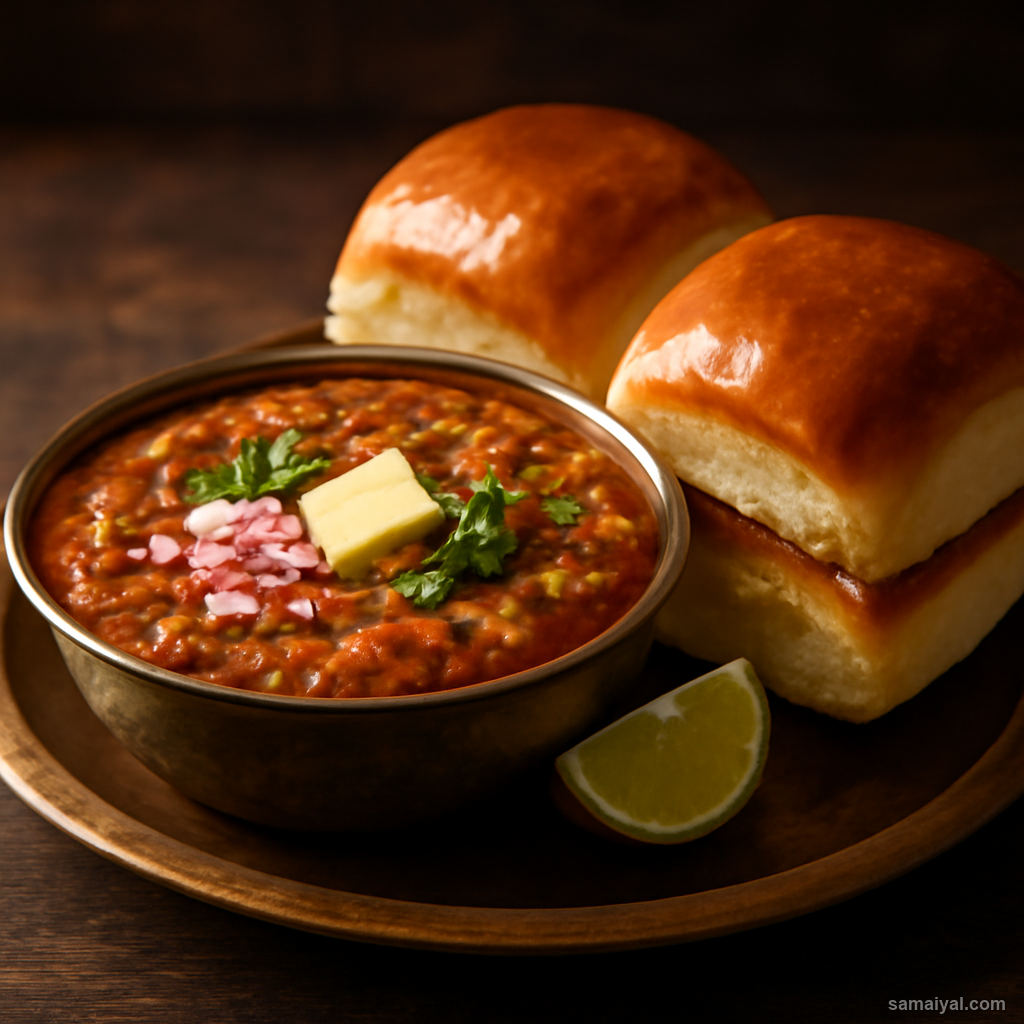
Pav Bhaji
Mumbai's beloved mashed vegetable curry served on butter-toasted soft buns — street food gold.
Deep-fried fermented rice and jaggery discs coated in poppy seeds — the Bihari Diwali special

About Anarsa Festival Sweet: Anarsa is the most distinctive Bihari Diwali sweet — par-boiled rice fermented for 3 days, mixed with jaggery, rolled in poppy seeds and fried. The technique is ancient and unusual in modern Indian sweets, requiring planning days ahead. The result is a unique sweet with a slightly tangy fermented note alongside the sweetness — completely unlike any other Indian festival sweet. It is the showpiece of Bihari Diwali sweet boxes.
Understand par-boiled rice: Use 2 cups of par-boiled rice (also called sela rice or usna chawal). Par-boiled rice has been steamed in the husk before drying, which gives it a slightly chewier texture and yellowish tint. Available at all Indian grocers — look specifically for par-boiled rice; standard white rice will not produce proper anarsa.
The critical 3-day soak: Wash the par-boiled rice in 4-5 changes of cold water until the water runs clear. Place in a large bowl and cover with plenty of cold water by 5cm.
Day 1 - 3 of soaking: Leave the rice covered loosely (not airtight) in a cool dark place. Each day, change the water — drain off the old water and refill with fresh cold water. The rice will gradually soften and develop a faint fermented character.
Why the long soak: This is not just hydration — the rice undergoes mild wild fermentation over 3 days, developing the slightly tangy character that defines anarsa. Skipping or shortening this step produces inferior results.
The daily checks: Each day, smell the rice — it should smell faintly sour-sweet, like rising bread dough. If it develops any strong off-smell (rotten, fishy, alcoholic), discard and start over with fresh rice.
Day 3 final drain: After 3 days, drain the rice completely in a colander. Spread on a clean kitchen towel and pat dry. Then leave to air-dry for 1 hour, ideally with a fan blowing over it. The rice should look dry on the surface.
The critical grinding: Place the dried fermented rice in a grinder. Grind in batches to a smooth fine paste. The texture should look like wet flour or thick dough — completely smooth, no visible grains. This may take several pulses with scraping between.
If using a stone mortar (most traditional): Pound the rice in batches with a heavy stone mortar until you have a smooth paste. This is the original Bihari method and produces the best texture.
Measure the jaggery: Use 1 cup of grated jaggery. Use dark Bihari palm jaggery for the most authentic deep flavour. Grate finely on the small holes of a box grater.
Mix the dough: In a wide bowl combine the rice paste, grated jaggery, and 1/4 tsp cardamom powder. Mix thoroughly with your hands or a wooden spoon for 3-4 minutes until everything is fully integrated.
The firm dough: The mixture should form a firm, slightly sticky dough. If too wet, add 1-2 tbsp rice flour. If too dry, add 1 tsp warm water. The right consistency is firm enough to shape but pliable enough to mould.
Let the dough rest: Cover and rest for 30 minutes. The jaggery will fully integrate and any excess moisture will be absorbed.
Prepare the poppy seeds: Use 4 tbsp white poppy seeds (khus khus). Spread on a wide flat plate.
Shape the discs: Take a portion of dough about the size of a golf ball. Press between your palms (lightly greased with 1 tsp ghee) to flatten into a disc about 6cm wide and 1cm thick.
The poppy seed coating: Press both sides of each disc firmly into the poppy seeds. The seeds should adhere thickly to both surfaces. The dough texture should hold the seeds well.
Work in batches: Continue shaping and coating until all the dough is shaped — you should get 12-15 discs.
Let the discs rest briefly: Place the coated discs on a tray. Let rest for 15 minutes — this lets the surface dry slightly so the seeds adhere firmly during frying.
Heat the oil correctly: Pour neutral cooking oil (or ghee mixed with oil for richer flavour) into a deep heavy pan to a depth of at least 5cm. Place over medium heat. The oil temperature is critical — too cold and the discs absorb oil; too hot and they brown before the inside cooks.
Test the oil temperature: Drop a tiny piece of dough into the oil. It should sink briefly, then rise to the surface within 5-7 seconds with steady bubbles around it. The oil should be hot enough to cook through but not so hot that it browns instantly.
Fry one or two at a time: Carefully slide one disc at a time into the hot oil. Do not crowd the pan — temperature drops if too many go in.
Fry until deep golden: Cook for 3 minutes per side, turning gently with a slotted spoon. The discs should turn deep golden brown with the poppy seeds visible against the golden background. The rich colour comes from both the rice flour cooking and the jaggery caramelising.
Do not over-fry: Anarsa goes from perfect to burnt quickly. Watch the colour carefully — pale gold means undercooked, deep golden brown means perfect, dark brown means slightly over.
Check doneness: Lift one out and break it open. The inside should be cooked through, soft, and have a beautiful chewy-fudgy texture from the rice-jaggery mixture. If still raw inside, fry the next batch for 30 seconds longer.
Drain on paper or rack: Lift each disc out with a slotted spoon and drain on a wire rack — best for keeping them firm.
Let cool completely: Anarsa firms up significantly as it cools. Let cool to room temperature for at least 30 minutes before serving or storing — about 1 hour total cooling time.
Serve at room temperature: Anarsa is meant to be served at room temperature, when the texture is at its best — slightly chewy, fragrant with cardamom and jaggery, with the poppy seeds providing crunch.
The Diwali serving: At Bihari Diwali, anarsa appears in the festive sweet box alongside other traditional sweets like khaja, khurma, and laddoos. Each guest gets a small portion of multiple sweets.
For gifting: Pack 4-5 anarsa in a decorative box, separated by parchment paper. They make beautiful homemade Diwali gifts.
A cultural and historical note: Anarsa is one of the few Indian sweets that uses fermentation as a core technique. It connects modern Bihari kitchens to ancient food preservation traditions. The combination of rice, jaggery, poppy seeds, and ghee was the celebration food before sugar became widely available — a reminder that natural ingredients always created the most memorable festive foods.
Leftover storage: Stored in an airtight container at room temperature, anarsa keeps for 2 weeks. The texture firms up over time but remains delicious. Refresh by warming briefly in a 150C oven for 3-4 minutes before serving for the best texture experience.
⭐ Featured
Mumbai's beloved mashed vegetable curry served on butter-toasted soft buns — street food gold.

Fluffy steamed chickpea flour cake from Gujarat — light, spongy, tangy and totally addictive.

Mumbai's vegetarian burger — spiced potato dumpling in a fried batter, served in a...
 ⭐ Featured
Crispy golden pastry filled with spiced potatoes and peas — India's most loved snack,...
Comments & Tips
Be the first to share your experience with this recipe!
Leave a Comment