 ⭐ Featured
Aloo Paratha
Stuffed whole-wheat flatbread with spiced potato filling — the quintessential Punjabi...
Mashed boiled potato with mustard oil, raw onion and green chilli — the everyday Assamese comfort food
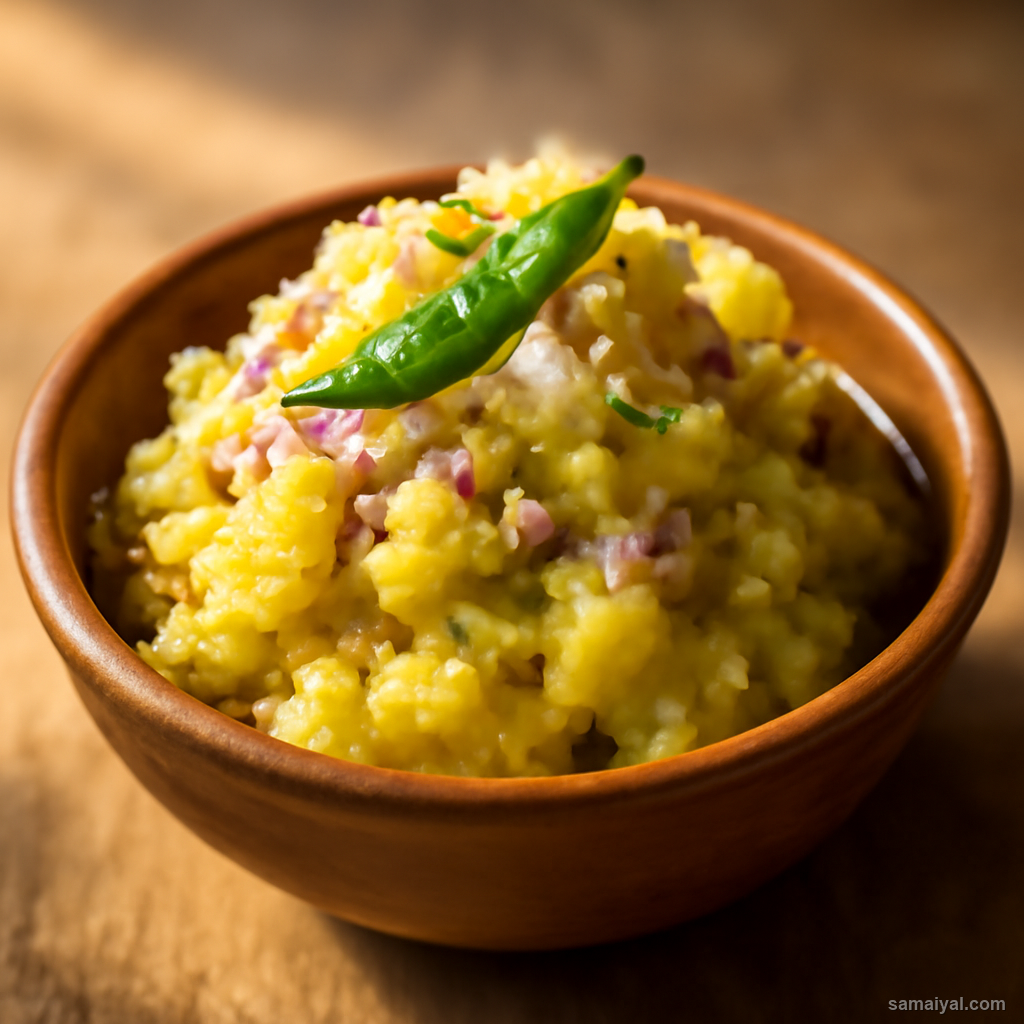
About Aloo Pitika: Aloo Pitika is the simplest and most beloved Assamese everyday food — boiled mashed potato with raw onion, green chilli, mustard oil and salt. It takes 25 minutes total and goes with absolutely everything. Eaten with rice and dal, with rotis, with khichdi, or just on its own as a light meal — Aloo Pitika is the foundation that connects every Assamese household.
Understand pitika: Pitika is the Assamese word for any mashed dish — vegetables, lentils or proteins crushed with raw aromatics and mustard oil. The technique is rustic and simple: cook through, mash, mix with sharp raw flavours, eat. Aloo Pitika is the most common and most loved.
Choose the right potatoes: Use 4 medium potatoes — about 600g total. Use floury potatoes (russet, Maris Piper, or any common Indian variety) which mash smoothly. Waxy salad potatoes can be used but will be slightly more chunky in the final dish — also fine, just different texture.
Wash and prepare: Scrub the potatoes thoroughly under cold running water — the skins matter, since you cook them whole. Do not peel before cooking; peeling hot potatoes after cooking is much easier and keeps the texture better.
Use the right pot: Use a saucepan large enough to hold the potatoes with at least 5cm of water above them. Crowded potatoes do not cook evenly.
Boil to fully soft: Place the potatoes in the pan. Cover with cold water (starting in cold water cooks more evenly than dropping in hot water). Add 1 tsp salt to the water — adding salt now seasons the potatoes from inside as they cook.
Bring to a boil: Place over high heat. Bring to a rolling boil. Once boiling, reduce heat to medium.
Cook to fully tender: Boil gently for 18-22 minutes, depending on potato size. The potatoes are done when a sharp knife slides in with absolutely no resistance from the centre — not just the outer flesh.
Drain and let steam dry: Drain the potatoes in a colander. Let them sit for 2-3 minutes — the residual heat dries the surface, which produces fluffier mash. Wet potatoes mash gummy.
Peel while warm: Once cool enough to handle (about 5 minutes), peel off the skins with your fingers — they should slip off easily. Use a small knife if a patch is stubborn. Discard the skins.
Mash with the right tool: Use a fork or potato masher. Avoid blenders, food processors or ricers — they over-process the potato and produce a starchy gluey mash. Mash for about 1 minute, leaving some texture. The Assamese tradition is rustic chunkiness, not silky smoothness.
Let the mash cool slightly: Let the mashed potato cool for 3-5 minutes — too hot will wilt the raw onion when added.
Prepare the onion: Take 1 small onion. Peel and chop into very fine 5mm dice. Some Assamese cooks slice into thin half-moons instead. The onion goes in raw — its sharp pungency is the heart of the pitika.
Prepare the green chillies: Take 2 fresh green chillies. Finely chop, including seeds for full heat or seeded for milder version. Adjust the number of chillies to your tolerance — pitika should have a clear chilli kick, but not be inedibly hot.
Chop the coriander: Take 2 tbsp fresh coriander leaves with their tender stems. Wash, shake dry and chop finely.
The critical mustard oil: Use 1 tbsp raw mustard oil. The Assamese pitika tradition uses raw, not heated, mustard oil — the sharp pungency is essential. If you find raw mustard oil too sharp, briefly heat 1 tbsp in a small pan for 30 seconds until it just smokes, then cool completely before using; this tames the sharpness while keeping the character.
Mix everything together: To the warm mashed potato add the chopped raw onion, chopped green chillies, the 1 tbsp mustard oil, and salt to taste — about 3/4 tsp.
Mix with hands or spoon: Use clean hands to mix everything together — the warmth of your hand and the gentle pressure helps the flavours marry beautifully. The traditional way is by hand. If you prefer, use a flat wooden spoon and fold gently rather than stirring round and round.
The consistency goal: The pitika should be thick but spreadable — like very thick mashed potato. If too dry and crumbly, add 1 tsp more mustard oil or 1 tbsp warm water. If too wet, no fix needed; it firms as it cools.
Taste and adjust: Dip a clean spoon and taste. The pitika should hit you with multiple flavours — soft starchy potato, sharp raw onion, gentle to fierce chilli heat, pungent mustard oil. Adjust salt or mustard oil to your liking. The flavour should be vivid and assertive, not muted.
Garnish: Sprinkle the chopped coriander over the top. For an extra Assamese touch, drizzle 1/2 tsp more raw mustard oil on top.
Serve with grains: Serve aloo pitika at room temperature alongside hot steamed rice (most traditional) or hot rotis. Eat by mixing a small amount of pitika into rice with your fingers — the proper Assamese way. The contrast of warm rice and the sharp-rustic pitika is the heart of the dish.
Serving alone: Aloo pitika also works as a quick standalone lunch — eat with a few slices of cucumber, a piece of papad and a glass of buttermilk. It keeps well at room temperature for 4-5 hours, making it a classic tiffin-box choice.
Variations: Add 1 hard-boiled mashed egg to the pitika for a richer protein-packed version. Or add 1 small mashed steamed beetroot for colour and earthy sweetness. For a fancy version, add 1 tbsp finely chopped fresh ginger. All variations are common across Assam.
Leftover storage: Stored in the fridge in an airtight container, aloo pitika keeps for 1 day. The flavours intensify but the texture changes slightly. Bring to room temperature before serving rather than reheating.
⭐ Featured
Stuffed whole-wheat flatbread with spiced potato filling — the quintessential Punjabi...
 ⭐ Featured
Thin crispy rice-lentil crepe filled with spiced potato masala — the iconic South...
 ⭐ Featured
Steamed fermented rice cakes served with tangy lentil vegetable soup — South India's...

Crispy ring-shaped lentil fritters with fluffy interior — a South Indian must-have with sambar.
Comments & Tips
Be the first to share your experience with this recipe!
Leave a Comment