 ⭐ Featured
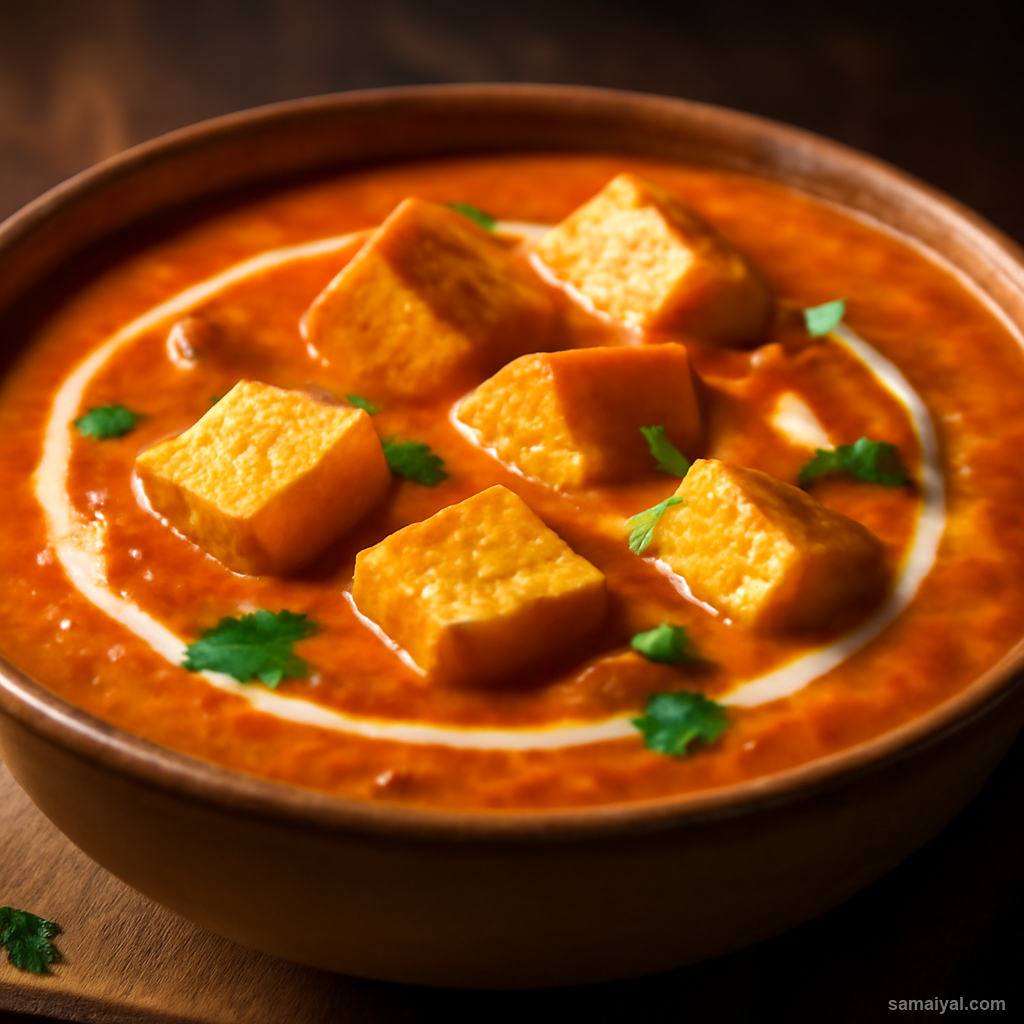
Butter Paneer Masala
Creamy tomato-based curry with soft paneer cubes — the all-time favourite of Indian...
Potato cooked in alkaline khar solution — the everyday vegetarian khar dish of Assamese homes
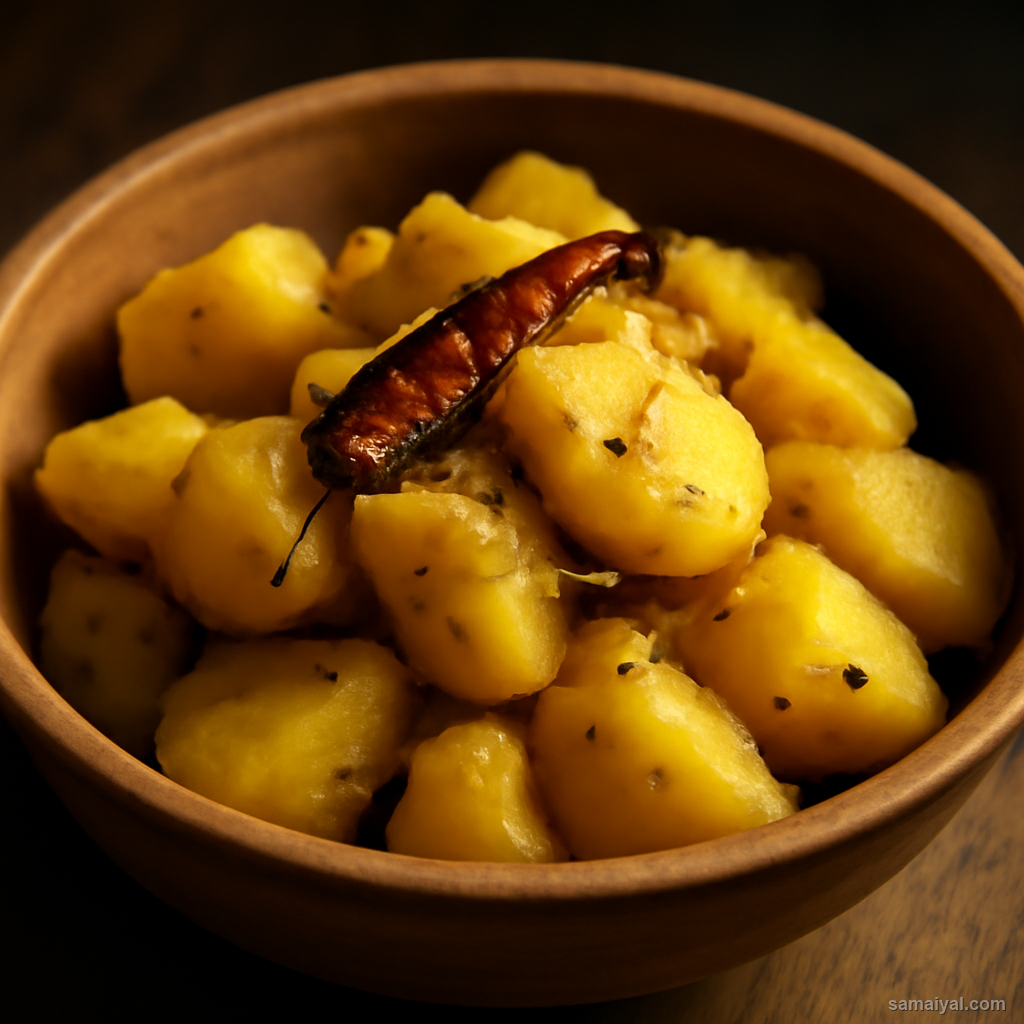
About Aloo Khar: Khar is the alkaline cooking technique unique to Assam, traditionally made by filtering ash from sun-dried banana peels through water. Aloo Khar is the everyday vegetarian version — simpler than the iconic non-vegetarian khar but with the same distinctive mineral, alkaline depth that defines Assamese cooking.
Understand khar: Authentic khar (called kolakhar) is made by burning sun-dried banana skins, soaking the ash in water and filtering. Most home cooks today use a small amount of food-grade baking soda dissolved in water as a substitute. For this recipe, dissolve 1/2 tsp baking soda in 2 cups of water — that is your khar solution. If you have access to authentic khar, use 2 tbsp.
Prepare the potatoes: Take 3 medium potatoes. Peel them with a sturdy vegetable peeler. Cut into 2cm cubes — uniform size means even cooking. Rinse the cubes briefly in cold water to wash off the surface starch, then drain.
Prepare the green chillies: Take 2 fresh green chillies. Slit them lengthwise from tip to stem but leave the stems intact — this releases the heat without the chilli pieces breaking apart in the dish. For a milder result, remove the seeds.
Chop the herbs: Take a small handful of fresh coriander leaves. Wash, shake dry and roughly chop. Set aside for garnish.
Bring the khar to a boil: Pour the khar solution (or baking soda water) into a heavy-bottomed pan or pot. Place over medium-high heat and bring to a gentle boil. Use a non-reactive pot — stainless steel or enamel, not aluminium, which reacts with the alkali.
Add the potatoes: Once the khar is boiling, add the potato cubes carefully to avoid splashing. Add the slit green chillies. The water should fully cover the potatoes; add a little more water if needed.
Reduce heat and simmer: Lower the heat to medium. Let the potatoes cook in the simmering khar for 12-15 minutes. The alkaline solution does something interesting — it softens the potatoes faster than plain water and gives them a slightly firmer, almost waxy texture on the outside.
Check for doneness: After 12 minutes, pierce a potato cube with a fork. It should slide in without resistance. The potato should be completely soft but holding its shape, not falling apart. If still firm, cook 2-3 more minutes.
Drain carefully: Place a colander over a heatproof bowl. Pour the contents through. Discard the khar liquid (do not use it for anything else; it is alkaline). Reserve the chillies along with the potatoes.
Dress while warm: Transfer the drained potatoes and chillies to a serving bowl. Drizzle with 1 tsp raw mustard oil — this is essential for the authentic Assamese flavour. Mustard oil dressed onto warm khar potatoes releases its characteristic pungent aroma.
Add salt: Sprinkle salt to taste — usually 1/2 tsp is enough since khar itself adds a faint mineral salinity. Toss gently to coat without breaking the potato cubes.
Garnish and serve: Scatter chopped fresh coriander over the top. Serve warm or at room temperature alongside steamed rice and dal. Aloo Khar is traditionally eaten at the very start of an Assamese meal — its alkaline nature is believed to prepare the digestion for the rest of the meal.
⭐ Featured
Creamy tomato-based curry with soft paneer cubes — the all-time favourite of Indian...
 ⭐ Featured
Velvety spinach curry with golden-fried paneer — nutritious, vibrant and absolutely delicious.

Bold, tangy chickpea curry packed with spices — a street food staple that works as a main dish.

Dry-spiced potatoes and cauliflower — simple, aromatic, and endlessly satisfying.
Comments & Tips
Be the first to share your experience with this recipe!
Leave a Comment