 ⭐ Featured
Aloo Paratha
Stuffed whole-wheat flatbread with spiced potato filling — the quintessential Punjabi...
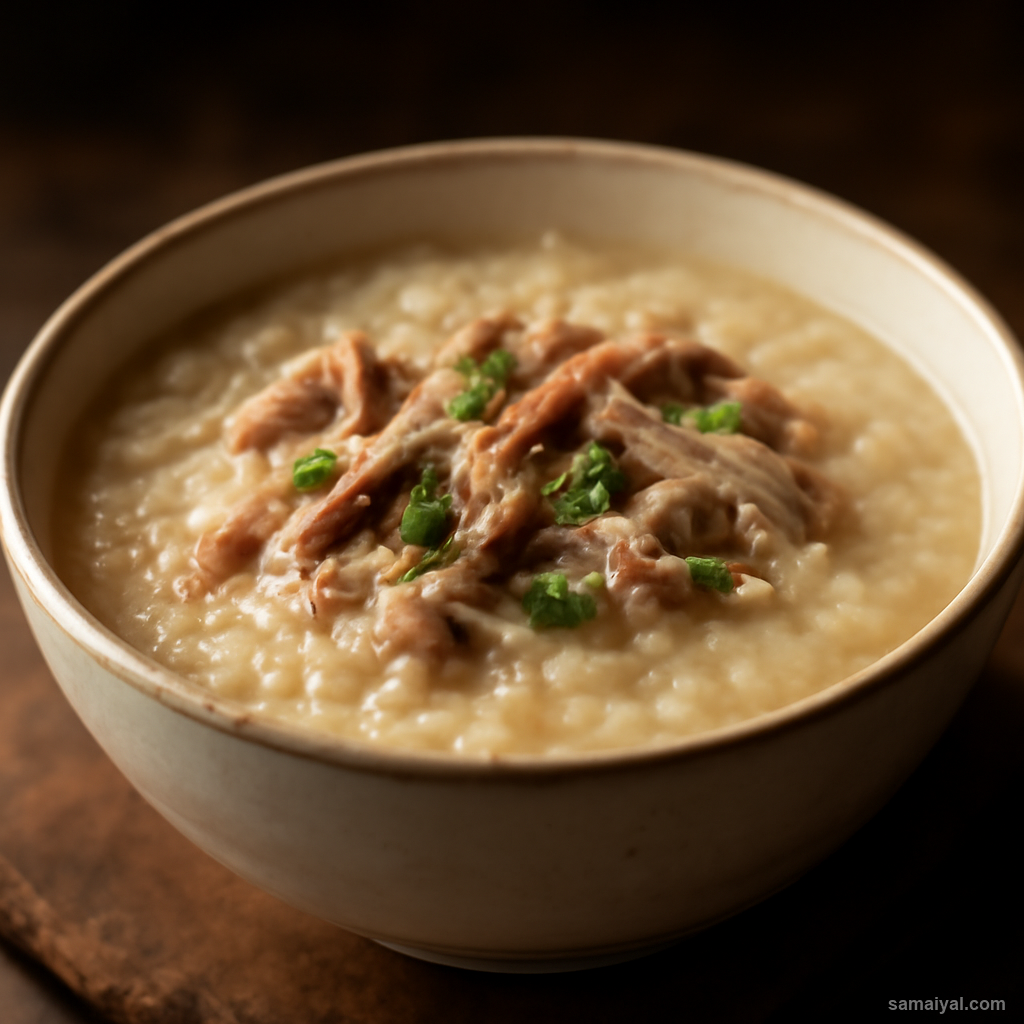
A thick, slow-cooked rice porridge with pork or chicken — the Mizo version of congee. Sawhchiar is the Mizo comfort food eaten when unwell, in cold weather and as a warming breakfast. Simple, sustaining and deeply flavoured from the meat stock.
Combine everything in one pot: Place raw rice, meat pieces, crushed garlic, sliced ginger and slit green chilli in a wide heavy pot. Add 5 cups water. Everything goes in together at the start.
Bring to a boil: Heat on medium-high. Bring to a full boil, stirring once.
Reduce and cook uncovered: Reduce to medium-low. Cook uncovered, stirring every 5 to 8 minutes, for 35 to 40 minutes.
As the rice breaks down: The rice will progressively break down and the starch will thicken the liquid. The meat will become tender and fall apart into the porridge. Keep stirring to prevent the bottom from sticking.
Check consistency: After 35 minutes the sawhchiar should be thick — a thick, creamy porridge where the rice is no longer distinguishable as individual grains. If still too thin, cook 5 more minutes.
Season: Add salt to taste. The meat has contributed some saltiness already — taste before adding.
Check the meat: Press the pork or chicken with a spoon — it should be completely tender and beginning to break apart into the porridge.
Adjust the consistency: The sawhchiar should be thick but still pourable — it should flow slowly when ladled. If too thick, add 1/4 cup water. If too thin, cook 5 more minutes.
The Mizo approach: No oil is used in sawhchiar — the pork fat renders into the porridge naturally, providing thickness without separate oil addition.
Serve: Ladle into deep bowls. Garnish generously with sliced spring onions and chopped coriander. Serve hot.
Note: Sawhchiar is the Mizo comfort food — made for sick family members, for cold mornings and as a warming meal during the monsoon months. The one-pot, no-oil preparation is characteristic of Mizo cooking. Sawhchiar is also traditionally given to new mothers and to elderly family members who need a light but sustaining meal. In Mizoram, the preparation is considered the most complete and digestible form of a rice and meat meal.
⭐ Featured
Stuffed whole-wheat flatbread with spiced potato filling — the quintessential Punjabi...
 ⭐ Featured
Thin crispy rice-lentil crepe filled with spiced potato masala — the iconic South...
 ⭐ Featured
Steamed fermented rice cakes served with tangy lentil vegetable soup — South India's...

Crispy ring-shaped lentil fritters with fluffy interior — a South Indian must-have with sambar.
Comments & Tips
Be the first to share your experience with this recipe!
Leave a Comment